
Félix Blume
Sound
Biography
Félix Blume is a sound artist and sound engineer. He currently works and lives between Mexico, Brazil and France. He uses sound as a basic material in sound pieces, videos, actions and installations. His work is focused on listening, it invites us to a different perception of our surroundings. His process is often collaborative, working with communities, using public space as the context within which he explores and presents his works. He is interested in myths and their contemporary interpretation, in human dialogues both with inhabited natural and urban contexts, in what voices can tell beyond words.
Known For
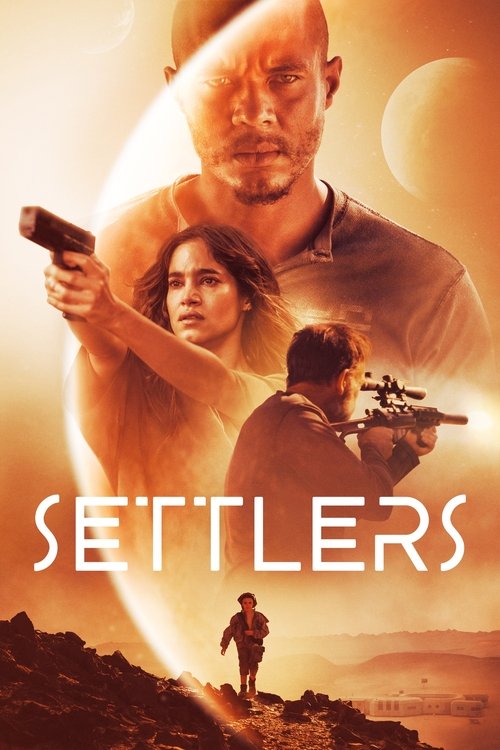
Remmy and her parents, refugees from Earth, have found peace on the Martian outskirts until strangers appear in the hills beyond their farm. Told as a triptych, the film follows Remmy as she struggles to survive in an uneasy landscape.
Settlers
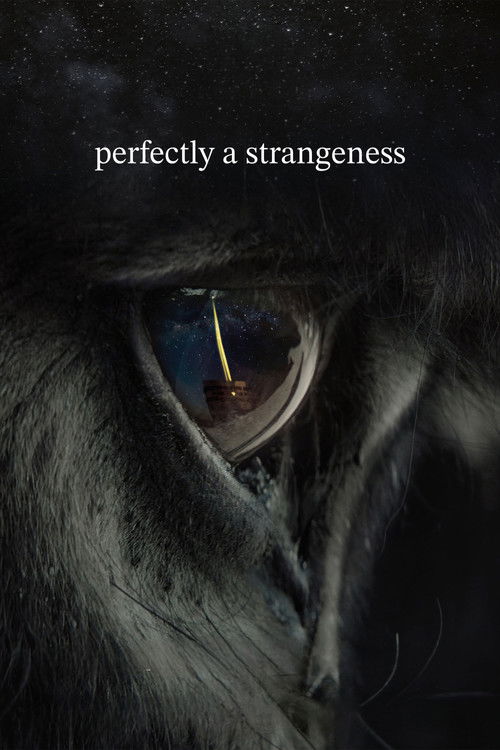
In the dazzling incandescence of an unknown desert, three donkeys discover an abandoned astronomical observatory and the universe. A sensorial, cinematic exploration of what a story can be.
perfectly a strangeness
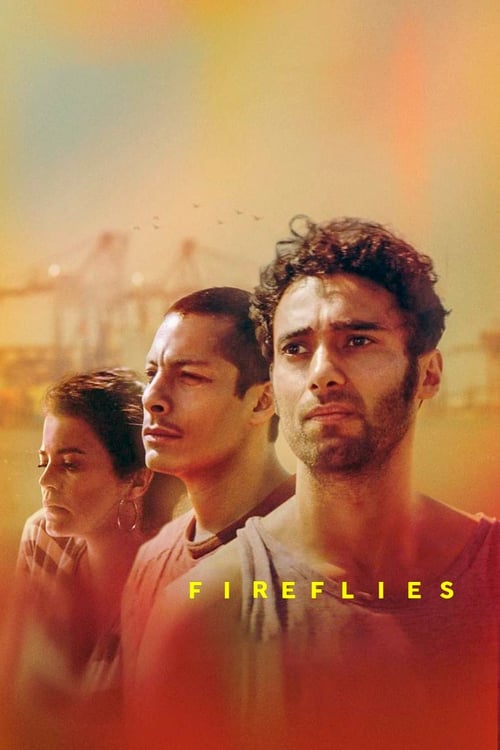
Ramin flees from persecution in Iran and ends up living in the limbo of exile, far from everything he knows, in the tropical port town of Veracruz, Mexico. There his nostalgia and melancholy are confronted with new friendships, while he starts to rediscover his own desires.
Fireflies
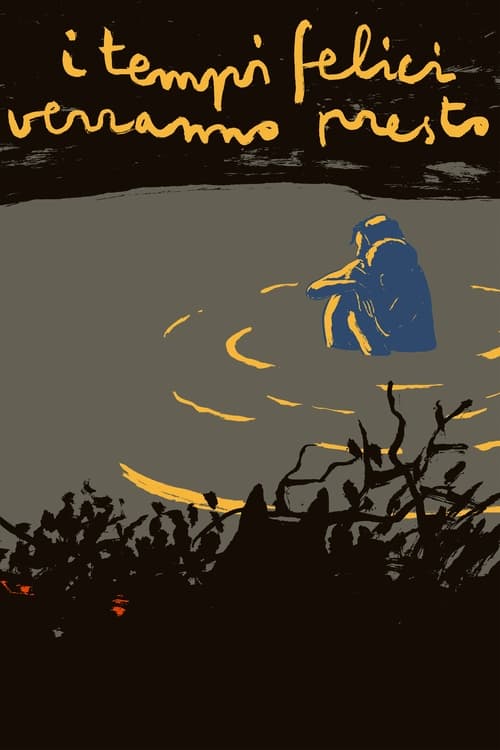
Tommaso and Arturo are on the run in a remote forest. They hunt for food, trying to survive and find their way through the lush nature. It’s quiet, almost peaceful, until the sound of gunshots… Many years later, this forest has a wolf problem. It’s here where Ariane discovers a strange hole in the ground. Could she be the woman referred to in the valley’s legends?
Happy Times Will Come Soon
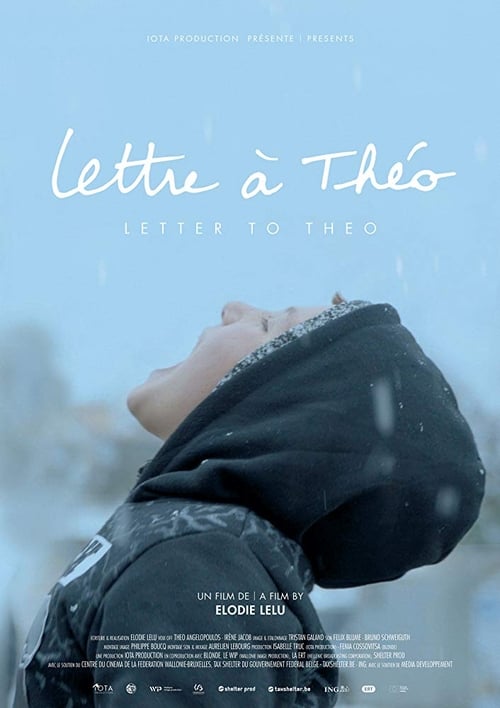
The filmmaker Théo Angelopoulos died on January 24th, 2012, knocked down by a motorbike on the set of his final film. In his unfinished film, he was telling the destinies of the victims of the Greek crisis. The list of victims of the crisis has only grown longer, this destitution echoing another that Théo had sensed was coming: that of the massive arrival of refugees who find themselves trapped in Greece by the closure of the borders. Yet citizen resistance is being organized and fights every day to bring those in danger of obliteration out of the shadows. Ironically, the ambulance supposed to come to his rescue broke down because budgetary restrictions had made it impossible to maintain the vehicle. The crisis itself killed Théo. This is a letter addressed to him in the form of a film.
Letter to Theo
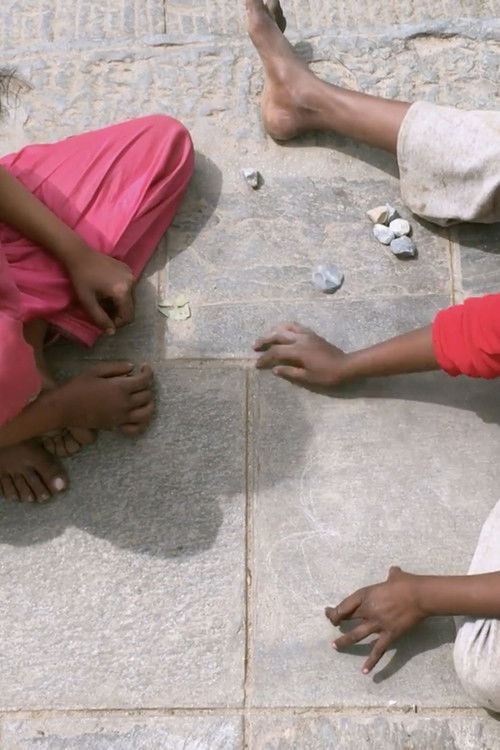
Knucklebones, or jacks, has existed for more than 2000 years and was first played with the astralagus bones of a sheep. This version –played with stones by two girls seated on the landing of a concrete stairway, people’s legs and occasional monkeys passing by– is close to the Korean Gonggi, with no separate ball. The turn begins by throwing a stone in the air and performing certain actions with the four others before catching it again. Later all are tossed up and received, at least some, on the back of the same hand. Pick-ups are sometimes between splayed fingers. The film blurs the logic of any sequence, dwelling on the leaping, clattering stones, and the agility of dusty hands.
Children’s Game #18: Knucklebones
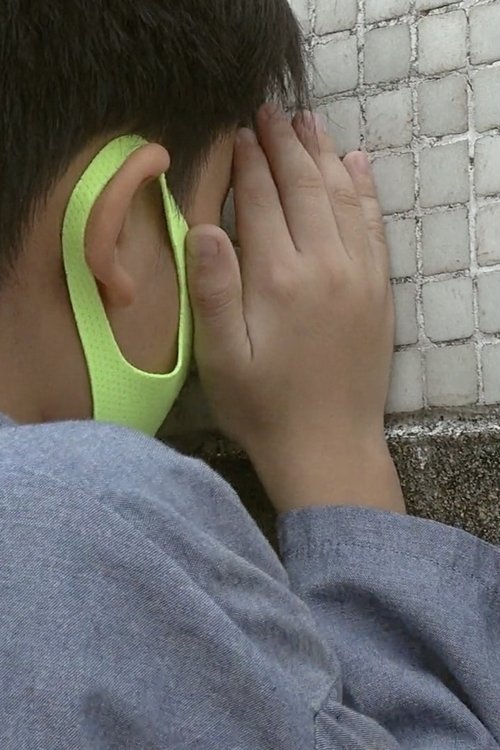
No description available.
Children’s Game #24: Pandemic Games

The history of barbed wire, whose use dates back to the first settlers of the Wild West, always driven by their reckless and ruthless spirit of conquest and selfish ambition to leave their mark on wild lands; of its relationship with politics and mercantilism; of the perversion of the millenary relationship between men and animals; of the evolution of surveillance techniques. Fences and borders: the tragic tale of the enclosure of the world.
Devil's Rope
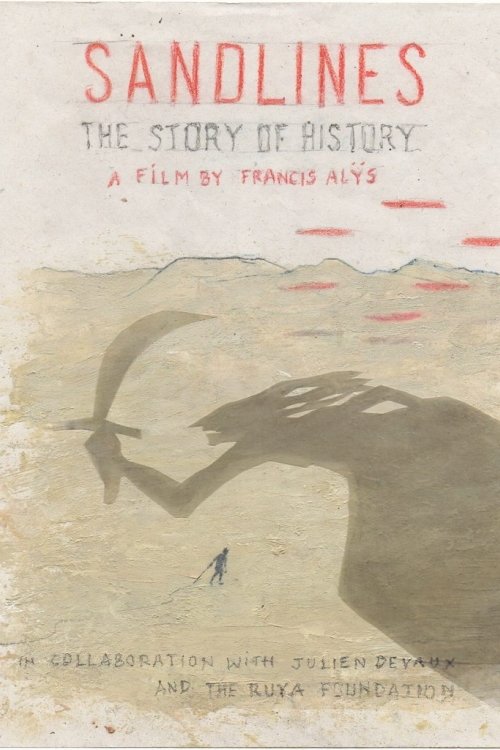
The children of a mountain village near Mosul re-enact a century of Iraqi history, from the secret Sykes-Picot agreement in 1916 to the realm of terror imposed by the Islamic State in 2016. The children revisit their past to understand their present.
Sandlines, the Story of History
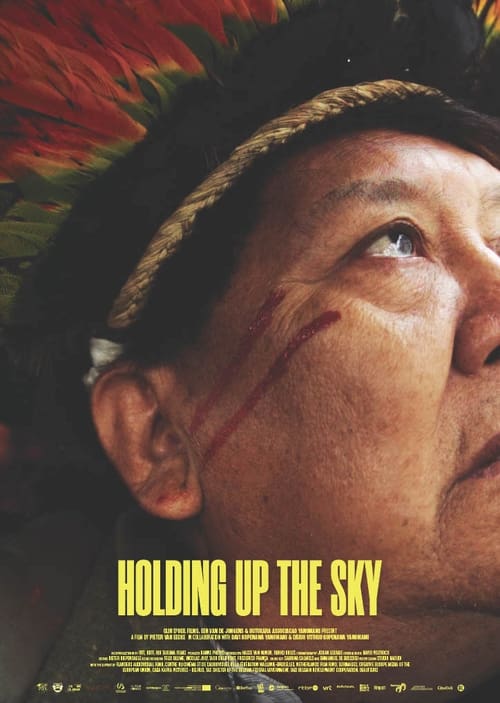
"When the shamans stop dancing and life in the rainforest loses its balance, the sky will collapse and come to crush everything." This wisdom is passed down from generation to generation by the Yanomami of Brazil. But gold miners are polluting the rivers, shamans are dying, the rainforest is disappearing and the earth is getting hotter. Davi Kopenawa, a tribal leader and spokesman for the Yanomami, has been fighting relentlessly against the colonization of his land for 40 years. He warns Westerners that when the sky collapses, they too will be crushed. Why don't they listen? Translated with www.DeepL.com/Translator (free version)
Holding Up the Sky
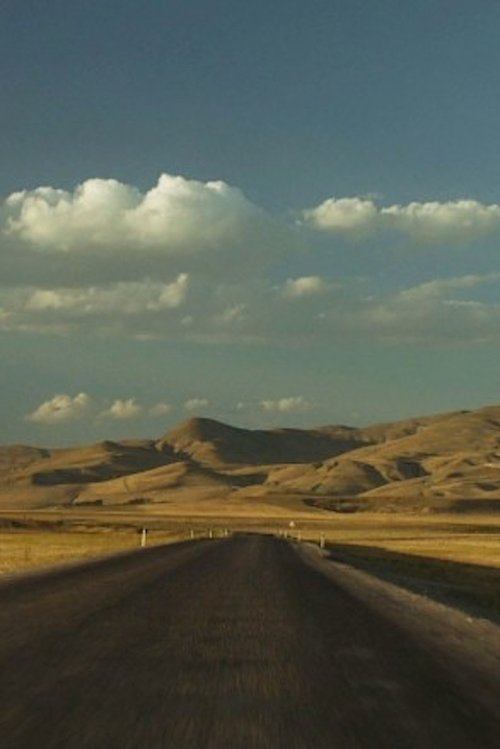
"Beyond the Ararat" is the story of a woman of Turkish origin who embarks on a journey to better understand what makes up her identity. A road movie which brings her from her childhood neighborhood in Brussels to Turkey and Armenia. A quest where each woman she encounters could be the reflection of herself. Entering the land of her ancestors, Anatolia, she questions her cultural heritage. Stopping in her grandmother's village, she discovers the "Agit"; an antique oral tradition where women sing for their dead. The songs open a potential space for mourning, where Turkish, Kurdish but also Armenian women missing from that land, can sing "together". The confrontation with the "missing" from her memory, brings her farther eastward in Anatolia to the foot of the Ararat Mountain, and beyond.
Beyond the Ararat
No description available.
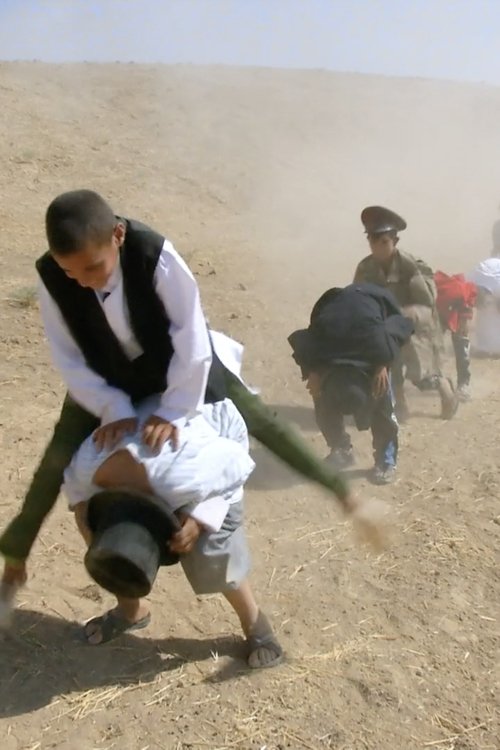
Children’s Game #20: Leapfrog
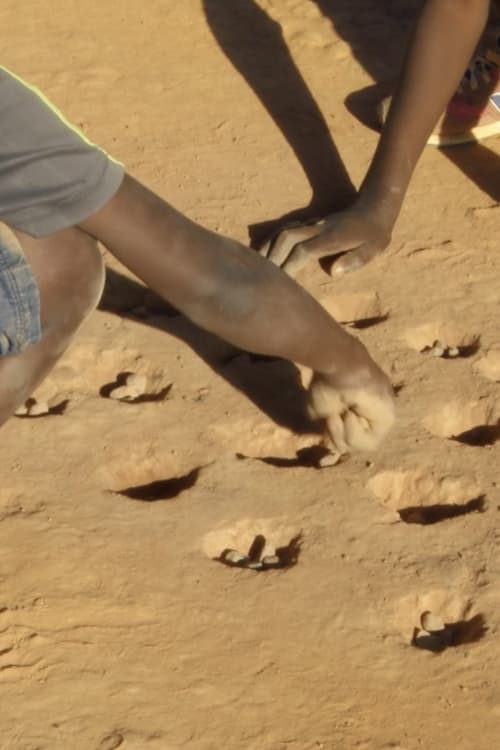
Kisolo is one of a thousand variants of the global Ur-game, Mancala, a “sowing” game sometimes still played with seeds even when using a board. Its timeless agrarian gestuary follows the combinatorial rules of what is also a “count and capture” game. After ruining several carving knives on digging holes in the hard orange earth, two players squat either side of four rows of six (the third-century pits under a stele in Ethiopia have three rows). First, three stones to each hole, then the players take turns, gravely reciting numbers. The focus is on hands hanging loose and expectant or smoothly reaching, scooping, and distributing – never a moment’s hover – until one player has, somehow, captured all the stones.
Children’s Game #26: Kisolo
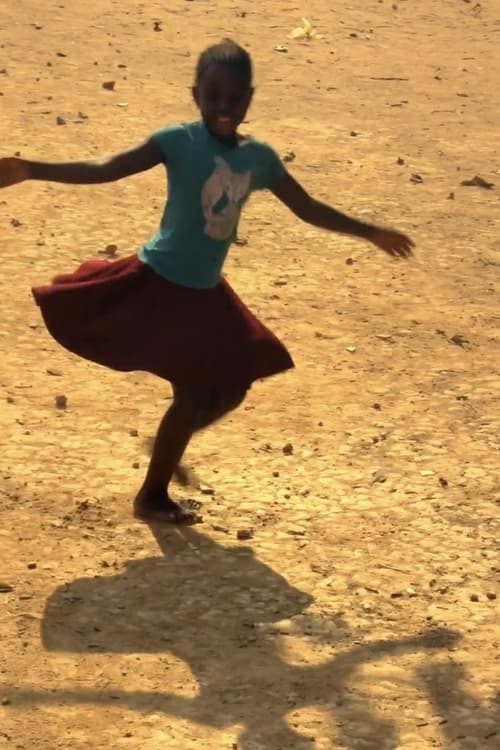
Many of us played this as kids, spinning on the spot until collapsing. In a group there’s a competitive element, each tries to be the last one still upright; but it’s only, always, about inner sensation. A crazy, soaring dizziness, a drugless altered state, glimpsed in the unseeing inwardness of some eyes that remain half-open. Arms outstretch like wings, amplifying and balancing the whirl of abandon. To the soft beat of unconsciously synchronised steps, the camera moves down to capture long shadows, like images of the disembodiment being felt: ghostly rotations among the sand stones bare feet don’t feel.
Children’s Game #36: Kujunkuluka
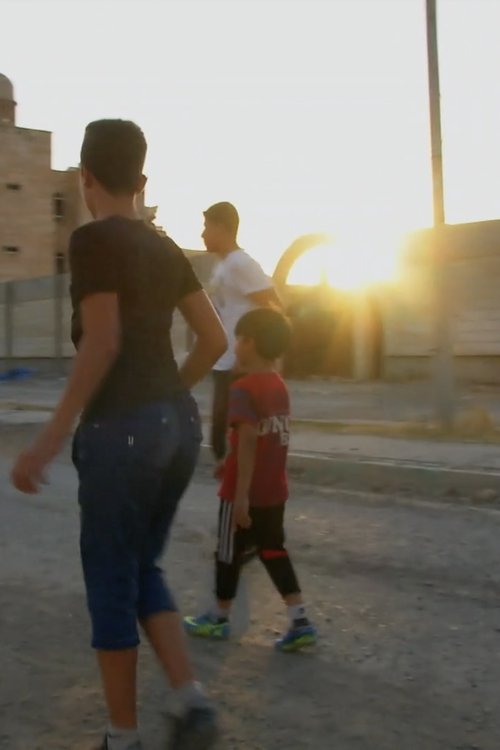
In August 2017, during the final phase of the Fatah (Conquest) Operation, the Iraqi Army pushed Islamic State combatants back from the east bank of the Tigris River in Mosul. With the support of Baghdad’s Ruya Foundation, Francis Alÿs had been working with the inhabitants of the border region between Iraq and Syria, embedded with the armed forces fighting the Islamist militias. On the west bank of the Tigris, which had just been liberated from Daesh control, Alÿs documented a peculiar street game that he had heard of on a previous trip: a soccer game played without a ball, but with great skill, imagination and resistance by a group of young people, in defiance of the barbarous impositions of the Islamic State, an expression of passion and creativity that these young people were more than willing to reenact in front of the camera.
Children’s Game #19: Haram Football
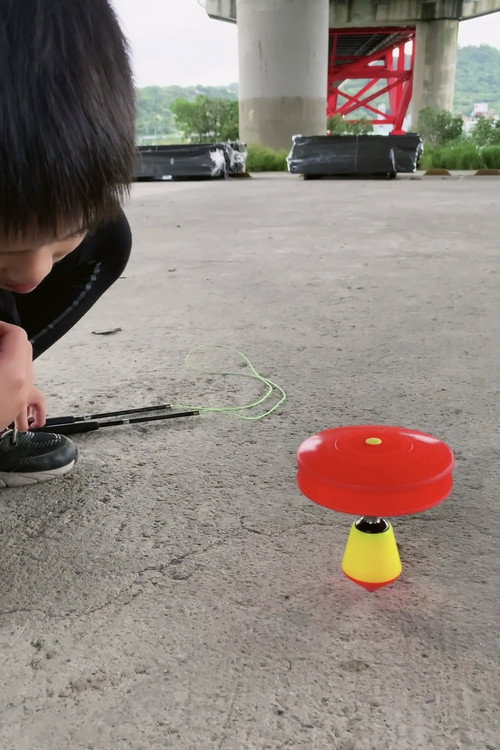
Che Ling means “pull bell sound”. This ancient Chinese juggling is a form of yoyo, once popular in Europe as “diabolo”. Two youngsters take turns exhibiting their skills, with the joyous involvement of their whole body. Almost unnoticed, the dominant hand controls the acceleration – counterclockwise – and directs the trick; the other maintains a responsive balance; it’s as if the magic was drummed into existence.
Children’s Game #37: Che Ling
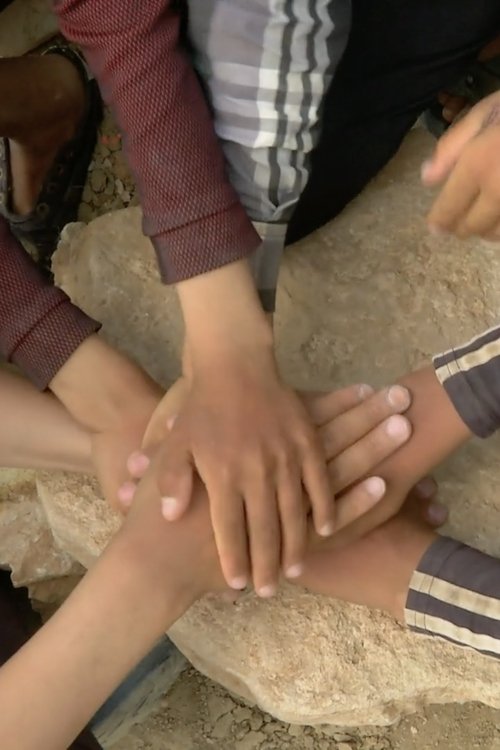
No description available.
Children’s Game #21: Hand Stack
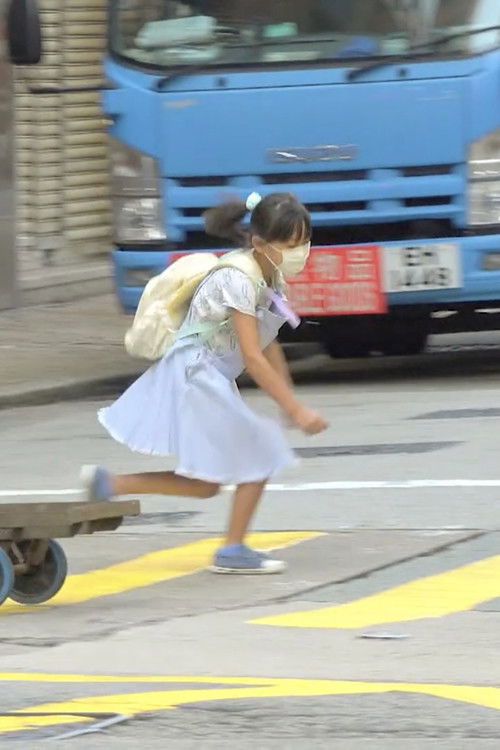
A sprite in a blue pinafore, plimsolls, and white facemask flits through Hong Kong, enclosed in a quicksilver bubble of magic. Streets become the dull, slow backdrop to her vividness. Oblivious to storefronts and curious stares, seeing only the yellow lines and the cracks in the pavement, she snakes and two-steps around seams and lines without loss of élan, chanting spells that shade into vague sounds. “Step on a line, break the devil’s spine, Step on a crack, break the devil’s back, Step in a ditch, your mother’s nose will itch, But if you step in between, everything will be keen!” By igniting her route with meaning, she briefly wrests public space from the commercial values this city lives by.
Children's Game #23: Step On A Crack
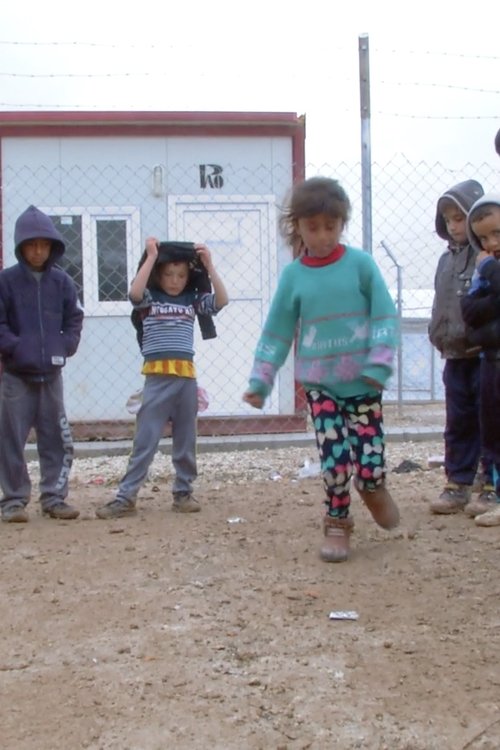
Outside a stark tent city, this version of the game involves a grid of squares, two across by six long, marked by lines gouged into the arid ground. The player tosses a stone into the grid and starts hopping up one side of it to where the stone lies, careful to land only once in each square or station. When the stone is reached it must be kicked or nudged back down the other side to the start line, still hopping on the same foot. The test is difficult, and few succeed. For as the closing subtitles tell us: ‘In ancient cultures hopscotch symbolizes the progress of the soul from Earth to Heaven. The player hops between Worlds to escape Hell and reach Heaven, from which he will return to Earth reborn and redeemed.’
Children’s Game #16: Hopscotch
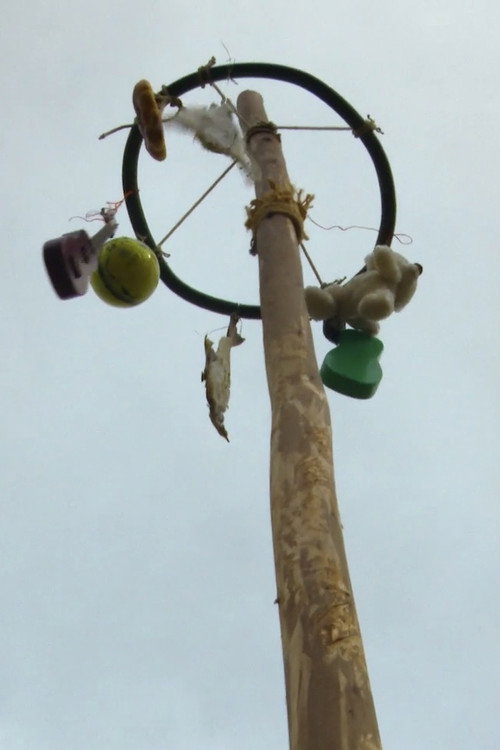
A guitar, a bacalao and a teddy bear dangle at the top of a wooden pole. The mast is slickened with grease. A group of teenagers gather. Strength and teamwork will be required, as well as some patience. After a couple of attempts at solitary climbing, the participants join forces and use their bodies to build a tower; a hand pushes down on a shoulder, a foot on a head, but all eyes are focused on the top and on snatching a prize.