Directing
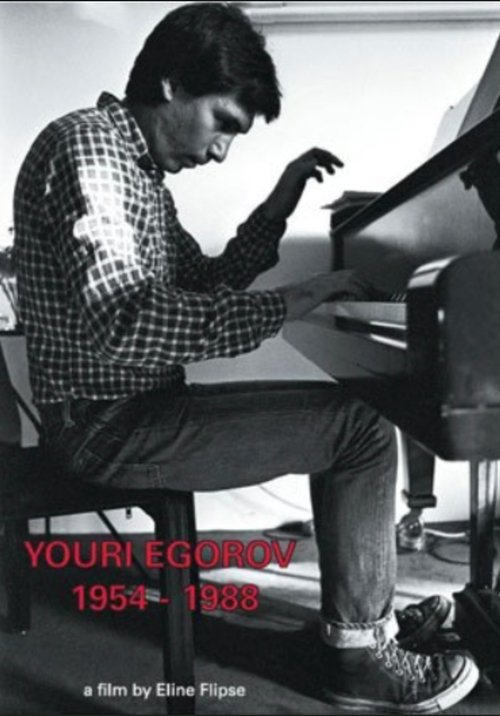
'In 1980, the VPRO asked me to make a short film about the Russian pianist Youri Egorov. It was allowed to last ten minutes and was broadcast in the then Extra section. We were 25, both born in May 1954. It was my second short film, and I was very nervous. Youri didn't like cameras and even less interviews. But he agreed, "because you were even shyer than he was," his friend Jan Brouwer told me later. In the years that followed, we would meet up sometimes, and on one such occasion, during the last concert of Vladimir Horowitz, I promised him that later, when we would both be 50, I would make 'a real' film about a long and interesting life. Youri smiled politely. When he died in 1988, I said goodbye to him at his home, and Jan Brouwer reminded me of my promise. So I made it after all, a film about a short and intense life.' - Eline Flipse
Andrei Shkolny is a journalist, in the remote countryside of Russia and Moscow is a long way away. People are poor and disgusted by politics and newspapers. Surviving everyday life is quite hard enough. Shkolny left his job at the regional paper “The Leninist”, because he couldn’t go on writing articles about nothing. A journalist through and through, he created his own newspaper – Nasha Gazeta (Our Paper) – which now has about 7000 readers every week. People can read their own news. There are no articles about Moscow, about golden harvests, about impressive yet unrealized and unrealizable projects, but stories about the village that has had no water for three months, about the farmer who found his dog by barking himself, about the doctor who travels many kilometers by bicycle every day despite temperatures of –36. The authorities are not amused. Shkolny is convinced he is doing nothing wrong. Who will win in the end?
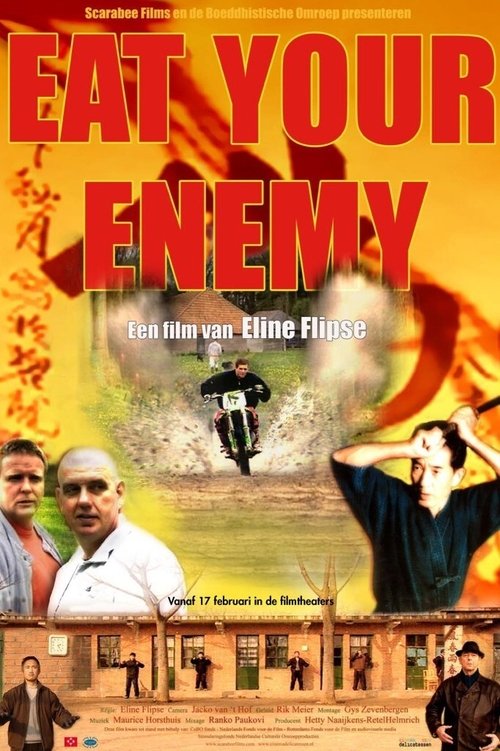
Eat Your Enemy is a documentary about martial arts and aggression, about spirituality, winning and losing, about suffering and vanity. And about East and West, muscle and mind power. About masters and students. A film full of paradoxes. Violence and its prevention are important themes in our society, and we are each involved in one way or the other. Aggression is bad, is the prevailing opinion. We, in the West, have begun to consider ourselves too civilized to fight. We fight with words and on the off chance that something does go wrong, a trauma team is at hand. Nevertheless, people continue to have a need to fight; take the violence during soccer matches. But in fact, we don't know how to handle aggression. In this film, several approaches to the martial arts in the West and the East are highlighted. The essence of the film is philosophical, but disguised as fight. Not as much a fight against an opponent but rather against oneself.