FEEL IT.STREAM
Gaston Miron

Gaston Miron

Acting

Biography

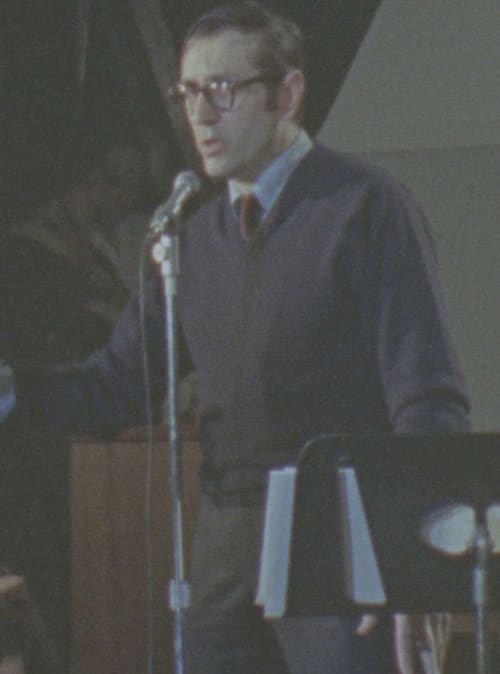
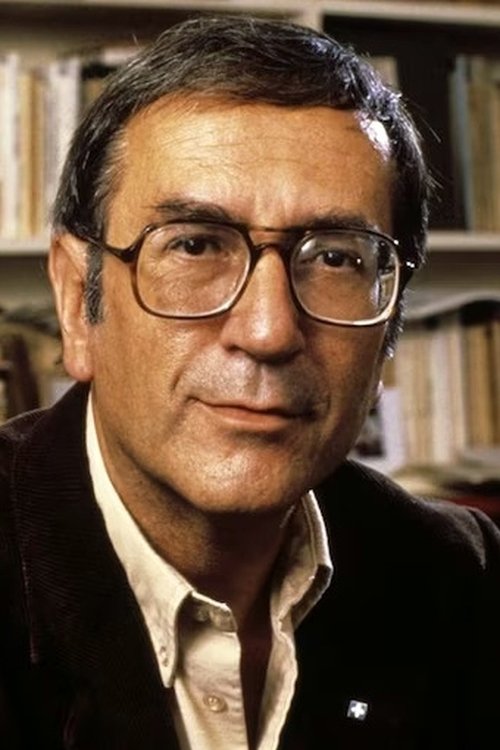
Gaston Miron OQ (8 January 1928 – 14 December 1996) was an important poet, writer, and editor of Quebec's Quiet Revolution. His classic L'homme rapaillé (partly translated as The March to Love: Selected Poems of Gaston Miron, whose title echoes his celebrated poem La marche à l'amour) has sold over 100,000 copies and is one of the most widely read texts of the Quebecois literary canon. Committed to his people's separation from Canada and to the establishment of an independent French-speaking nation in North America, Gaston Miron remains the most important literary figure of Quebec's nationalist movement. Gaston Miron was born in Sainte-Agathe-des-Monts, in the Laurentian Mountains region, 100 kilometers north of Montreal. His father, Charles-August Miron, was a successful carpenter-entrepreneur, and his death in 1940 was the decisive event of his son's childhood. The next year, finding herself in a precarious financial situation, Gaston's mother sent her son to study as a scholarship student at a Brothers of the Sacred Heart boarding school near Granby in Montérégie. At Sacred Heart, young Miron's plan was to pursue a career in education as a teaching brother. Upon graduation, however, after working for a year in a school near Montreal, he renounced his vows and planned-for career as a schoolteacher. His long, painful march towards his vocation as a man of letters had begun. Nineteen-year old Miron moved to Montreal in 1947. Conservative Maurice Duplessis reigned as Quebec premier, and the Catholic Church dominated the society's popular and literary culture. Miron worked for a time as an organizer and leader of the Catholic youth organization, l'Order du bon temps. In the evening, he took courses at the Faculty of Social Sciences of the University of Montreal, but never earned a degree. In 1953, with Olivier Marchand, Miron published his first collection of poems, Deux Sangs ("Two Bloods") at Éditions de l'Hexagone, an artisanal publishing company founded by the authors and four of their friends. Hexagone was the first publisher in French Canada dedicated to poetry: Miron would become the central force behind its contribution to Quebecois culture over the next thirty years. Hexagone's editorial line was to establish a "national literature" and put an end to the "poet's alienation" in the society of the time. Miron quickly signed young and innovative poets like Jean-Guy Pilon and Fernand Ouellette, thus prolonging the efforts of the modernists of the immediately preceding generation like Alain Grandbois, Paul-Marie Lapointe and Roland Giguère, who had released their first books before the Hexagone's founding and would later join its roster of authors. ... Source: Article "Gaston Miron" from Wikipedia in English, licensed under CC-BY-SA 3.0.
Known For

Apostrophes
8.5

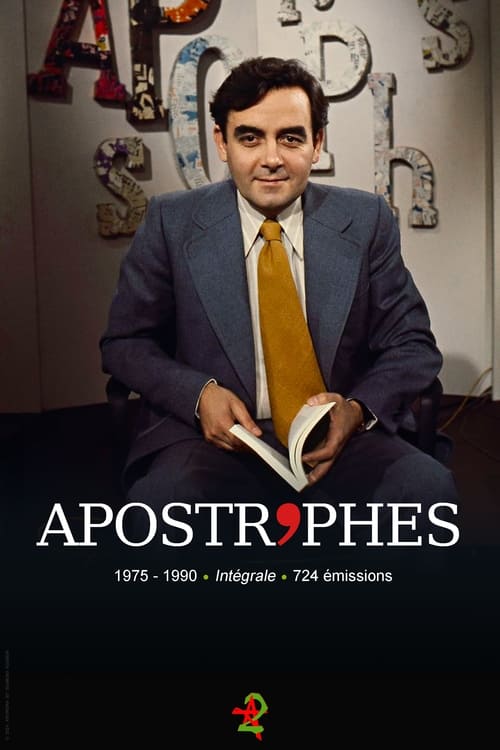
Apostrophes was a live, weekly, literary, prime-time, talk show on French television created and hosted by Bernard Pivot. It ran for fifteen years (724 episodes) from January 10, 1975, to June 22, 1990, and was one of the most watched shows on French television (around 6 million regular viewers). It was broadcast on Friday nights on the channel France 2 (which was called "Antenne 2" from 1975 to 1992). The hourlong show was devoted to books, authors and literature. The format varied between one-on-one interviews with a single author and open discussions between four or five authors.

Apostrophes

1975
Les Rose
8.2

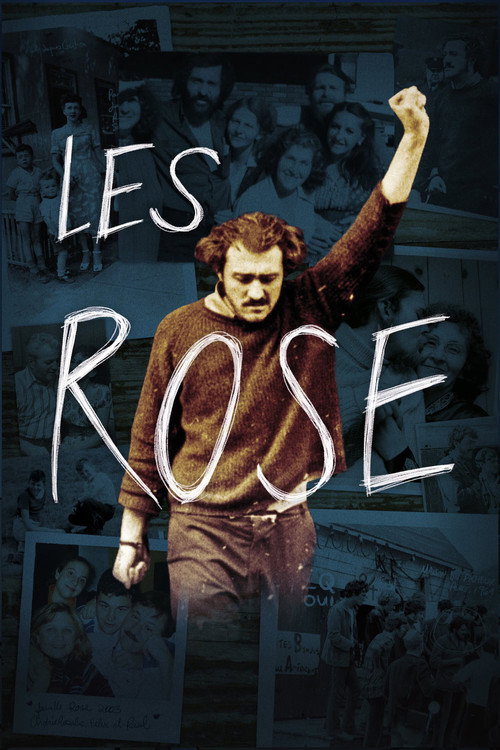
In October 1970, members of the Front de Libération du Québec (FLQ) kidnapped and murdered Minister Pierre Laporte, part of an unprecedented crisis in Quebec. Fifty years later, Félix Rose tries to understand what could have led his father and uncle to commit such crimes. Thanks to his uncle Jacques, who agrees for the first time to speak on the subject, and to the traces left by his father Paul, he revives the heritage of a Quebec working class family. The fruit of ten years of research, Les Rose allows us to revisit a time and people that we knew through clichés, and gives a glimpse of the experiences of a rebellious youth and the crimes that followed.

Les Rose

2020
L'Infonie Inachevée
7.0

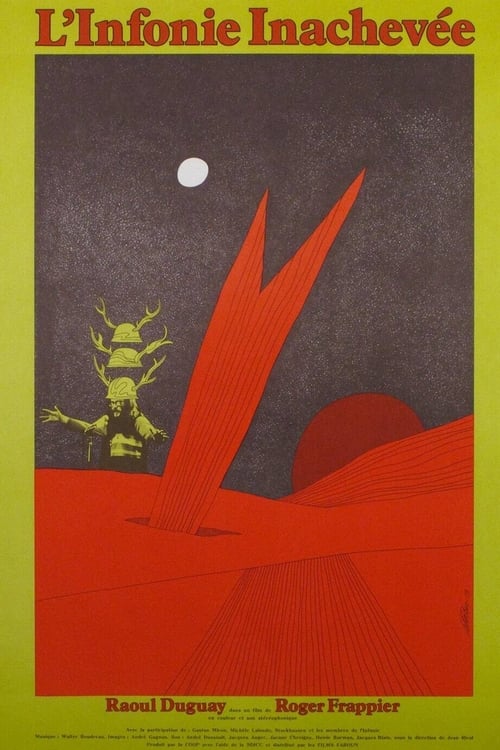
No description available.

L'Infonie Inachevée

1974
Miron: Un homme revenu d'en dehors du monde
N/A

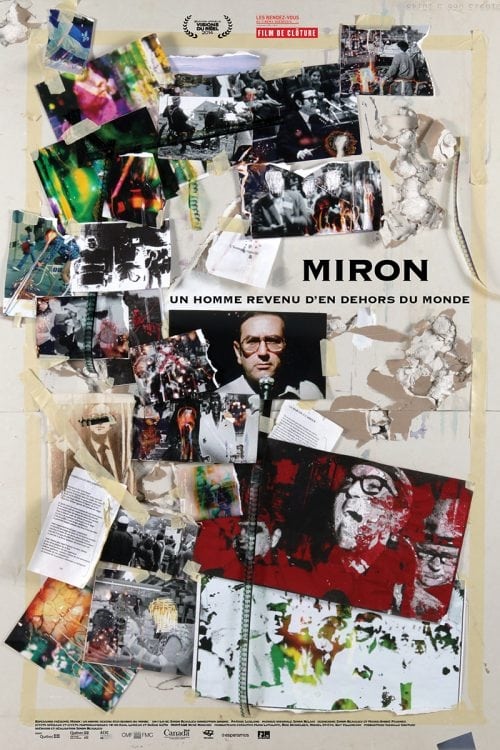
Writer and poet Gaston Miron comes back to life through archival documents from a variety of sources. His prose features landscapes of human beings and snow, dances with no future, and endless mines. His impassioned speeches on Quebec culture and identity are superimposed on images of demonstrations and political meetings about the future of Quebec. Between his recollections and fragments of memory, a man stands, passionate, convinced, reciting or dancing, to upset the established order and change things before it is too late.

Miron: Un homme revenu d'en dehors du monde

2014
15 Nov
7.5

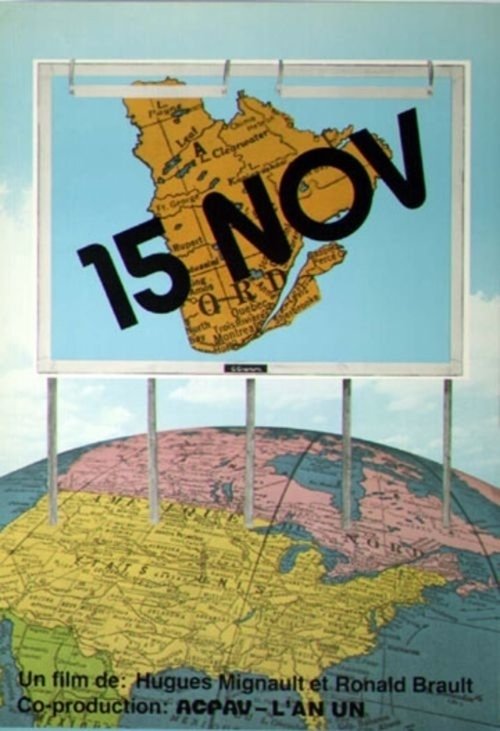
A look at November 15, 1976, the date the Parti Québécois seized power in the provincial elections, a victory that gave rise to an unprecedented outburst of joy at the Center Paul-Sauvé, a place where PQ sympathizers gathered.

15 Nov

1977
Cinéma, cinéma
7.0

An anthology of sequences from the best films that the National Film Board of Canada produced since its beginnings. Divided by themes and presented by a trio of actors-signers (including Carle's wife Chloé Sainte-Marie) who sings the same song in between the movie excerpts. This movie celebrated the anniversary of the National Film Board in 1985.

Cinéma, cinéma

1985
No image
N/A

No description available.

Chronique de la nuit de la poésie 1980

2017
Chronique de la nuit de la poésie 1970
N/A

No description available.

Chronique de la nuit de la poésie 1970

2015