Camera
No description available.
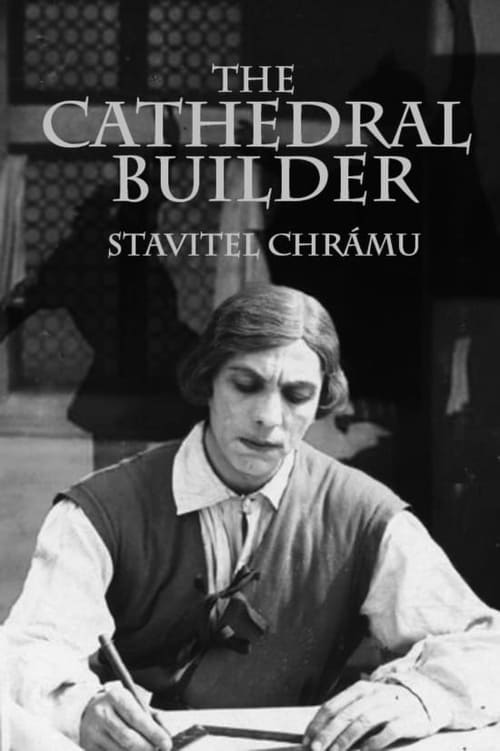
The story of the legendary architect Petr Parléř, who is charged by the king Charles IV with the task of building a Gothic cathedral in Prague.
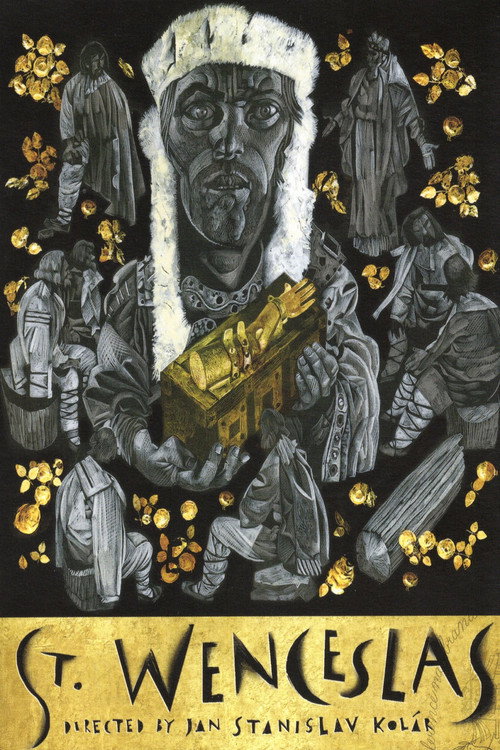
Czechoslovak historical film about Saint Wenceslas. It was the most expensive Czech film to date, with the largest set constructed in Europe to accommodate an all-star cast of over a hundred, together with 1,000 extras for the lavish battle scenes.
An experimental film from Jirí Lehovec, mixing the sound process with animated rhythms.
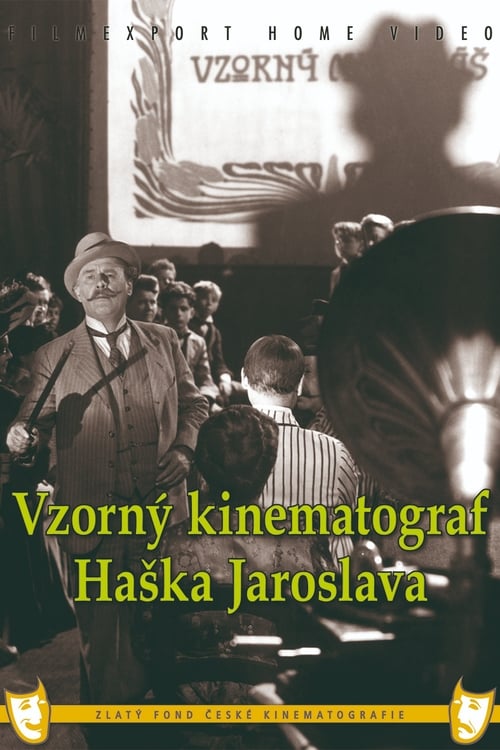
Jaroslav Hašek screens four film stories in the fairground shed around 1900. After period advertising slides and a "newspaper", we see "the first part of a sensational, exemplary, parfuss, salon program - a film from the life of school-age children, shot under very difficult circumstances". The plot of this film takes place partly in a school classroom and partly in a gymnasium toilet, where the primate Chocholka took refuge from a Latin composition. "Exemplary Family Happiness" is the second film that takes the viewer into the family of the municipal official Honzátek, in which many stormy scenes occurred when the hamster, provided by Honzátek Jr., moved into the sofa - a wedding gift from Sister Ema. Equally surprising are two other stories, one of which tells about the "father of the poor", the owner of a company with unrecoverable cash flow and a famous patron, and the other about the fateful consequences of a joint trip between the old bachelor Mr. Hanzlíček and his neighbors.
A flight under the Prague’s Railway Bridge in July 1919 and its tragic consequences: the death of the director of YMCA in Prague and a river custodian. The film also captures two notable figures of early Czech film history – cinematographer and director Jindřich Brichta and co-owner of a production company, cinematographer Karel Degl.