
Michelle Williams Gamaker
Directing
Biography
Michelle Williams Gamaker is a moving image and performance artist. Her work explores the fiction-making machine of 20C British and Hollywood studio films by restaging sequences to reveal cinematic construction, and recasting characters to propose alternative endings that counter their often doom-laden plight. Williams Gamaker’s key focus is the development of ‘fictional activism’: the restoration of marginalised brown characters as central figures, who return in her works as vocal brown protagonists challenging the fictional injustices to which they have been historically consigned. Scriptwriting, workshopping with actors, acquiring film paraphernalia and producing props for the intricate staging of her film sets are all vital elements in the re-enactment of the artificial landscapes that shaped Williams Gamaker’s love of cinema. She recently completed Dissolution, a trilogy of films comprising House of Women (2017),The Fruit is There to be Eaten (2018), and The Eternal Return (2019) in which characters from Powell and Pressburger’s 1947 Black Narcissus unravel as they become aware of their screen and staged realities. Fictional activists are mutable subjects that can be played either by Williams Gamaker herself – such as her alter ego Violet Culbo – or by long-term collaborators who take on multiple personas including that of the Indian-born US film star Sabu – or characters such as Kanchi from Black Narcissus(1947), and O-Lan from The Good Earth(1937). Collaboration is also a crucial element of Williams Gamaker’s work; since 2009 she has worked with American artist Julia Kouneski, revisiting the work of Brazilian artist Lygia Clark’s psychotherapeutic research as inspiration for interventions with the body, architecture and landscape.
Known For
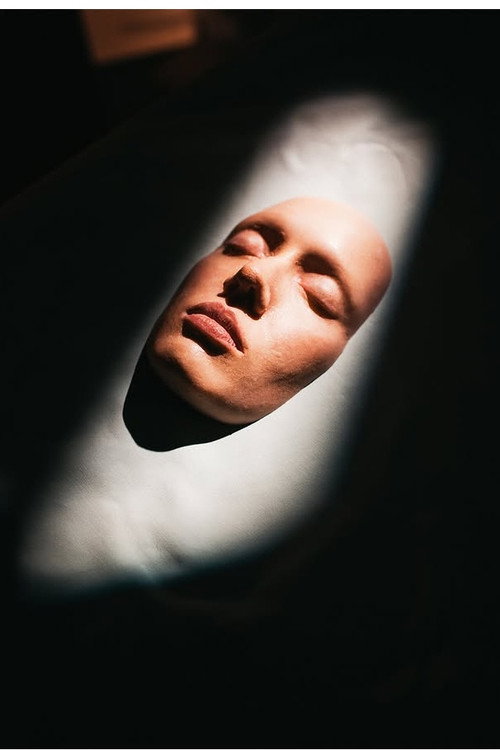
Williams Gamaker revisits the life of Merle Oberon to expose the racial politics of early cinema and examines how Oberon’s mixed heritage was erased under the pressures of Hollywood’s racial hierarchies.
Strange Evidence

What if Sabu and Anna May Wong turned the tables on Michael Powell and his crew, during the making of The Thief of Baghdad?
Thieves

Between age three and four, Vera Loumpet-Galitzine traverses many landscapes, exploring where she comes from, to come into her own. We follow her to her school and neighbourhood activities in France, Cameroon and Russia. As Vera dances, sings and runs around these visually engaging landscapes, seemingly easily integrated into her rich fantasy world, we attempt to imagine what they look like to her. What does she see, think, or imagine?
Becoming Vera

A group of charismatic young Asian women audition for the recasting of Kanchi from Powell and Pressburger’s 1947 Black Narcissus.
House of Women

A study of Merle Oberon, in a screen test for an unrealised project which became The Red Shoes (1948).
Oberon
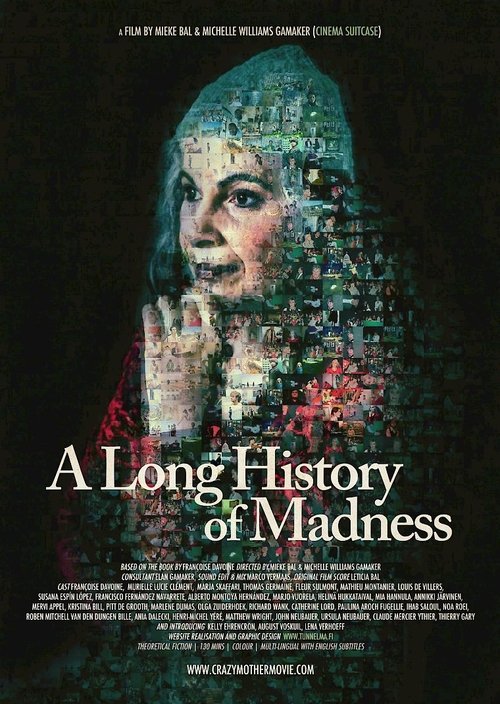
If your mentally ill patient dies, are you to blame? For Dr Françoise Davoine, Parisian psychoanalyst, this question becomes disturbingly real as one of her patients, Ariste, dies. Davoine is abducted and put on trial by mediaeval fools and through the course of one hellish day - across several centuries and countries - must argue her case for exoneration. As the journey forces Dr Davoine to question her own life, via a mix of fiction, documentary and theory, A Long History of Madness takes the viewer on a one-of-a-kind journey into the minds of the ‘mad’ and those designated to cure them.
A Long History of Madness

With the non-existing word “refugee-dom” Lena Verhoeff and I wanted to express the state, emotional and physical, of the life of the refugee on the road. On everyday television, we see images of people walking with luggage and small children and exhausted faces. But our theme was a bit different. The phrase “lonely but not alone” came from an autobiography of former Dutch queen Wilhelmina, published in 1959, to describe her life as always surrounded by a dense crowd of people at court but still, always feeling lonely. The two qualifiers, lonely and alone, which seem to be synonymous, are here, through the conjunction “but”, rather presented as an opposition; an opposition qualifying a non-existing noun.
Refugeedom: Lonely But Not Alone
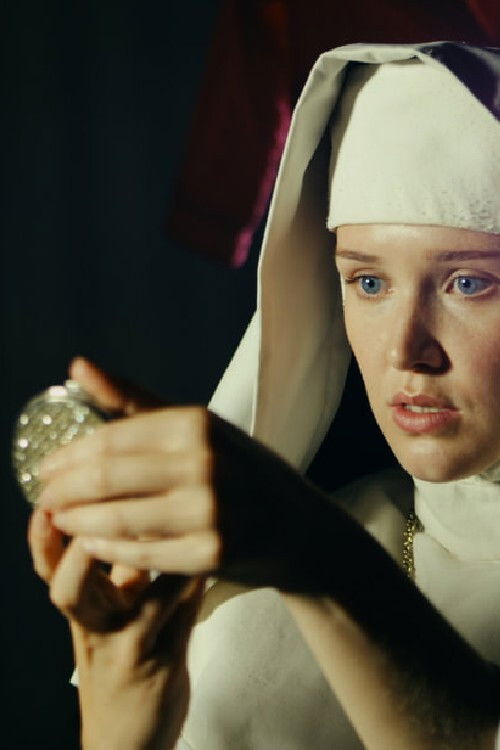
The Fruit is There To Be Eaten is based on the 1947 film Black Narcissus, by British directors Michael Powell and Emeric Pressburger., set in India. The work echoes the style of the source material in that it is set in India, but replaces painted backdrops with back projection, stock footage and revealed sets to reimagine the relationship between lower-caste dancing girl Kanchi and missionary nun Sister Clodagh. In a schoolroom and in the gardens of a Himalayan convent, Kanchi and Clodagh recognise they are trapped in a film set in 2016. With the colonies a distant memory, Clodagh has lost her role as sister superior. This allows Kanchi to introduce her gods in order to challenge an imposed belief system, and in so doing to break down the civility of the colonies into something more carnal.
The Fruit is There to be Eaten

Three awesome portraits of brown queers who take no shit.
Brown Queers
Ada Blackjack, an Iñupiat woman, was the only surviving member of an expedition to Wrangel Island in the Arctic in 1921. Ada was employed as a seamstress and cook for four explorers, who hoped to claim the island for the British Empire. However, the four men fell ill and eventually died or disappeared while attempting to seek help, leaving Ada to survive alone on the island for three long months. The words you hear in the film are unedited extracts from Ada’s diary, expressing her concern for her young son Bennett, who she reluctantly left behind in a care home.
The Silver Wave
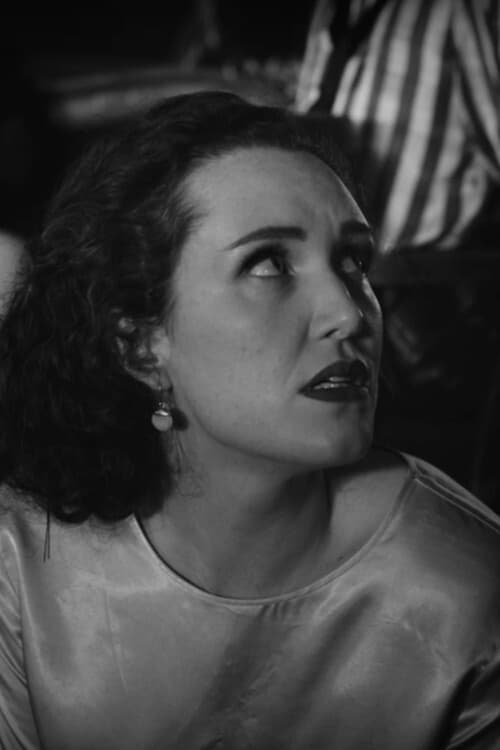
The Eternal Return explores the phenomenon of how a performer of colour such as international actor Sabu might be treated and thought of in a way analogous to the animals with whom he appears. In Sabu’s case this was the conflation of his background as mahout son’s with his career as actor that imposed a seemingly inescapable relationship with elephants: the animals recur throughout his filmography. It also highlights how, in spite of his extraordinary fame Sabu was always the sidekick and never the love interest. With the use of a combination of live-action dramatised recreation and British Pathé stock footage re-edited and altered with VFX, The Eternal Return revisits the now-struggling Sabu in 1951 as he supports his family by performing – once more with a troupe of elephants – in Tom Arnold’s Christmas Circus in Haringey Arena.
The Eternal Return
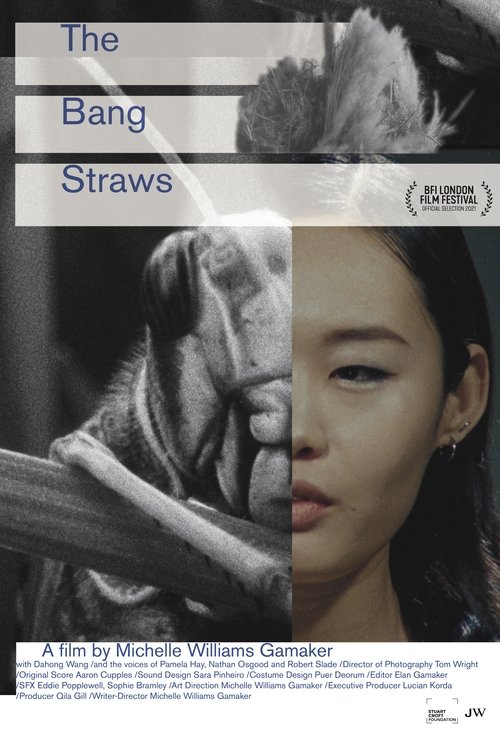
An aesthetically invigorating reworking of the casting process of Sidney Franklin’s The Good Earth (1937), a film notorious for a white actor’s racist portrayal of a Chinese character.