Stéphane Monclaire
Acting
Known For

Cinématon is a 156-hour long experimental film by French director Gérard Courant. It was the longest film ever released until 2011. Composed over 36 years from 1978 until 2006, it consists of a series of over 2,821 silent vignettes (cinématons), each 3 minutes and 25 seconds long, of various celebrities, artists, journalists and friends of the director, each doing whatever they want for the allotted time. Subjects of the film include directors Barbet Schroeder, Nagisa Oshima, Volker Schlöndorff, Ken Loach, Benjamin Cuq, Youssef Chahine, Wim Wenders, Joseph Losey, Jean-Luc Godard, Samuel Fuller and Terry Gilliam, chess grandmaster Joël Lautier, and actors Roberto Benigni, Stéphane Audran, Julie Delpy and Lesley Chatterley. Gilliam is featured eating a 100-franc note, while Fuller smokes a cigar. Courant's favourite subject was a 7-month-old baby. The film was screened in its then-entirety in Avignon in November 2009 and was screened in Redondo Beach, CA on April 9, 2010.
Cinématon

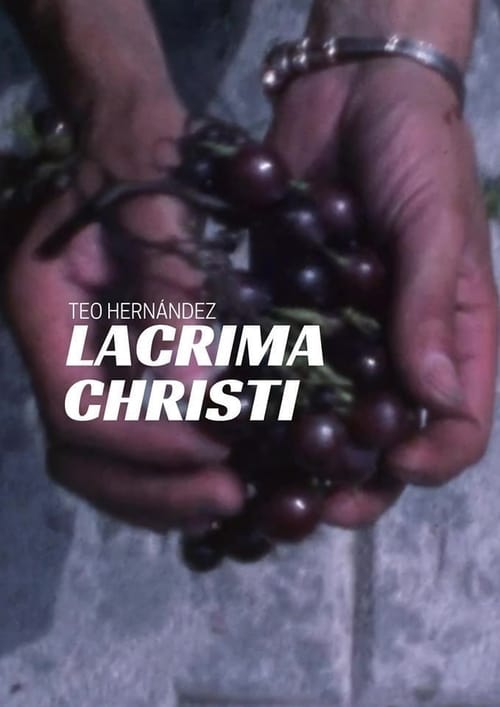
Lacrima Christi is the longest of the over 150 films made by the Mexican filmmaker resident in Paris, Teo Hernández. Part three of a tetralogy devoted to Christ’s Passion, Lacrima Christi is an exploration of the transfer between desire and myth that takes as its starting point a series of objects found in the flea market of Belleville.
Lacrima Christi

No description available.
Cocktail Morlock
Reel 7 of Gérard Courant's on-going Cinematon series.
Cinématon VII

Teo Hernandez films waste and scrap found on the pavements of the streets of Paris. “Sidewalks are great subjects: garbage, objects and materials, stains, signs, are a movie subject.”
Mesures de miel et de lait sauvage

Chutes de Lacrima Christi is an 95‑minute experimental collage film assembled entirely from unused outtakes of Teo Hernández’s earlier work Lacrima Christi. Co‑created with Gaël Badaud between 1979 and 1980, it repurposes discarded Super 8 color footage into a series of non‑linear vignettes that fuse Christian myth with everyday imagery. Using the “chute” technique—physically gluing scraps of film into new sequences—the film explores the meeting of two cultures, Europe and America, and reveals dreamlike resonances in mundane moments. By reframing offcuts from the Passion tetralogy, Hernández invites viewers to discover hidden narratives and poetic meaning in material that was originally deemed surplus.
Chutes de Lacrima Christi

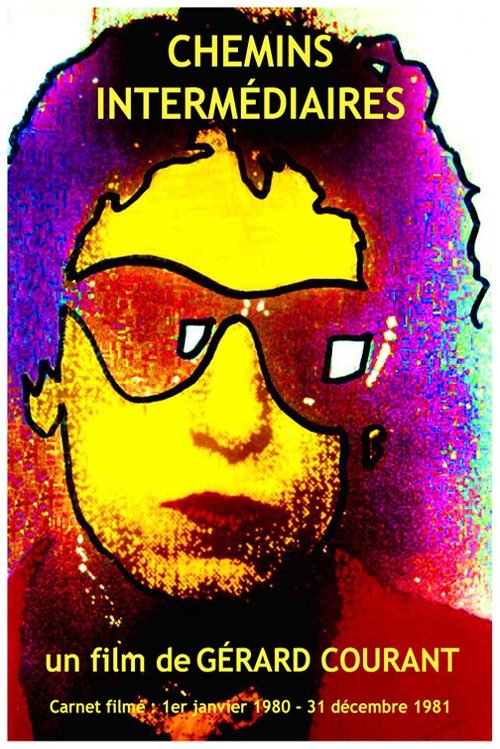
In this new opus of the Carnets filmés we find his pronounced taste for travel (West Berlin, Marseille, the Pyrenees, the Southern Alps) and his life devoted to filming (the feature films Coeur bleu, Vivre est une solution, Spoonful, La Neige tremblait sur les arbres). Also noteworthy in 1980 was the appearance of a ceremony that would be filmed every year: the re-enactment by the villagers of Burzet, in the Ardèche, of the Passion of Christ.