Anton Khamchishkin
Camera
Biography
Audiovisual artists and directors. They experiment with multimedia forms and performative practices. Their projects have been showcased at the Multimedia Art Museum, Stanislavsky Electrotheatre, the Archstoyanie Festival, GES-2, the Svody Art Production Centre, Street Art Museum, Radio House, and other venues. Their 2022 film Triptych won the main prize “Golden Taiga – Short Film” at the Spirit of Fire IFF and were selected for the National Competition at Message to Man.
Known For

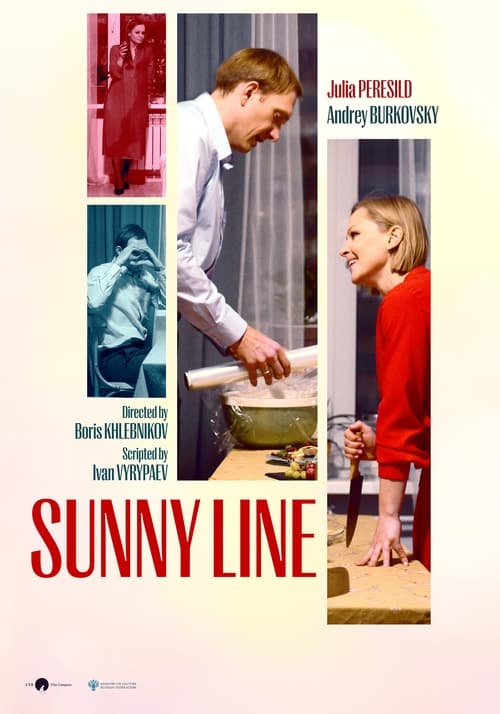
Christmas night. Married couple. All the guests have left and it’s time to dig into the marriage relationships – do husband and wife still love each other or not? If they have ever loved at all… Are they telling the truth or are they lying? Can they forgive and forget? Should they stay together or get divorced?
Sunny Line

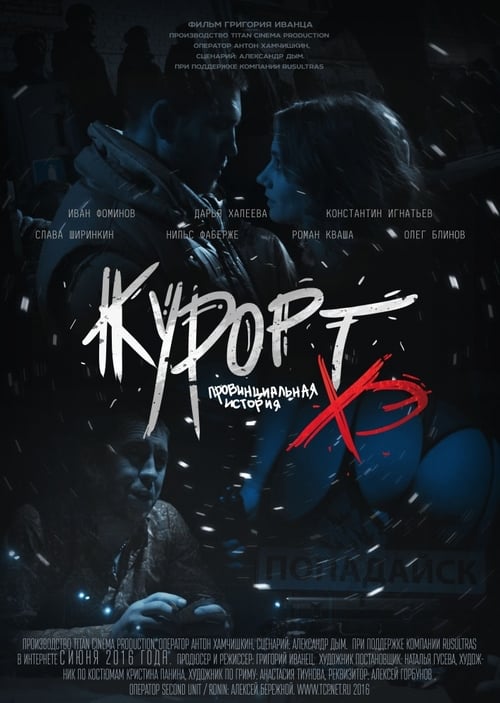
After a contract fight somewhere in the open spaces of Russia between St. Petersburg and Moscow, the top Moscow football hooligans return home to the capital with a victory. On the way, their minibus breaks down, which has to be brought into service in the nearest unknown town called Popadaysk. They are forced to stay in this city for the night. At first glance, the usual provincial town, but it was not there. Its criminal authorities, its laws of the street, corrupt cops, its own fashion and style, and its secrets.
Курорт. Провинциальная история Хэ

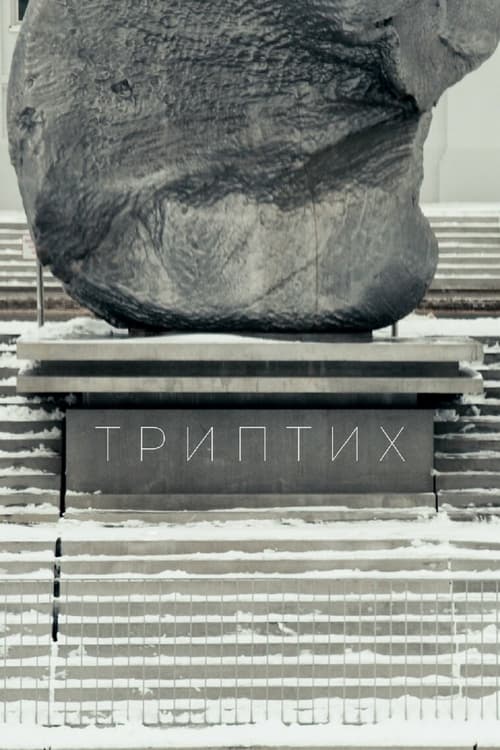
Big Clay #4, a 12-meter sculpture by Swiss artist Urs Fischer, was installed in Moscow in August 2021 and caused a mixed reaction. Gradually, the Russian context supplemented the work with two new parts – thus, from a single work, Big Clay turned into a triptych.
Triptych
Res communis omnium is a Roman law term that defined things that by their nature are of universal human value - such as land, air. The concept has retained its relevance in international law. When the copyright on a work expires, it goes into the public domain (the more relevant modern term is public domain). Based on an analysis of the creativity of over 500 artists, writers, composers, architects, researchers from all over the world, whose works have ceased to be legally protected by copyright since 2022 (50-60-70-80 years after the death of the authors), we are trying to musically and poetically form to re-read what we got into the public domain at this critical time. It turns out. a kind of time capsule, the works were created over half a century ago,
Public Domain

Ukrainian-born, Russian-bred, Afghan-raised, filmmaker once started to catalog all his fences, and then more and more new fences appeared.
Twin Fences

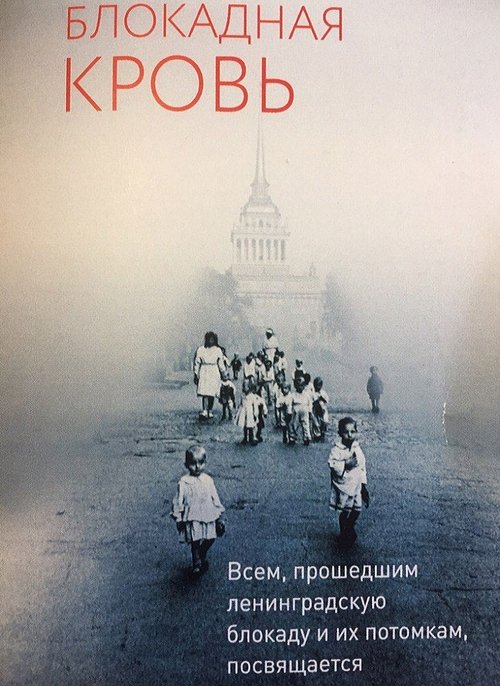
The film tells how in the iron blockade of the blockade worked "the blood factory", the Institute of blood transfusion that provided the Leningrad front and the city in this strategic resource: blood donation. The blood bond between the city and its defenders was a very important factor in breaking the blockade and finally crushing the enemy. Due to a prolonged lack of food and a very great psychic stress the blood of the inhabitants of Leningrad has undergone phenomenal biochemical transformations which have had consequences for the following generations. The hypothesis confirmed by the latest research by geneticists and biologists is that this 900-day "forced fast" suffered by people during the blockade gave a post-war generation with a specific mentality and a spirit of sacrifice of the inhabitants. from Saint Petersburg.
The Blood of the Blockade
A conversation with Vladimir Mayakovsky about the future - from this very future.
The Future Will Not Come Unless We Take Action
In the spring of 2022, security guards in Moscow are tense. Under the guise of a film competition on the architecture of the city, Yana Osman and Anton Khamchishkin are permitted, if nothing else, to film the battlements of the Kremlin wall. But how to speak of the attack when you have to say “special military operation”? How to create pictures of resistance when filming any protest is forbidden? By pondering swallows and mathematical catastrophe theory, for example.
Swallowtails
Through massive wooden crates inscribed with strange hieroglyphs, the filmmakers lead the viewer into ΚΟΙΝΟΣ ΚΟΣΜΟΣ: a fluid space where history, mythology, and play converge. Here, boundaries dissolve into permeable membranes, allowing fact and fiction, the inner and the outer, the past and the future, the living and the inanimate to exchange forms, meanings, and roles.