Acting
The story of the great strike of the workers building the Cervena Skala - Mergecany railway line
The film adaptation of the novel of the same name by Peter Jilemnický is a drama about the life of poor Kysuce miners, which takes place in the thirties during the economic crisis. During the peak wave of emigration, the dream of a better life drives thousands of people to America for work. Others, in order to support their families, leave for the surrounding towns. Produced by the Bratislava Art Film Studio, studios and laboratories Bratislava - Koliba.
In southern Moravia, in the native village of Velka Samota, a ministry official returns from Prague to lift the declining JZD he helped establish.
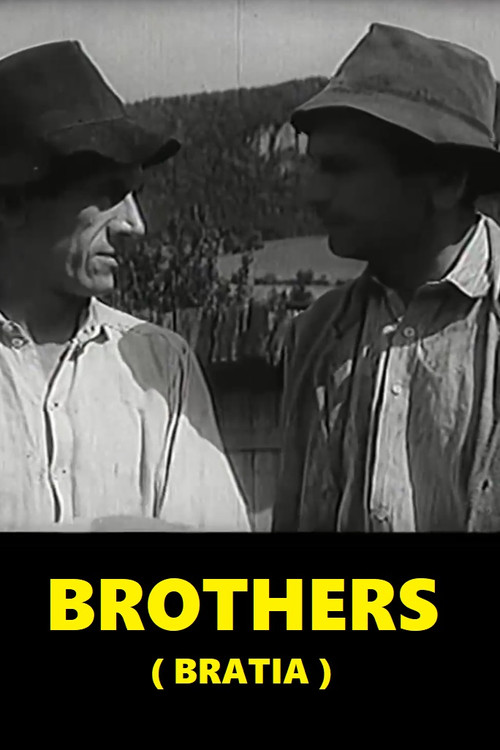
A bricklayer, Jozef Haviar, decides to live with his family on the small farm of his father through the difficult years of the economic crisis. But on his return to his father's house he gets into a conflict with his brother. The life-and-death conflict between the two brothers documents the difficult situation of Slovak country life in the 1930s, the time of economic depression.
The television film based on the novel of the same name by Ladislav Mňaček draws on the period of World War II and the Slovak National Uprising. The film's story is composed of two intertwining time lines. In the images of the present that frame the entire narrative, the young partisan Voloďa - a hero with autobiographical features - recovers from a serious injury. In feverish reminiscences and in conversations with his nurse Eliška, he recapitulates the eventful events of his time in the partisan group in the village of Ploština, which the partisans abandoned under the pressure of events and left to the mercy of the German commando. Voloďa is haunted by visions of the burning Ploština, remorse and responsibility for the tragedy. In feverish reminiscences, he relives the meetings of the partisan detachment with the German commando. Memories of the mysterious Jewish girl Marta, a partisan liaison with whom Pavol had a passionate love affair, also return to him.
No description available.
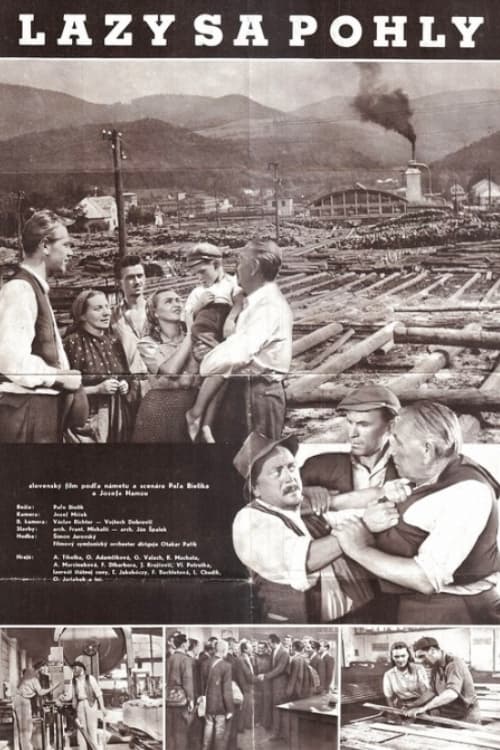
The life on the poor Slovak hills, the lazy hills, where agriculture is at a primitive stage and where the shelves give a small harvest. Meanwhile, socialist industrialization is reaching an amazing boom in the valleys. Therefore, it is necessary to solve the problem of small farmers on poor farms and the lack of labor in ever-growing industrial enterprises. The film, based on the fate of Matěj Rendek, who returns to Slovakia after 18 years from America, and on the fate of his family, who have toiled for years on poor fields and slaved for a rich farmer, shows how this problem must be solved: an agricultural cooperative is established on the lazy hills, which, with the help of machines, can handle agricultural work better and with a significantly smaller number of laborers, and most of the lazy villagers leave to work at a large sawmill.
Slovak movie is based on the novel by the prominent representative of Slovak prose František Hečka, who was in 1952 awarded the State Prize. The novel and the movie successfully capture the development of Slovak village after the liberation in 1945. The narrative is centred around the characters of the old Púplava, who after the liberation begins to organise a new village life, and his struggle for the construction of settlements Mrzáčky, burnt by the fascists. It is centred around the conflict, greatly reflecting the situation of the countryside at this time: the conflict between the rural poor and the rural rich. In the movie, a rich personal and emotional life of other heroes pulsate besides the main storyline. The movie ends with the final defeat of the reactionary forces by Communists in February 1948, taking over all power in the state of workers and peasants. - "The Wooden Village" is released in celebration of the 7th anniversary of the Communist February Victory.
A TV film based on a short story by Alfonz Bednár. A drama set during the Slovak National Uprising.
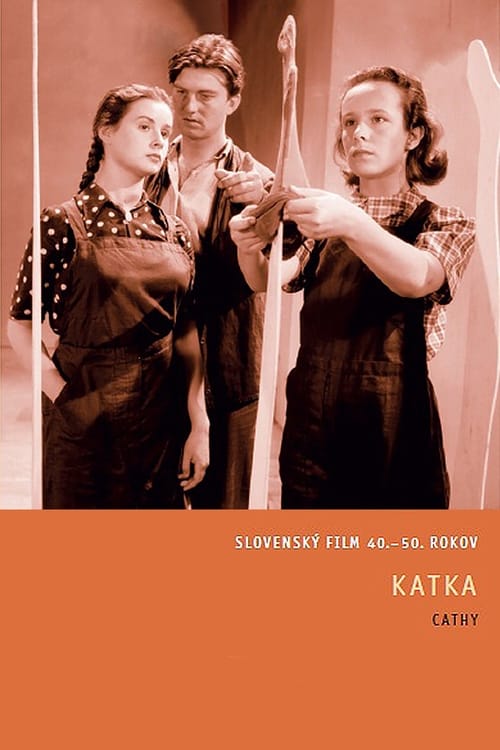
Strong-willed peasant girl Katka disobeys her father and heads to the city to work in a factory, where no one knows quite what to make of her.
A dramatic story of a young woman, Mária Kedrová, who gradually breaks free from her humiliating position in her family and society in the post-war years. Tired of the inhumane work and tyranny on behalf of her husband's kulak family, after endless humiliation, she leaves the Kedrová house with her son Martin to start living her own life.
Peter and Lena had a daughter, Zuzka, soon after their wedding. Lena graduated from drama school and wanted to act, but there were no vacancies in the theater in the city where they lived, and she was forced to join a traveling troupe. Lena was away from home for months. Peter and Zuzka missed her very much. One day, Peter met Eva and fell in love with her. When Lena learned about this, she returned to the city, never to be separated from her family again.
Autumn 1944, the Slovak National Uprising is suppressed and the fighters must withdraw to the mountains. Commander Repta’s unit takes along the thirteen-year old Zuzka, who lost her home and all her relatives in the rebellion. But the enemy brutally pursues them and Repta therefore must divide his unit. The withdrawal is covered by the group commanded by Peter, whose members almost all die in an exchange of fire with the German soldiers. The only one to survive is the severely wounded Peter. Zuzka, of whom everybody forgot in the zeal of the fight, hides him from the Germans. As soon as Peter is able to walk, he and Zuzka set off to meet their co-fighters.
The dramatization of the novel depicts a period when the patriarchal way of life in Russia was coming to an end and the aristocratic-landowner world, with its philosophy of life and hierarchy of values, was giving way to new forces. Oblomov is an organic part of the environment in which he lives. He is as closed off as Oblomovka and its inhabitants. He lives his life on the sofa and finds all the hustle and bustle of his contemporaries meaningless. The principle of his existence is peaceful lethargy, an effort to isolate himself from the flow of events and time. His opposite is his friend Stolz, whose philosophy of life presupposes constant movement and entrepreneurial spirit. He believes that man is capable of transforming the world with his energy and intellect. Oblomov's love for Olga, although reciprocated, is doomed to failure because they expect the impossible from each other – she expects decisiveness and action, he expects self-sacrificing love...