Emilija Škarnulytė
Directing
Biography
Working between the documentary and the imaginary, Škarnulytė makes films and immersive installations exploring deep time and invisible structures, from the cosmic and geologic to the ecological and political. Winner of the 2019 Future Generation Art Prize and the Ars Fennica Award 2023, Škarnulytė represented Lithuania at the XXII Triennale di Milano and was included in the Baltic Pavilion at the 2018 Venice Biennale of Architecture. She most recently presented works at MORI Art Museum, Kiasma, Gwangju Biennale, Helsinki Biennale, Vilnius Biennale, Henie Onstad Triennale. She has had solo exhibitions at Canal Projects, New York (2024), Ferme-Asile, Sion (2023); Kunsthaus Pasquart, Biel/Bienne (2021); Den Frie, Copenhagen (2021); National Gallery of Vilnius (2021); Künstlerhaus Bethanien, Berlin (2017); Contemporary Art Centre CAC of Vilnius (2015). In 2022, Škarnulytė participated in the group exhibition Penumbra organized by Fondazione In Between Art Film on the occasion of the 59th Venice Biennale. She has films in the collections of the Centre Pompidou, Kadist Foundation, HAM, IFA, and her works have been screened at the Tate Modern and Serpentine Gallery in London, Centre Pompidou in Paris, Museum of Modern Art in New York, and numerous film festivals including Rotterdam, Busan, Hotdocs and Oberhausen.
Known For

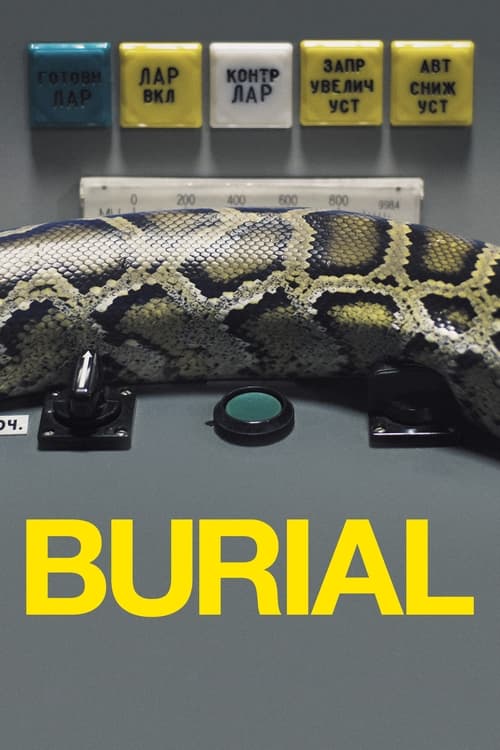
With striking images and meticulous sound work, Burial reminds us of the paradoxical relationship between scientific development and the destruction of nature. Questioning the effects of human activity on the planet we inhabit and which we have put at risk, the film focuses on the unsolved issues of nuclear plants and nuclear activity.
Burial

The aphotic zone is the deep and dark region encompassing most oceanic waters, into which light hardly penetrates. The Lithuanian artist and filmmaker Emilija Škarnulytė has made a hypnotic film, somewhere between documentary and imaginary account, in which the oddness of the underwater world is confronted with the sonic landscape of a distant civilisation.
Aphotic Zone
Short film directed by Emilija Škarnulytė
Xirasia

With RIPARIA, Emilija Škarnulytė proposes a visual crossing of the Rhône via Lake Geneva. Using scientific techniques of photogrammetry and underwater sensors, she follows the course of the water, beyond the waves, scraping the benthic sea floor, the domain of the riparian and the lacustrine, to read the effects of human intervention. Considering time in its thickness, she explores hydrology and its mythologies, questions in a poetic way what happens in our landscapes and suggests what might happen.
Riparia

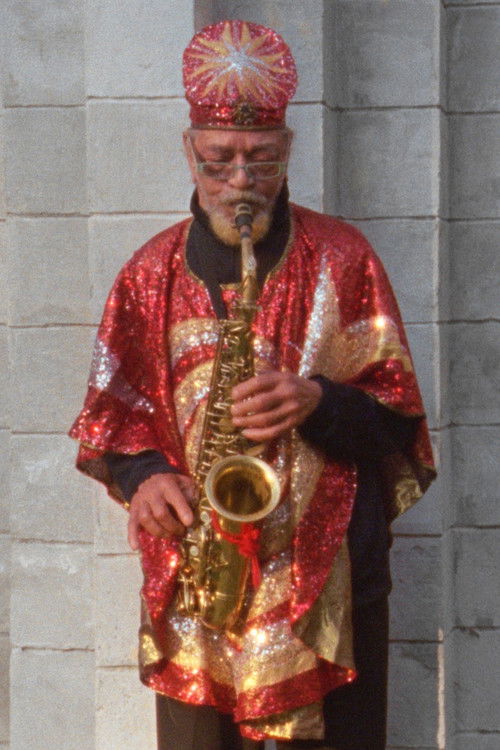
A visual odyssey of Sun Ra concepts through their followers - Marshall Allen and Abshalom Ben Shlomo. The film follows Sun Ra Arkestra band members and their journey across the desert, a promised land where Sun Ra once created his identity. Navigating through an astro-galactic world of sound, they find a reason to fight racism, injustice and vanity of the modern world - all through inner wisdom of music and sound. It's a story of infinite peace in a troubled world. An utopian planet where Sun Ra and his prophets celebrate the divine wealth of their spirits.
Sounds of the Desert

'See the soft pink, white and blue pools of the Dead Sea in Your Body Is A Mine (2019), its shimmering expanses of salt flats and pink cliffs, its pale shores littered with salt factories, commercial spas for tourists, political trauma and apartheid, a geo-political space of weightlessness and weighted politics, of extraction and violence and wellness. The light in the film is overpowering—it trembles. No bodies but industrial bodies in sight. “The quality of light by which we scrutinize our lives has direct bearing upon the product which we live,” Audre Lorde writes, famously, so lit. But what if there is no light, in some interior, and what product?' (Quinn Latimer)
Your Body is a Mine

The title of the work derives from the term ‘aphotic zone’, also known as the ‘dark ocean’ – the depths of the ocean that are inaccessible to sunlight. In the summer of 2022, Škarnulytė premiered a video work by the same title for an exhibition in Venice. The one-off performance Aphotia at LNOBT personifies the term, combining aspects of nature, deity, human and animal, and providing a metaphorical seedbed for promiscuous forms of being to flourish. The theme at the heart of the performance – invisible worlds (depths of water and of (sub)consciousness) – continues the artist’s enduring field of interest while closely overlapping with the Biennial’s central topic of the city, seen from the perspective of a speculative future, in the face of climate change and rising water levels.
Aphotia
Artist’s statement: I observe as if I were an archaeologist from the future who would return to earth and see the scars left by men. Nuclear power plants, ocean basins, really deep, colossal structures left after the constant progress of human greed. - Emilija Škarnulyte
The Footstones in Night Writing

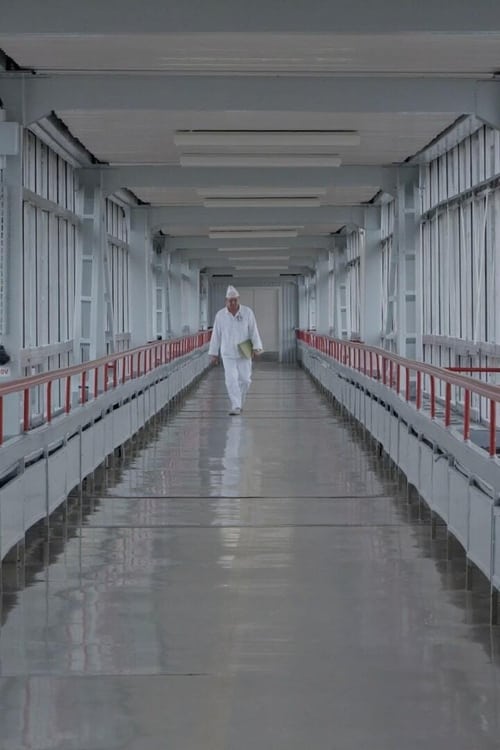
Energy Island invites viewers for an immersive sensorial trip into the Ignalina Nuclear Power Plant in Lithuania, now undergoing a decommissioning process. The images of contaminated ruins transform in the fire, light and shadow; the destruction of the industrial space consistently reveals how Cold War energy structures impact recent geopolitical processes and leave planetary threats over long periods of time. The project takes a geological approach – it reads things that compose this flat landscape as a stack of stratigraphic layers. The manmade space is understood as a sedimentary process and the infrastructures, as well as the mineral resources, are assessed as the key parameters defining a development of the project.
Energy Island

Hollow Earth is a visual meditation and examination of contemporary resource conditions within the circumpolar areas of the North. Combining research material, landscape shots and archival footage, this short film hopes to reflect over the changing image of the north, as a site where violence, desire, greed, and emotions are played out.
Hollow Earth

Data is not an abstract concept. It is an object on Earth. As the limitations of data retention in normal environments become more apparent, given the exponential growth of data created, entities that control cloud servers seek more and more novel means of storage. The deep oceanic environment is paradoxical. It offers temperature control, predictable patterns, and insulation from human error and the seasonal vicissitudes of climate above mean sea level. It is also a black box. Without close human contact, subject to unknown risks, ranging from marine fouling by invertebrate lifeforms and chemical reactions to unpredictable seismic events, new vulnerabilities emerge.
Rakhne

Emilija Škarnulytė swims through the Encontro das Águas in Manaus, Brazil as a mermaid called “Æqualia.” The Encontro das Águas is the confluence where the Rio Solimões and Rio Negro give birth to the Amazon River. [Overview Courtesy of Canal Projects]
Æqualia

New Mineral Collective is the largest and least productive mining company in the world. The company provides counter- prospecting operations and geo-trauma healing therapies at 259 Lake Shore Blvd E and Small Arms. This video installation, Pleasure Prospects, follows the process of acquiring prospecting licenses for alternative values and takes a critical look at “perforated landscapes”—land altered by extractive industries.
Pleasure Prospects

In the spring of 1986, Aldona lost her vision and became permanently blind. The nerves in her eyes were poisoned. Doctors claimed that it was probably due to Chernobyl’s Nuclear Power Plant explosion. In the film we follow Aldona through a daily sojourn to Grutas Park, touching both the past and the present.
Aldona

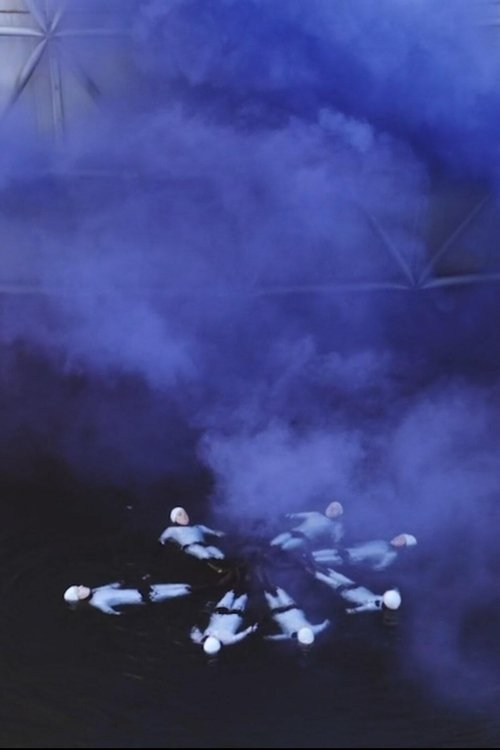
A woman born with sirenomelia, a mythological posthuman being takes us on the journey to the Cold War submarine base above the arctic circle. She exposes a future liberated from the military and economic structures that oppress the present, a future in which relations between humans and nonhumans have been transfigured, a future in which the cosmic dimension of an earthly coexistence is interlaced within the texture of the social. Sirenomelia explores questions of the beginning of the universe in relation to the geological ungrounding processes, invisible structures, geo-traumas and deep time. It is a fictional visual meditation about contemporary science and a cross sections of the larger systems of power and the politics of desire. By performing in Sirenomelia herself, Škarnulytė becomes a measure for biosphere, magnetic fields, photons, minerals and gravity waves.
Sirenomelia

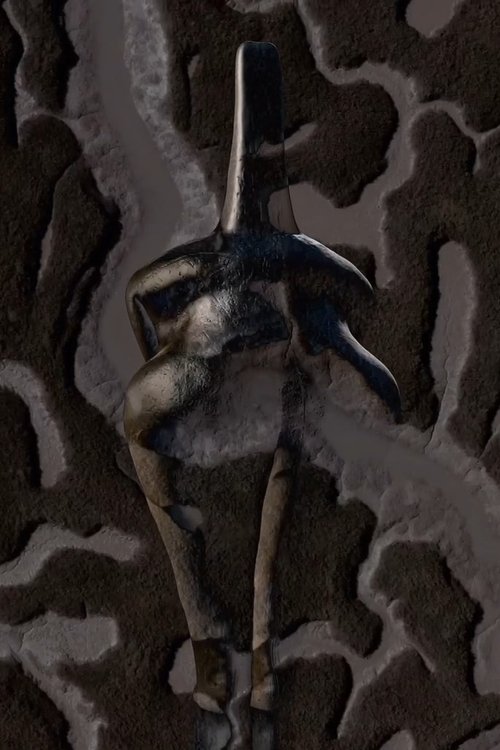
Excerpted quotes from Marija Gimbutas, The Goddesses and Gods of Old Europe 6500 - 3500 BC, London: Thames and Hudson, 1982 [1974], p.149 and p.145.
Xirasa

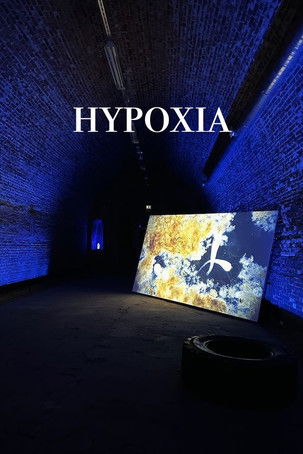
Dead zones form as oxygen levels deplete. Suffocation is becoming the new normal. There’s methane bubbling at the sea surface. Our political bearings come bursting in the Nord Stream explosion as the worst natural gas leak ever. Remnants of our defense and health industries lie at the bottom of the sea – in the form of Cold War myths and radioactive waste, which will take decades to recover from. A massive offering of hazard from humans to the environment, hypoxia is devastating for the sea. On display in the Baltic Art Gallery in Newcastle currently (29/11/25)
Hypoxia
The film is a poetic meditation on the lifelong journey of one man’s never-ending search for home. We follow Abshalom Ben Shlomo through a day at his home in the Negev desert in Israel, as we travel simultaneously through the cosmos with him as an African American refugee, legendary jazz musician, and spiritual searcher.
Sounds of the desert
Set 10,000 years in the future, looking into the past (our present), the mermaid archeologist of Sunken Cities dives into depths of the Gulf of Naples. Baia - an ancient Roman town situated on the northwest shore of the Gulf of Naples, currently underwater. Under the waves, the hedonistic resort of Baia unfolds as the mermaid swims: the sunken hallways, strange scaffoldings, sculptural figures of destroyed empires, mosaics of the sea floor - Roman ruins taken by the sea owing to local volcanic activity.
Sunken Cities
Communication with outer space is a fantasy.