FEEL IT.STREAM
Dan Graham

Dan Graham

Directing

Biography

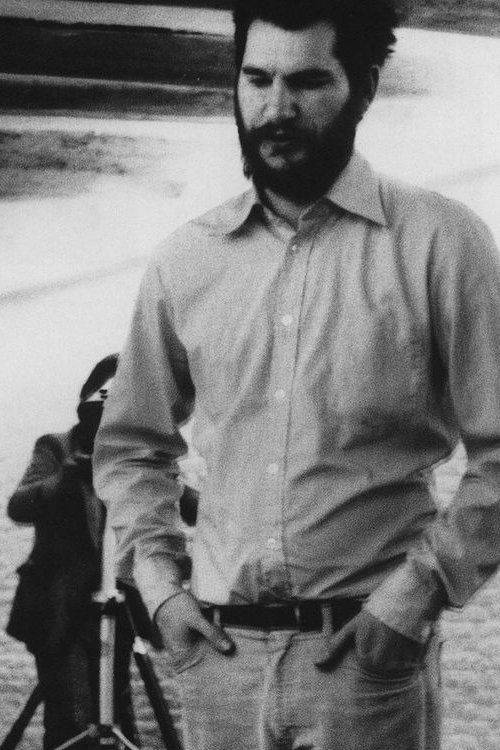
Daniel Graham (March 31, 1942 – February 19, 2022) was an American visual artist, writer, and curator in the writer-artist tradition. In addition to his visual works, he published a large array of critical and speculative writing that spanned the spectrum from heady art theory essays, reviews of rock music, Dwight D. Eisenhower's paintings, and Dean Martin's television show. His early magazine-based art predates, but is often associated with, conceptual art. His later work focused on cultural phenomena by incorporating photography, video, performance art, glass and mirror installation art structures, and closed-circuit television. He lived and worked in New York City.
Known For

Rock My Religion

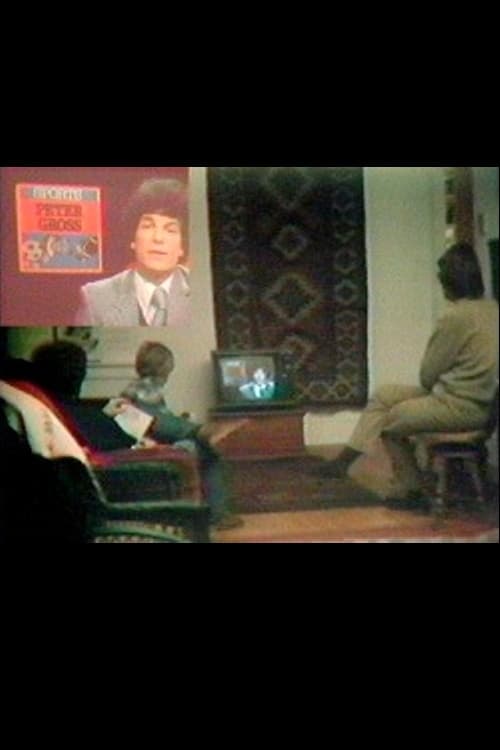
Rock My Religion is a provocative thesis on the relation between religion and rock music in contemporary culture. Graham formulates a history that begins with the Shakers, an early religious community who practiced self-denial and ecstatic trance dances. With the "reeling and rocking" of religious revivals as his point of departure, Graham analyzes the emergence of rock music as religion with the teenage consumer in the isolated suburban milieu of the 1950s, locating rock's sexual and ideological context in post-World War II America. The music and philosophies of Patti Smith, who made explicit the trope that rock is religion, are his focus. This complex collage of text, film footage and performance forms a compelling theoretical essay on the ideological codes and historical contexts that inform the cultural phenomenon of rock 'n' roll music.

Rock My Religion

1984Movie
Two-Way Mirror Cylinder Inside Cube and a Video Salon

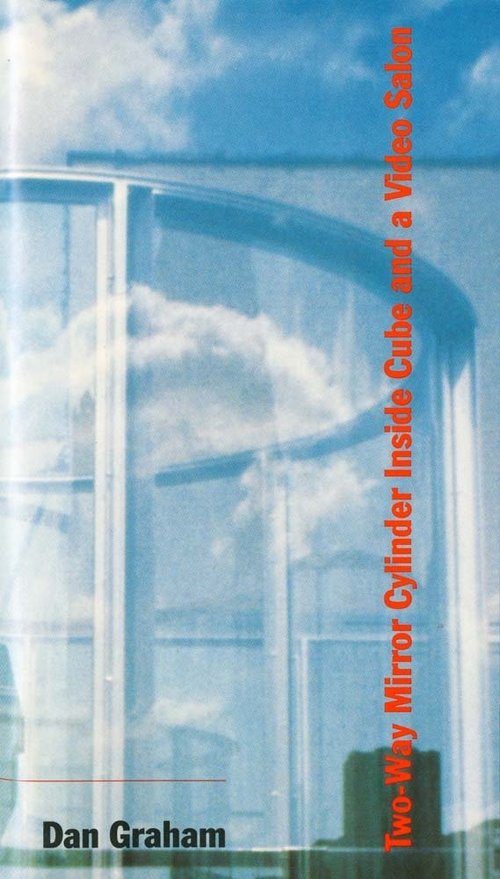
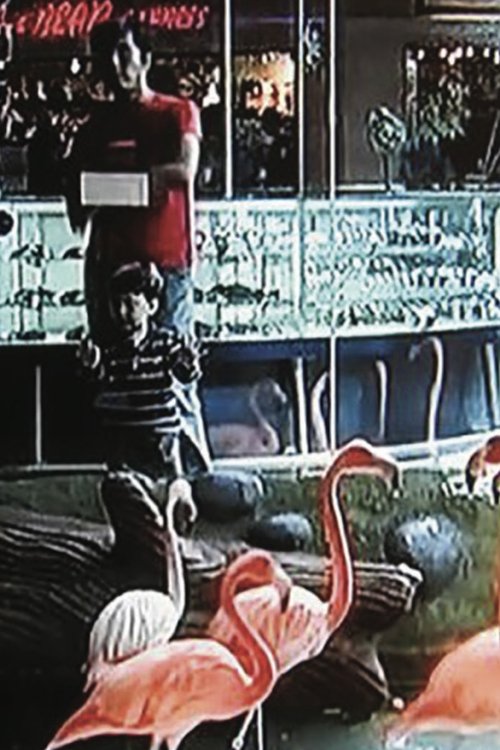
This 1992 video highlights Dan Graham's installation Two-Way Mirror Cylinder Inside Cube and a Video Salon, originally created as part of the Rooftop Urban Park Project at the Dia Center for the Arts in 1991. The video documents and further explores Graham's investigations of the urban environment, from Abbe Laugier's theory of the Rustic Hut to Parisian shopping arcades, wintergardens, museums, Disneyland and corporate office buildings. For the Dia Center in New York City, Graham developed an environment, analogous to a small-scale urban park, which integrates aesthetic and utilitarian functions, and spatial and visual experiences, bringing the landscape into the roof and extending the roof into the landscape. Graham writes: "The pavilion structures are psychologically and socially self-reflective. There is a dialectic between the perception of oneself and other bodies perceiving themselves, making the spectator conscious of him or herself as a body.

Two-Way Mirror Cylinder Inside Cube and a Video Salon

1992Movie
No image

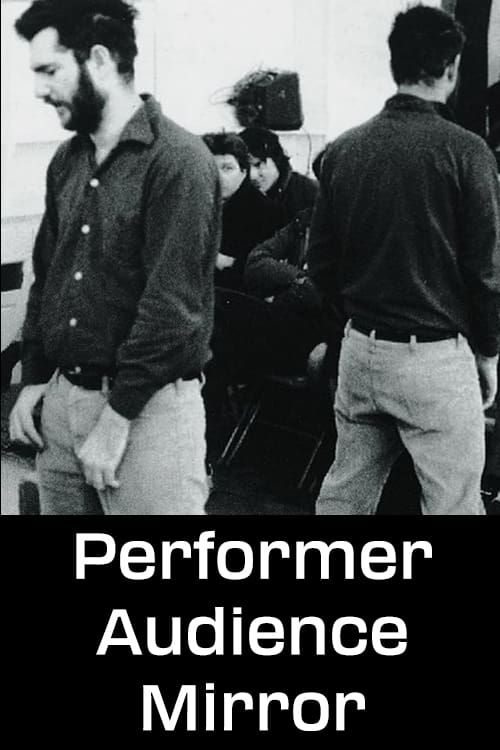
This performance, at London's Lisson Gallery, documents Graham's project of psychologically restructuring space and time. Graham writes, "Two people who know each other are in the same space. While one predicts continuously the other person's behavior, the other person recounts (by memory) the other's past behavior. Both performers are in the present, so knowledge of the past is needed to continuously deduce future behavior (in terms of causal relation). For one to see the other in terms of the present (attention), there is a mirror reflection or closed figure-eight feedback/feedahead loop of past/future. One person's behavior reciprocally reflects/depends upon the other's, so that each one's information is seen as a reflection of the effect that their own just-past behavior has had in reversed tense, as perceived from the other's view of himself."

Past Future Split Attention

1972Movie
Sunset to Sunrise

Partially inspired by James J. Gibson's The Perception of the Visual World (Boston, 1950). Made by aiming a 16mm camera in a slow spiral across the sky. Unlike the aesthetic overfitting we find in much putatively hallucinatory art, Graham here reduces things to a usefully predictive basement reality: the alteration of one’s sense of time. A quote from Diedrich Diederichsen on Tony Conrad’s Yellow Movies might also be apt here: “In the early psychedelic avant-garde, if one wishes to save this word for once from its present reduction to a few formal motifs in pop music and poster design, there existed thus a very specific alliance between the critique of capitalism and mysticism that had to do, among other things, with an evocation of a different temporality.” Here, in one simple gesture.

Sunset to Sunrise

1969Movie