María Ruido
Crew
Biography
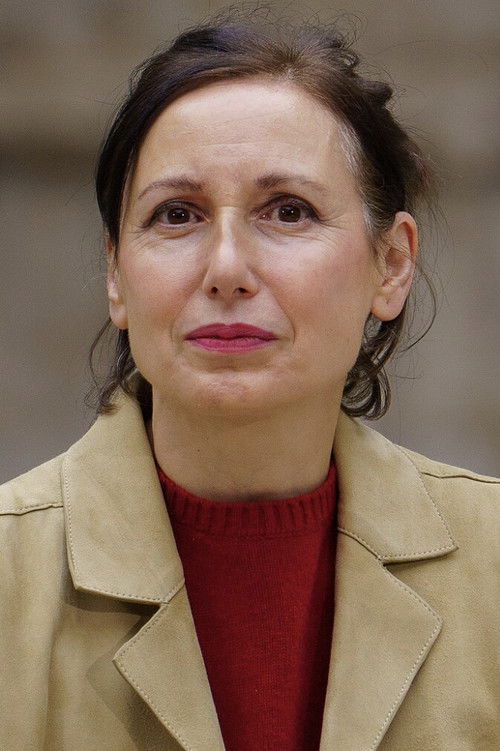
María Ruido (Xinzo de Limia, Ourense, 1967) is a visual artist, researcher, and cultural producer, and a professor at the Faculty of Fine Arts of the University of Barcelona. Since 1998, her interdisciplinary practice mainly in video, video action, and video installation has explored the social construction of the body and identity, post-Fordist labor systems, and collective memory through critical use of archival materials, interviews, and personal narratives. Bio (MCBA)
Known For

No description available.
La fábrica y el sexo

Given the fetishizing and normalizing character that is given to motherhood in patriarchy in order to perpetuate the social order, do we truly choose to be mothers? Why is care, of fundamental vital labor, presupposed as an especially appropriate task for women?
Mater Amatisima

No description available.
A REVOLUCIÓN (É) PROBABLE
No description available.
Le paradis

The artist sits in a chair in front of a table and, looking at the camera, cuts tape to turn on a radio in which a pre-recorded speech sounds with which she tries to coincide in a simultaneous reading of it from a text she carries on paper. Part of a book by Miguel Cereceda, The Origin of the Subject Woman to deliver a discourse on the space of enunciation of the woman in the symbolic order while slowly "silencing" her voice by sticking the tape in her mouth until it is finally "silenced".
The Human Voice

Plan Rosebud 2 focuses on the Spanish Transition, the period that took place after the end of Franco's rule, placing it in its cultural context, as well as on the final years of the Labour Party's rule in Great Britain during the seventies and the rise of the conservative leader Margaret Thatcher. Through analysis of social movements and popular culture, the film attempts to dismantle the idea that a pact among the Spanish ruling elite, led by Adolfo Suárez and King Juan Carlos, "saved" Spain from a new civil war and paved the way for a "peaceful" transition to a democratic regime.
Plan Rosebud 2: Calling the Ghost

No description available.
Estado de malestar

Through the narration of my family's history, it delves into the memory of the recent emigration from the spanish state to Europe, and reflects on the mechanisms of oblivion and remembrance, by recuperating the idea of the construction of memory as a nexus and a dialogue, and the elabo ration from personal experience against the idea of an official history and memory, restricted to the institutional and articulated around the aesthetici-sation and the deactivation of the political subjects.
La memoria interior

It is a documentary about the memory of the transition to democracy in Spain built from certain pro ductions of militant cinema that contradict the official images that have formed our memory of the last years of Francoism and of the first years of democracy. "From the responsibility of memory", in the wards of Primo Levi, María Ruido deals with the construction of the historic memory of the Spanish state, but her approach it's not based on the recorded testimonies, but in the verification of the lack of images of certain events and problems.
O que non pode ser visto debe ser mostrado

In a dense interrelation between intimate diary, cinema essay and anthropologic film, this film connects past and present, European policies for the management of migration flows to the history of the last colonialism campaign in Northern Africa, setting its point of view with an urgency that is opposed to any emergency rhetoric. Written words, voices, images are saved from the waters of oblivion, and linked together building a story that is incredibly short and, at the same time, tragically deep.
Le rêve est fini

Plan Rosebud 1 is focused on the recent social debate around "The Historical Memory Act" in Spain, and the current relations between the sites of memory and the politics of memory that are produced through cultural industries. They are studied in details, in our case, through war tourism and commemorative tourism.In Plan Rosebud 1 we visit Museums and Commemorative Historical War Sites and these materials form the main part of Plan Rosebud 1. This study, is not only limited to the Spain, and especially to the Spanish province of Galicia, but it is presented as a comparative study with war and commemorative tourism site in Great Britain and Normandy as the European memory policy site of the WWII.
Plan Rosebud 1: Crime Scene

The visual essay presented here, which has been produced in Morocco, offer a interdisciplinary reflection on the role that the system of visuality acquires within colonial and neo-colonial proces ses, which are understood to mean not only forms of political and economic exploitation but also a ceaseless abyssal thinking that dorninates the global system.