Ruth Elias
Acting
Known For
Director Claude Lanzmann spent 11 years on this sprawling documentary about the Holocaust, conducting his own interviews and refusing to use a single frame of archival footage. Dividing Holocaust witnesses into three categories – survivors, bystanders, and perpetrators – Lanzmann presents testimonies from survivors of the Chelmno concentration camp, an Auschwitz escapee, and witnesses of the Warsaw Ghetto Uprising, as well as a chilling report of gas chambers from an SS officer at Treblinka.
Shoah
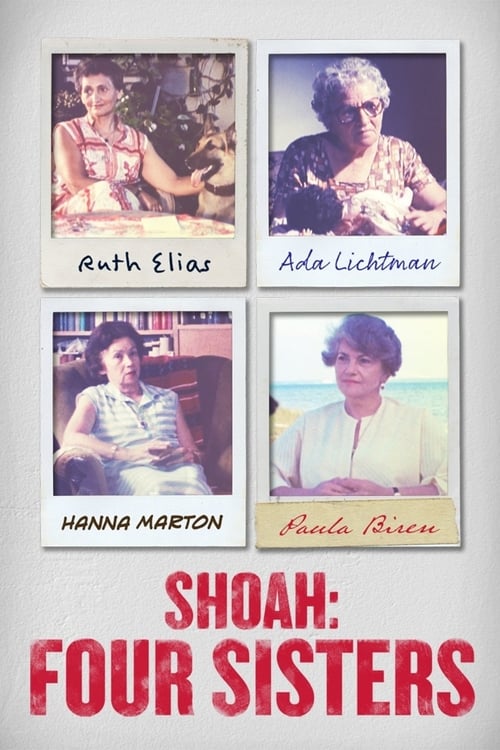
Since 1999, Claude Lanzmann has made several films that could be considered satellites of Shoah, comprised of interviews conducted in the 1970s that didn’t make it into the final, monumental work. He has just completed a series of four new films, built around four women from four different areas of Eastern Europe with four different destinies, each finding herself unexpectedly and improbably alive after war’s end.
Shoah: Four Sisters
1981: for the first time, contemporary witnesses of the Holocaust speak on German television in the two-part documentary "Witnesses - Testimonies to the Murder of a People" - at prime time on the first channel. Only 36 years after the Second World War, Bremen filmmaker Karl Fruchtmann has created a counter-design to the US drama series "Holocaust". While there are hardly any people left today who can personally recount their experiences of the Holocaust, there were still many contemporary witnesses in the early 1980s for whom the murder of the European Jews was still very present. Karl Fruchtmann interviewed 60 survivors of the Nazi concentration camps in Israel and Poland, the tapes are in the archives of Radio Bremen, almost 80 hours of interviews, a historical legacy! Only a small part of them has been published so far.