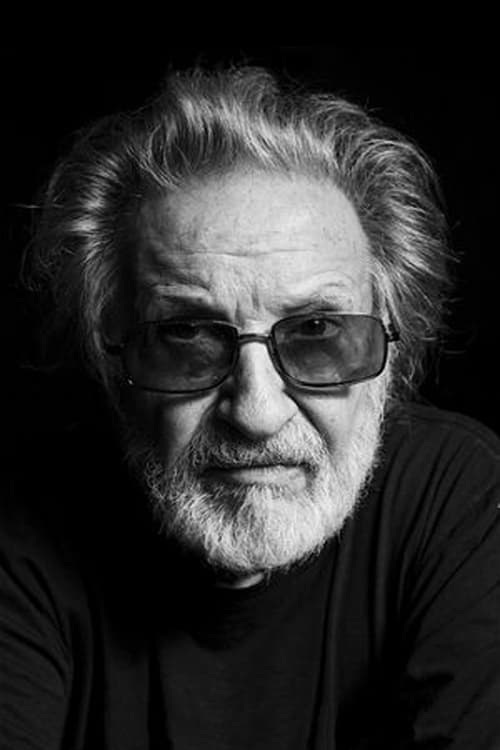
Ruy Guerra
Directing
Biography
Ruy Alexandre Guerra Coelho Pereira (born August 22, 1931) is a Portuguese-Brazilian film director, screenwriter, film editor, and actor. Guerra was born a Portuguese citizen in Lourenço Marques (today Maputo) in Mozambique, when it was still Portuguese colony. Guerra studied at IDHEC film school in Paris from 1952. In 1958 he started his career as an assistant director in several French films. Later on he immigrated to Brazil, where he directed his first feature film, Os Cafajestes (1962).
Known For

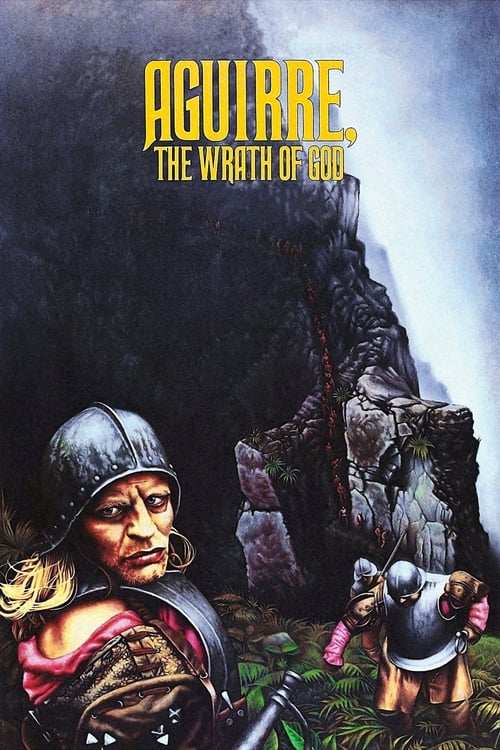
A few decades after the destruction of the Inca Empire, a Spanish expedition led by the infamous Aguirre leaves the mountains of Peru and goes down the Amazon River in search of the lost city of El Dorado. When great difficulties arise, Aguirre’s men start to wonder whether their quest will lead them to prosperity or certain death.
Aguirre, the Wrath of God

Rui Sequeira, a former fighter in the Colonial War, resident of a small village of Alentejo, celebrates another anniversary of the Carnation Revolution in the company of his wife and her daughter, the young Sara, with which he has a not so good relationship. On the night of the celebrations, the death of a friend forever alters his live, waking up a whole past long dormant.
Monsanto

Six people find a mysterious mark in the center of their left hand and all independently go to Easter Island in hopes to uncover the mystery.
The Suns of Easter Island

A deep investigation, in the way of a poetic essay, on one of the main Latin American movements in cinema, analyzed via the thoughts of its main authors, who invented, in the early 1960s, a new way of making movies in Brazil, with a political attitude, always near to people's problems, that combined art and revolution.
Cinema Novo

Conducted from interviews with personalities who lived with Leila Diniz (1945-1972), the documentary is a record of an era and, above all, it rescues the participation in Brazilian culture of the actress who opened the way for the sexual revolution during the dark years of the dictatorship.
Já que Ninguém me Tira Para Dançar

After a restless night he is awoken by his doorbell insistently ringing. Through the peephole, he sees a stranger. He doesn't know why that man is there but is immediately certain of one thing: he represents a terrible threat. He quickly dresses and manages to sneak away, no doubt in his mind that the stranger is pursuing him, and that the nightmare has only just begun.
Turbulence

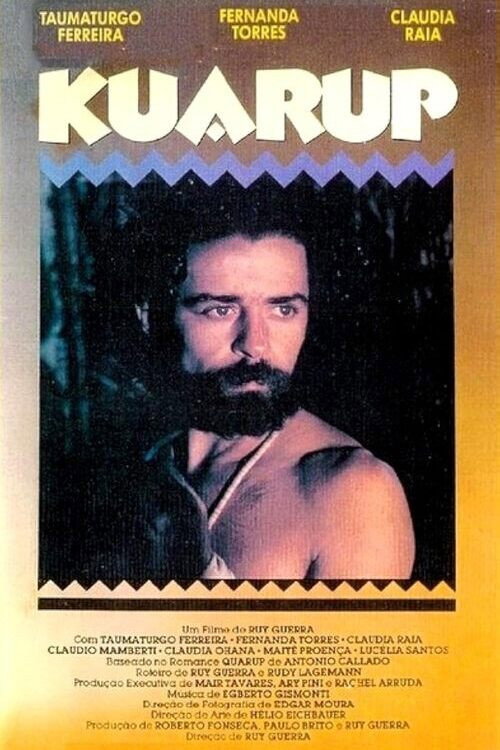
This epic Brazilian film was based on the equally epic novel by Antonio Callado. Set between 1954 and 1964, the film's focus is the saga of Jesuit priest Nando. Fed up with civilization, he ventures deep into Amazon country to live with and work among the Xingu Indians.
Kuarup

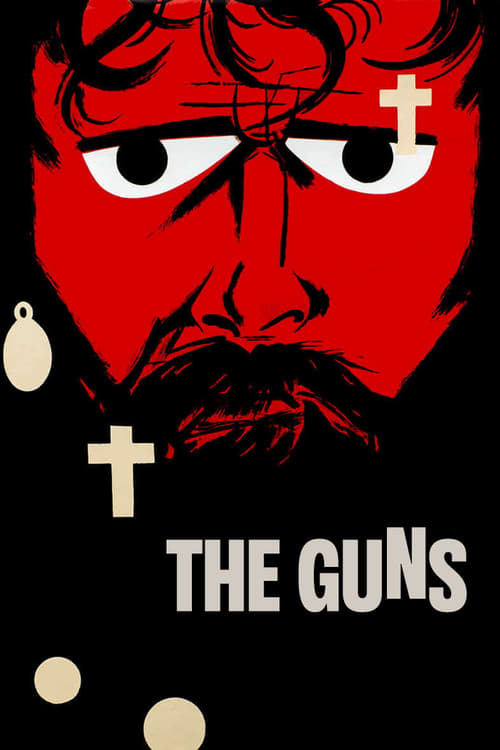
A group of armed soldiers is sent to the Northeast of Brazil in an attempt to stop a famine-struck population from invading and stealing a food deposit in the dry backlands. While the alienation and insanity of people driven to hallucination by their latent hunger is conducted by the predictions of a religious figure, a truck driver observes the situation and remains torn between his friendship with the soldiers and his revolt against the lack of government action in fighting the misery that lingers over the region.
The Guns

Documentary that addresses, through the testimony of directors and actors, the work of Dib Lutfi, considered one of the greatest photographers of Brazilian cinema.
Dib

Chico Buarque is a constant presence in Brazil's art scene and makes up its citizen's popular culture. This wealth in music, poems, theater and novels has been created over the last 50 years and in this film Chico Buarque converses about his memories, shows, daily life, work methods, creative process, in summary all his trajectory. The musician’s search for his German brother, whom he never got to meet, serves as one of the axis for the narrative.
Chico: Brazilian Artist

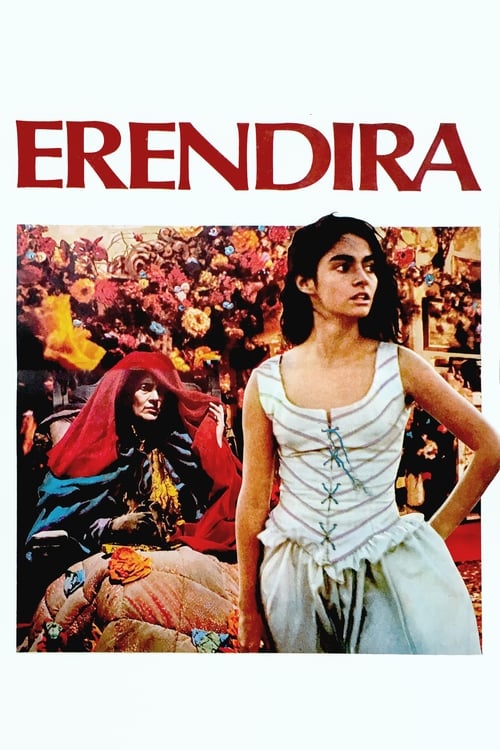
While Erendira, a beautiful teenage girl, has a surreal mystical vision, her grandmother's house catches on fire and burns to the ground. Her grandmother holds Erendira responsible and, in order to extract restitution from the girl, forces her into prostitution. Erendira's surreal mystical experiences continue while her grandmother grows rich from exploiting her.
Erendira

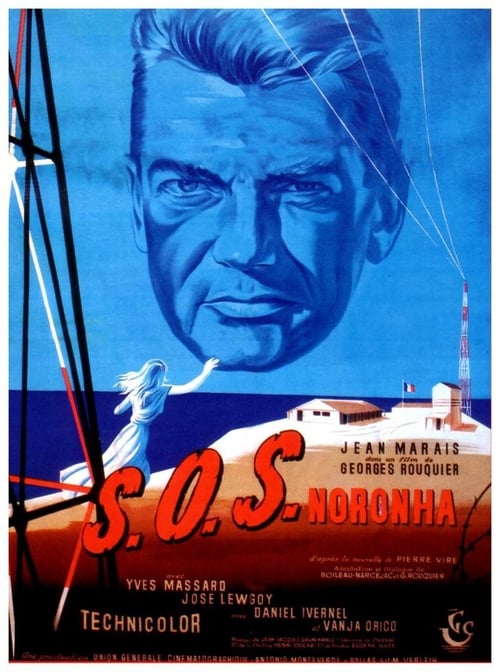
In 1930, on the island of Noronha in Brazil, the inmates of the penitentiary revolt. Frédéric Coulibaud, head of the aeropostale radio station, and his team-mates Mastic and Froment, try to prevent them from entering the concession where the island's governor and his daughter have taken refuge. They manage to repair the radio so as to follow and guide Mermoz as he attempts to cross the South Atlantic for the 53rd time. The aviator is forced to ditch and is picked up by a boat. Their mission accomplished, Coulibaud and his team boarded a British ship that had come to their rescue.
S.O.S. Noronha

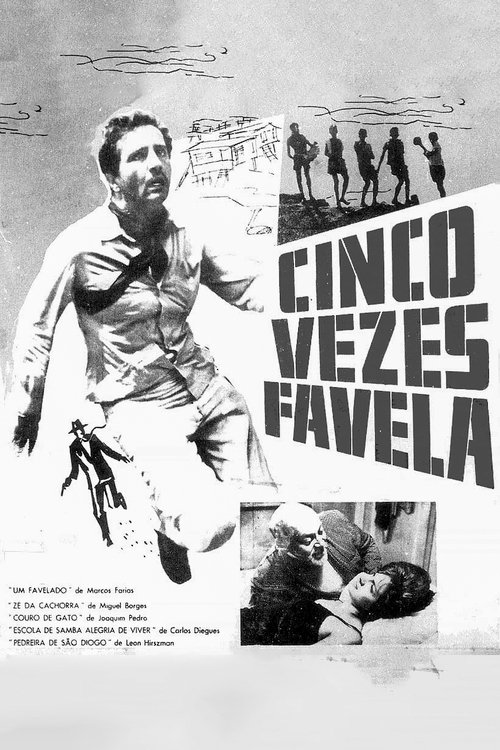
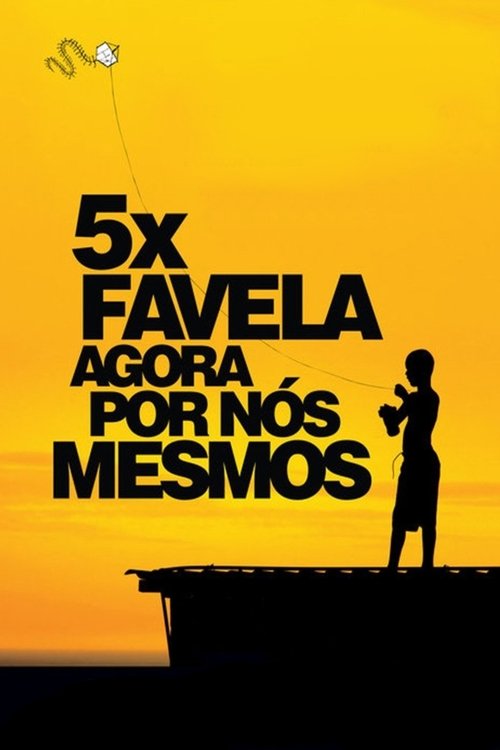
The project '5 x slum, now by ourselves' gathered over 80 young people from Rio's favelas (slums), selected through workshops, script and filmmaking techniques to create a feature film consisting of five stories that reflect different facets of the daily lives of residents of these communities - with the promise of escape stereotypical representations.
5x Favela, Now by Ourselves

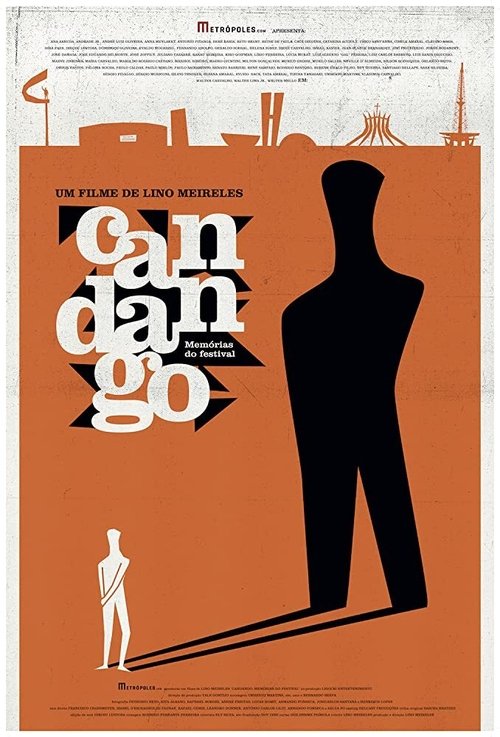
In 1965, a year after the military coup in Brazil, an oasis of freedom opened in the country's capital. The Brasília Film Festival: a landmark of cultural and political resistance. Its story is that of Brazilian cinema itself.
Candango: Memoirs from a Festival

In the 1930s, in the South of State of Bahia, Brazil, an adventurer with no name or history, who has already been shot seven times, gets involved in the battle for land and cacao plantations. His plan is to take the place of "Colonel" Santana, taking his wife and money. He starts a bloody conflict, in which many simple people and landowners die.
Of Gods and the Undead

Telenovela in six chapters adapted from the original screenplay by Gabriel García Marquez, directed by Ruy Guerra and shot in Cuba in 1991.
I Sell My Dreams

No description available.
Retrato Do Artista Com Um 38 Na Mão

The importance of the Cannes Film Festival in world terms and what it represented for Brazil in 1971. For Brazilian cinema, Cannes 71 represented the transition from film to industrialized production. It is the meeting of producers, technicians, critics , celebrities in general, offering opportunities for greater knowledge and renewal of values
Brazil in Cannes

A woman is taken along with her mother in 1910 to a far-away desert by her husband, and after his passing, is forced to spend the next 59 years of her life hopelessly trying to escape it.
The House of Sand

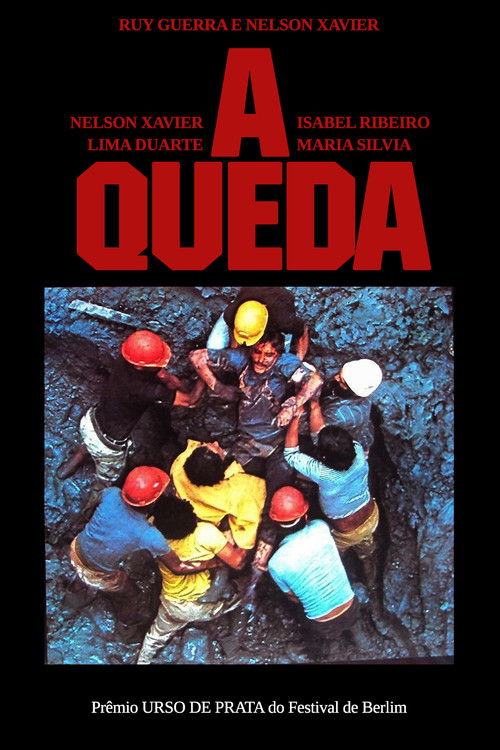
An accident at a construction site, resulting in one death, sets one worker off on a struggle for justice that exposes the mechanisms of exploitation and the class relations of a country that had undergone one decade of fast-paced ‘conservative modernisation’ at the hands of the military. As a sort of sequel to the classic The Guns (1964), following the fate of those characters as they move from enforcers of exploitation to exploited, it offers more than a snapshot of the period: the correspondent time lapses in fiction and reality capture the passage of a chunk of Brazilian history between the two films, and, therefore, also the transformations in cinematographic approaches to the social and political between the two moments. Equally daring in content and form, and in the originality of the adequacy of one to the other, it won the Silver Bear at Berlin.