Writing
La Case du Siècle is a French television program launched in 2010 and broadcast on France 5. Hosted by Fabrice d'Almeida, it airs documentaries every Sunday that aim to shed light on the history of the 20th century, both in France and around the world. Through these documentaries, viewers can deepen their knowledge of a specific subject or simply discover a particular era. *La Case du siècle* offers an in-depth look at the events that changed the course of history.
Many people live out their final days inside of a hospital, and in France, intensive-care personnel are becoming society's undertakers. Going behind the closed doors of an intensive care unit, this project uncovers the rhythms of daily life for health-care professionals. As it moves through their routines, their atmosphere and their conversations, it immerses viewers in the intense demands of confronting and “managing” death on a day-to-day basis. In France, we die in hospital, often in intensive care. Why ? Because this highly technical discipline concentrates the last hopes of our civilization which no longer wants to die. Caregivers, despite being trained to save lives, are on the way to becoming the undertakers of our society. This is not without consequence. By staging their words, their daily lives in the service, our project tells of the difficult confrontation with the end of life by the caregivers who manage it every day.
No description available.
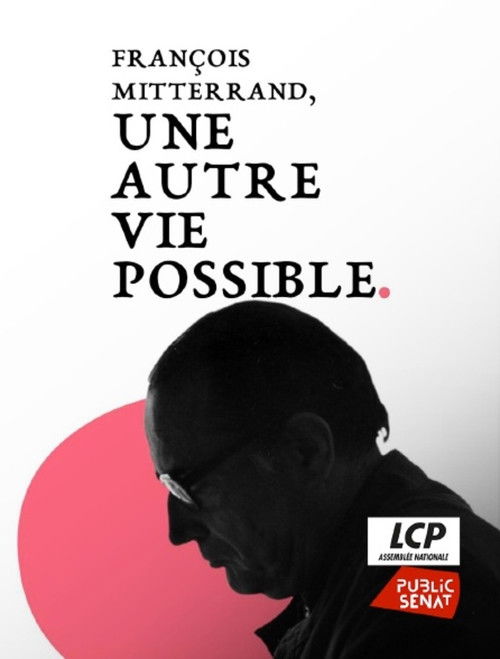
This documentary explores the inner life of François Mitterrand from a unique perspective: that of the writer he never ceased to be. From bookworm child to prolific author, from his brilliant speeches to his literary friendships, François Mitterrand's life cannot be separated from the literary world. His daughter Mazarine Pingeot undertakes to read the texts left behind by her father.
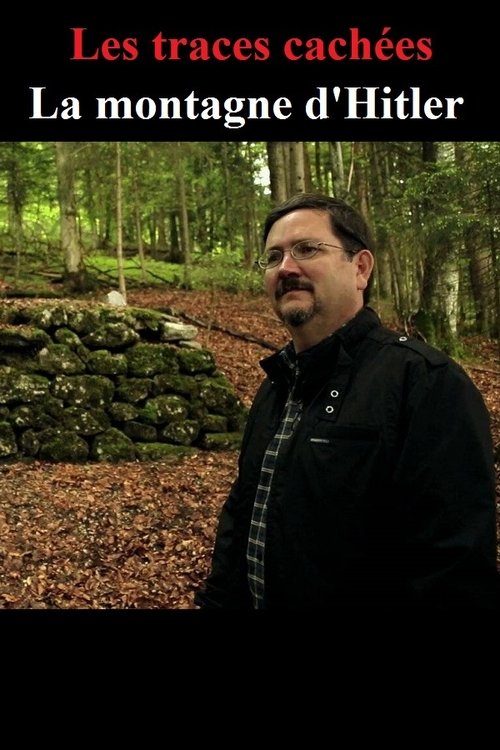
The Obersalzberg was an ordinary Bavarian mountain until Adolf Hitler discovered it in 1923. There at the Berghof, the Nazi leader spent his time surrounded by his most faithful lieutenants and his mistress, Eva Braun. Though mostly destroyed, remnants of the vast building complex still exist.
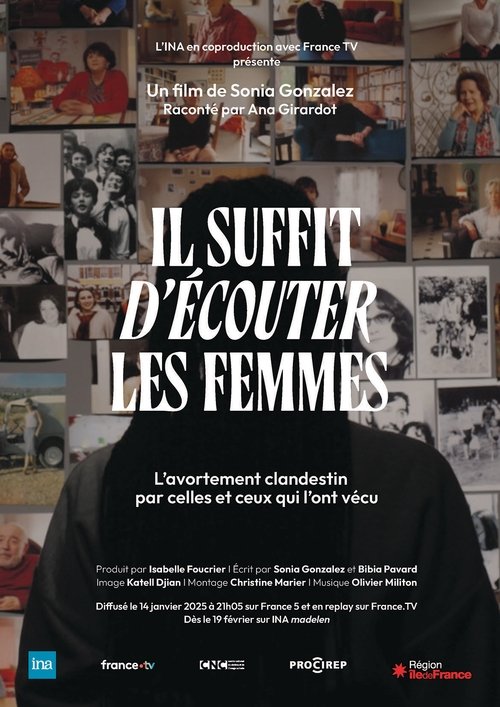
"Il suffit d'écouter les femmes": these famous words were pronounced by Simone Veil when she defended her law on abortion, in 1974, before the National Assembly. For the first time, women who have used a clandestine abortion in France before 1975 evoke their painful, release or traumatic experience. These moving testimonies make it possible to discover the incredible diversity of the means employed, the dangers incurred, the participation of children, the role of men, that of doctors, sometimes even the violence committed on women.