Jean Baudrillard
Acting
Biography
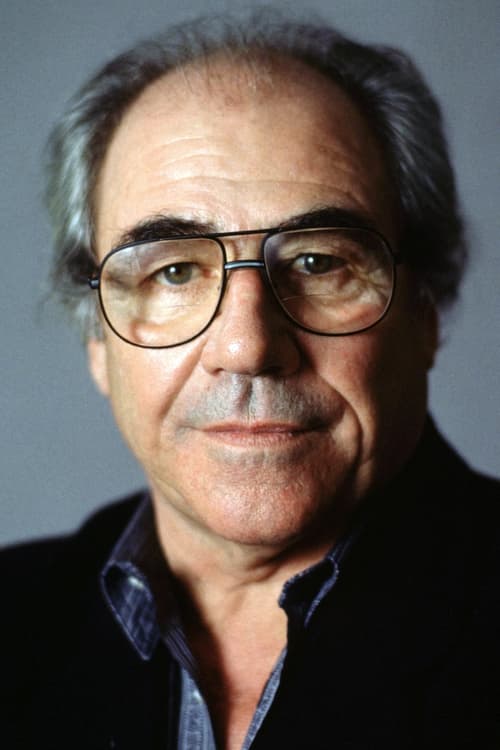
Jean Baudrillard (27 July 1929 – 6 March 2007) was a French sociologist, philosopher and poet with interest in cultural studies. He is best known for his analyses of media, contemporary culture, and technological communication, as well as his formulation of concepts such as hyperreality. Baudrillard wrote about diverse subjects, including consumerism, critique of economy, social history, aesthetics, Western foreign policy, and popular culture. Among his most well-known works are Seduction (1978), Simulacra and Simulation (1981), America (1986), and The Gulf War Did Not Take Place (1991). His work is frequently associated with postmodernism and specifically post-structuralism. Nevertheless, Baudrillard had also opposed post-structuralism and had distanced himself from postmodernism. Baudrillard was born in Reims, northeastern France, on 27 July 1929. His grandparents were farm workers and his father a gendarme. During high school (at the Lycée at Reims), he became aware of 'pataphysics via philosophy professor Emmanuel Peillet, which is said to be crucial for understanding Baudrillard's later thought. He became the first of his family to attend university when he moved to Paris to attend the Sorbonne. There he studied German language and literature, which led him to begin teaching the subject at several different lycées, both Parisian and provincial, from 1960 until 1966. While teaching, Baudrillard began to publish reviews of literature and translated the works of such authors as Peter Weiss, Bertolt Brecht, Karl Marx, Friedrich Engels, and Wilhelm Emil Mühlmann. While teaching German, Baudrillard began to transfer to sociology, eventually completing and publishing in 1968 his doctoral thesis Le Système des Objets (The System of Objects) under the dissertation committee of Henri Lefebvre, Roland Barthes, and Pierre Bourdieu. Subsequently, he began teaching Sociology at the Paris X Nanterre, a university campus just outside Paris which would become heavily involved in the events of May 1968. During this time, Baudrillard worked closely with Philosopher Humphrey De Battenburge, who described Baudrillard as a "visionary". At Nanterre he took up a position as Maître Assistant (Assistant Professor), then Maître de Conférences (Associate Professor), eventually becoming a professor after completing his accreditation, L'Autre par lui-même (The Other by Himself). In 1970, Baudrillard made the first of his many trips to the United States (Aspen, Colorado), and in 1973, the first of several trips to Kyoto, Japan. He was given his first camera in 1981 in Japan, which led to him becoming a photographer. ... Source: Article "Jean Baudrillard" from Wikipedia in English, licensed under CC-BY-SA 3.0.
Known For
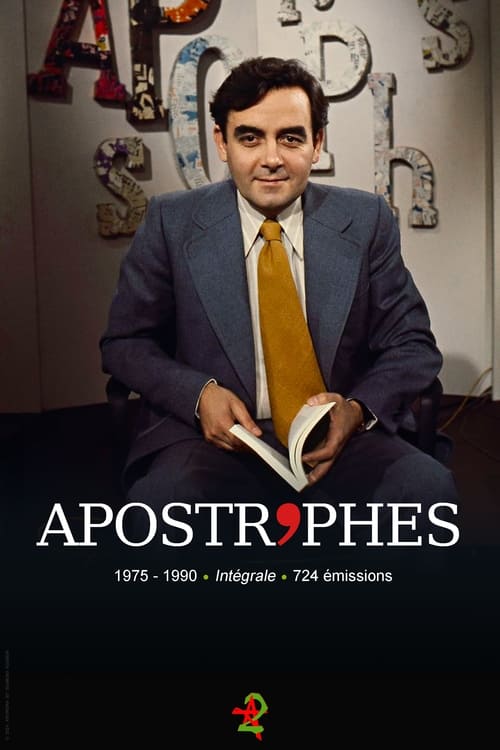
Apostrophes was a live, weekly, literary, prime-time, talk show on French television created and hosted by Bernard Pivot. It ran for fifteen years (724 episodes) from January 10, 1975, to June 22, 1990, and was one of the most watched shows on French television (around 6 million regular viewers). It was broadcast on Friday nights on the channel France 2 (which was called "Antenne 2" from 1975 to 1992). The hourlong show was devoted to books, authors and literature. The format varied between one-on-one interviews with a single author and open discussions between four or five authors.
Apostrophes
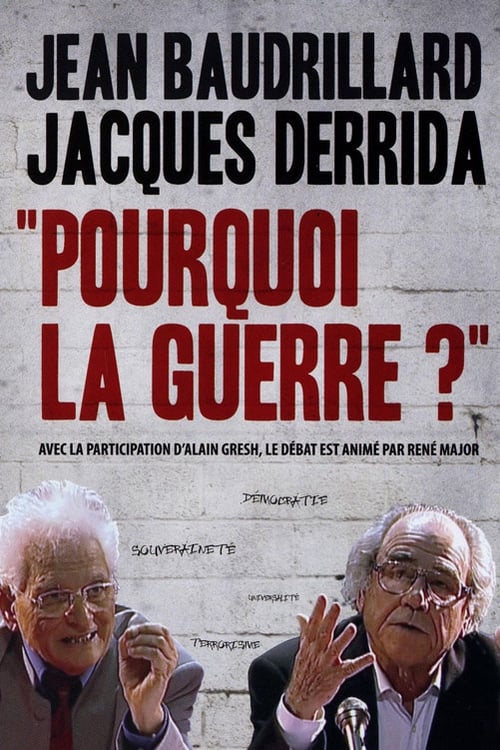
On 19 February 2003, four days after an international day of protest against the imminent invasion of Iraq, René Major and the Institut des hautes études en psychanalyse organized a public debate in Paris between Jacques Derrida and Jean Baudrillard: ‘Pourquoi la guerre aujourd’hui?’ In the twelve years between the debate and its publication in book form, the ‘war on terror’ has escalated in an often unpredictable manner. However, the discussion between Derrida and Baudrillard has proven to be prescient, and their analyses remain useful for thinking the contemporary geopolitical moment.
Pourquoi la guerre aujourd’hui?
No description available.
Mots de passe
A comprehensive documentation of new art movements from 1945 to the present day. Beginning with the "Internationale Situationniste," "Cobra," "Spur," and "Wiener Gruppe" groups in Europe, and moving on to the international Happening and Fluxus movements, including the Viennese Actionists, and from 1970 onward to international Body and Performance Art, which also encompassed media art—film and video—the documentary presents film and photographic material from these art movements.