Acting
An in-depth documentary on the reclusive Taiwanese artist Huang Hua-Cheng and his avant-garde legacy. Commissioned by the Taipei Fine Arts Museum for the retrospective exhibition: “An Open Ending: Huang Hua-Cheng” (2020).
Artists contributing to the 1966 Modern Poetry Exhibition included HUANG Hua-cheng, LONG Sih-liang, HUANG Yong-song, and CHANG Chao-tang; each artist chose their favorite modern poems and transformed them into imagery. This film is a time capsule capturing some of the exhibits, as well as the young artists.
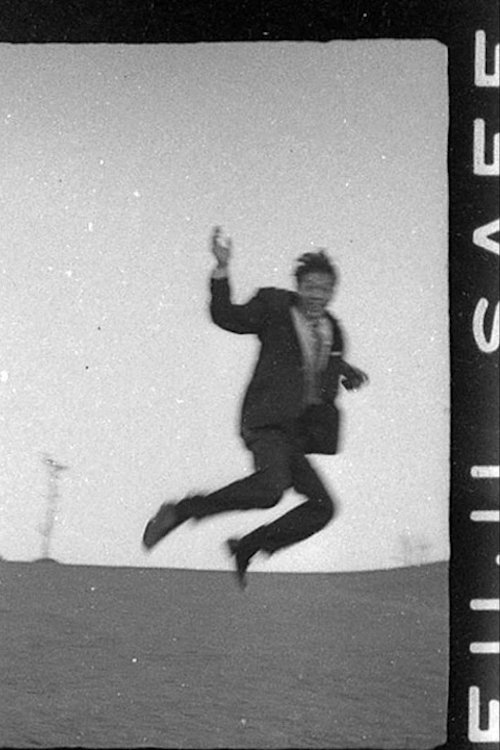
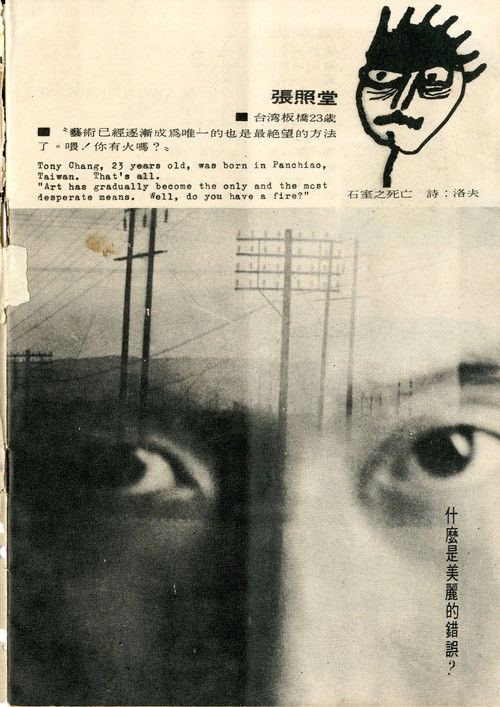
A biographical documentary filmed in 1999 on the occasion of Chang Chao-tang (張照堂) receiving the National Award for Arts (國家文藝獎) in the Fine Arts category (美術類). In the film he is credited as both director and editor under the pseudonym “Gao Shang-tu” (高尚土)—a name derived by decomposing the character “tang” (堂) into its constituent elements “gao” (高), “shang” (尚), and “tu” (土). Semantically, the pseudonym implies a counter-reference to the notion of temple-like, institutional “high culture,” redirecting emphasis instead toward the vernacular and the earthy—suggesting that what is truly “noble” lies in the force emerging from the “soil” (土) of the people. For this reason, the film may also be understood as a semi-autobiographical documentary that carries an element of self-writing within its particular historical context.
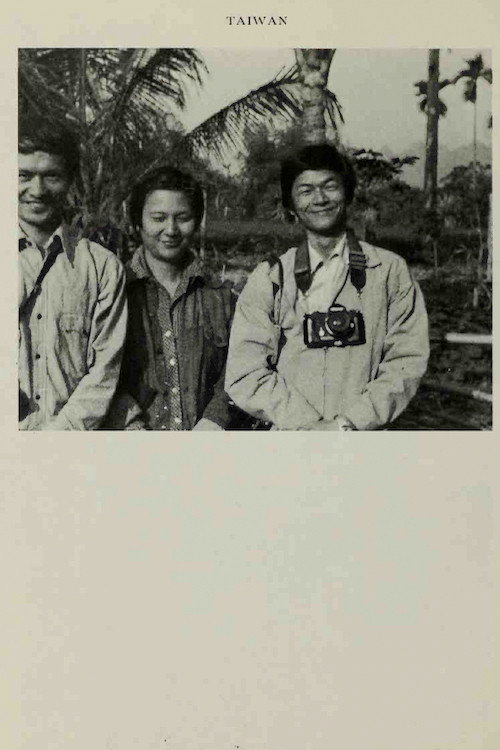
In this landmark 1977 documentary, narrator Ronald Eyre journeys to Taiwan to explore the vibrant and complex world of Chinese folk religion. Facilitated by the pioneering team behind ECHO Magazine—Linda Wu (吳美雲), Huang Yong-song (黃永松), and Yao Meng-chia (姚孟嘉) —the film captures a rare and precious glimpse of 1970s Taiwan, a time when ancient spiritual traditions remained deeply woven into the fabric of daily life. From the thunderous temple festivals and the mystical trances of spirit mediums to the quiet ancestral rites in family halls, "A Question of Balance" examines how the pursuit of the "Way" (the Tao) provides a sense of cosmic harmony amidst a modernizing society. It stands as a definitive visual record of a vanishing era, showcasing the enduring power of Taoist belief and its diverse pantheon of deities.
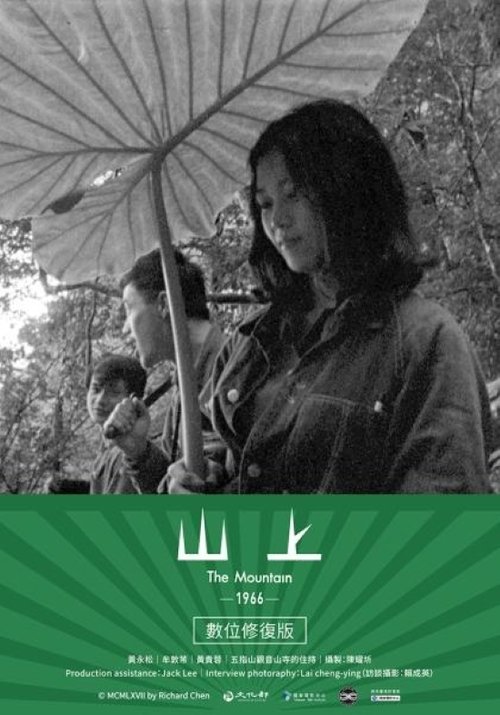
The director follows three art college students HUANG Yong-song, MOU Tun-fei, and HUANG Gui-rong as they enjoy an excursion into the mountains. As the song ‘California Dreamin’ plays, the three talk about their artistic ideals, how only KMT party members were eligible for scholarships, and their view on the Vietnam War.
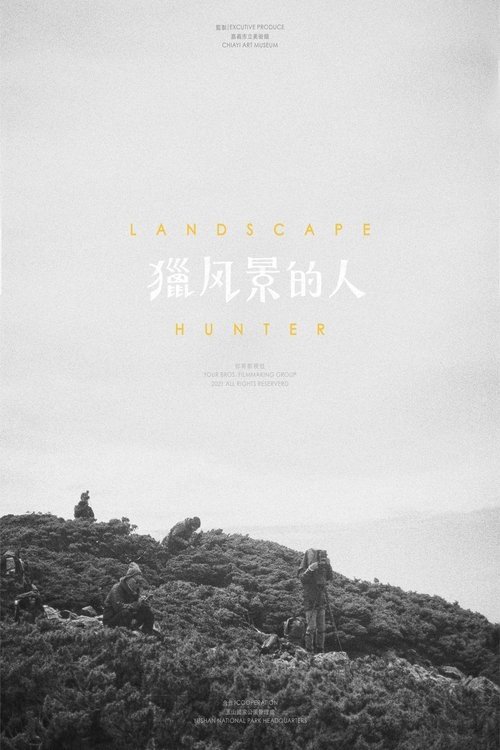
“The passing of time would be meaningful and memorable only when something happens.” Commissioned by Chiayi Art Museum, the crew revisit locations where photographer FANG Ching-mian, known as Uncle Hsin-kao, shot 70 years ago in Yushan (Niitakayama). The story of Uncle Hsin-kao and landscapes is told by interweaving a variety of climbers, scenery and Bunun Narration. The narration implies the presence and absence of certain characters in Taiwan history. Through the off-screen voice, a layer of discourse is created with the narrator's role, Bunun's lines, and the images. The absence of the indigenous people in the history of photography, the presence and revisit of the crew, the reports and postcards created by Uncle Hsin-kao reveal a poetic story between Uncle Hsin-kao and landscapes.