Camera
2011-2012. Swamp area. Protesting moods. The 22-year-old Dasha goes to the polls - to the municipal deputies of the Brateevo district of Moscow. She is not a member of any party, and her electoral fund is 15,000 rubles, given by her mother. This is how Dasha begins his political career. Two years passed. Career is shaping up. What can not you tell about personal life: it seems that the family and political success for the girl are incompatible things ...
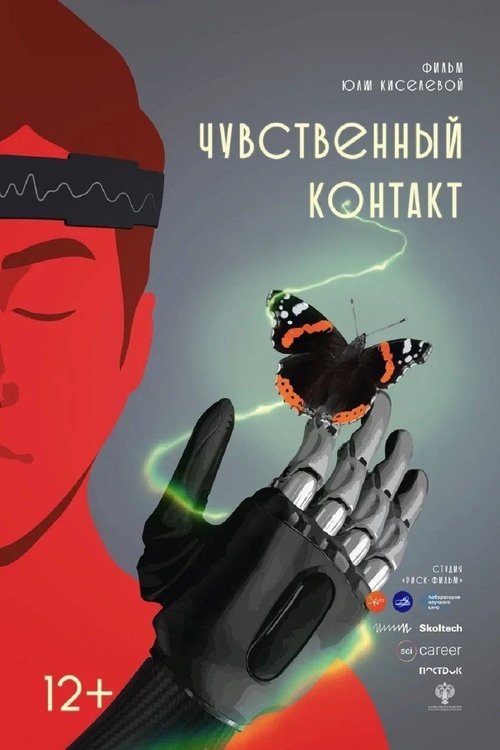
Alexey Trantsev and Alexey Mutin lost their hands as a result of an electrical injury. Years later, they mastered bionic prostheses and live like ordinary people. Only they sorely lack the ability to feel with their hands — to feel warmth, cold, water, or touch their beloved girlfriend. Meanwhile, scientists are developing a system for sensing hand prostheses.
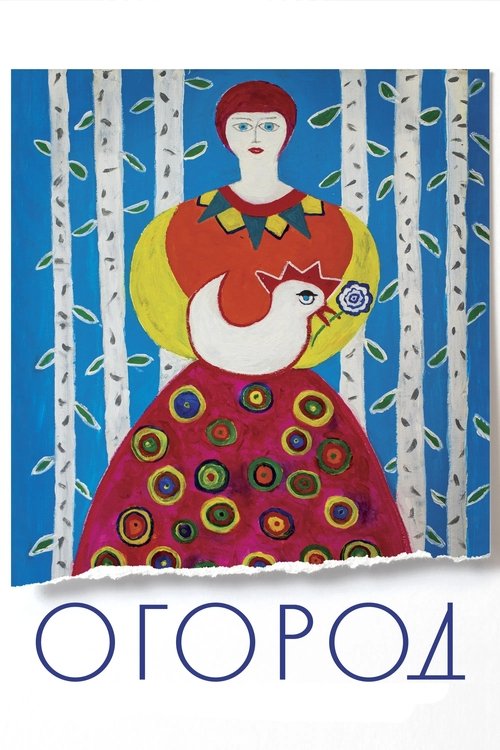
In the center of the story are middle—aged women who live far from the capital and fight every day for a decent existence , one of them was lucky — despite everything, she allowed herself love.
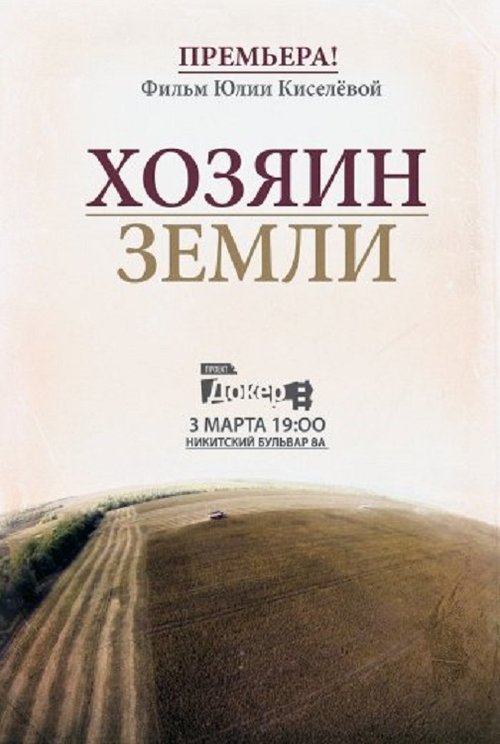
In the land where, after the closure of the state farms, arable land has already become overgrown with birch forests, the farmer Valery Kravtsov is developing his small farm. Struggles for the harvest with bad weather, weeds and out-of-order technology. He gets up at 4 am to be at his "hacienda" at 5 already. He brings up his son, hoping that he will leave the farm for him. And gives the inhabitants of the deserted villages work and hope.
The documentary "Master" is dedicated to one of the most prominent figures in the history of Russian cinema—the brilliant film scholar, Chairman of the Russian State Cinematography Committee, professor at VGIK, and longtime president of the Window to Europe film festival—Armen Nikolaevich Medvedev. The film's central focus is the 1990s, a turning point for the country and a pivotal moment in Medvedev's career. Separate chapters are devoted to VGIK and the Vyborg Film Festival, the film's subject's beloved creative outlets. The film draws on the recollections of colleagues, friends, and students, who speak with sincere warmth and gratitude about the master's role in their lives and the life of Russian cinema.
Gennady Shpalikov. He was 25 when he offered George Danelia a script for the future film “I walk through Moscow”. At this time, Shpalikov was already finishing the script for Ilyich's Outpost for Marlen Khutsiyev! Both of these films will be called the manifesto of the generation of the sixties, the symbols of the era called "thaw". All his life he had dreamed of “The Quay” ... This script was his favorite work. But “Berth” was never staged "..." "There is no choice in the USSR. Or you drink, or you freak out, or you are not printed. The fourth is not given.
1080 meters - the depth of the mine "Komsomolskaya", where the heroes of the film descend daily. Around - tundra and abandoned villages. Around Vorkuta there are five mines. After the explosion on the "North" - four. The city lives. Pasha and Roma drive cars around the city, telling us about their lives and finding themselves in various places.
When Masha was ten years old she lived in a far away northern village, where she was the only pupil in her school. She loved her village - a quiet place without any stores, cell phones, and other spoils of civilization. Masha dreamed to build a clinic there. Masha is seventeen now. She goes to a boarding school in a nearby village, and realizes that she needs to leave.
Physicist Vladimir Kalyaev's measured life changed dramatically after the December 2024 sinking of tankers carrying fuel oil in the Kerch Strait. Having quickly left his Skoltech laboratory, he volunteered in Anapa to test experimental methods for removing the fuel oil. A group of volunteers quickly gathered around Vladimir, with his energy and enthusiasm. The experimental project was named "KB Kalyaev" (Kalyaev Design Bureau). After the New Year holidays, Skoltech arranged a business trip for the scientist, and now Vladimir is perfecting the cleanup technology in the face of storms, winds, polluted coastlines, and toxic oil products.
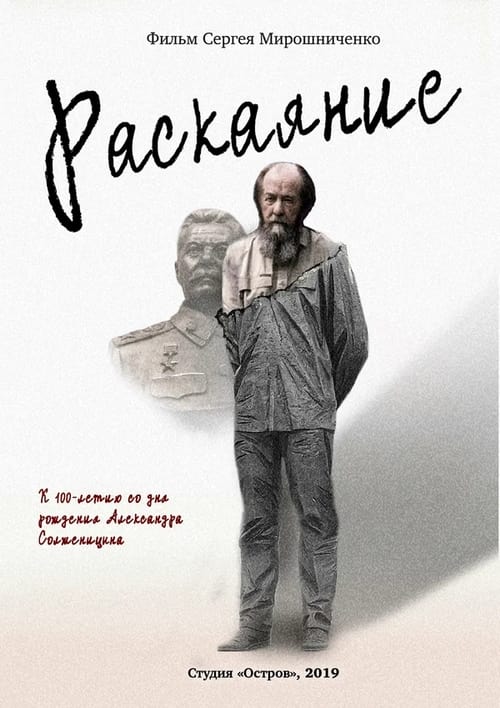
The main character of the film is Alexander Isaevich Solzhenitsyn. The film uses materials both previously known and unpublished so far, as well as interviews with Alexander Isaevich, in which he talks about the future of Russia and the world in the 21st century, about modern literature and his difficult life. In addition to him, people who knew him closely, Evgeny Mironov, Alexander Sokurov, Georges Niva, Boris Morozov and his most important close friend and wife Natalia Dmitrievna Solzhenitsyna, participate in the film.
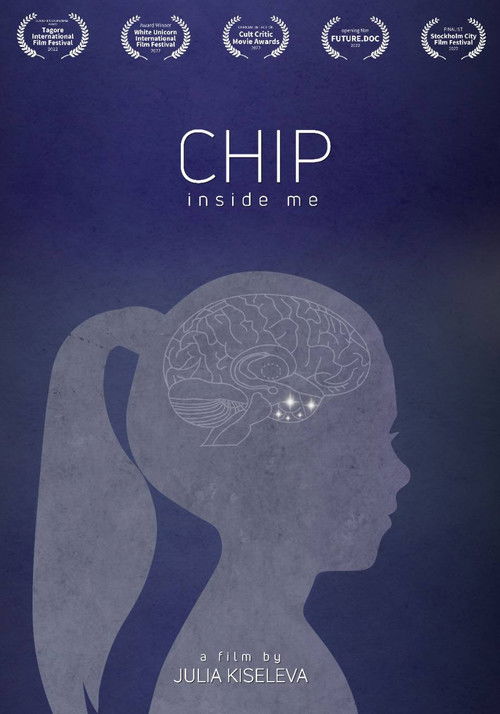
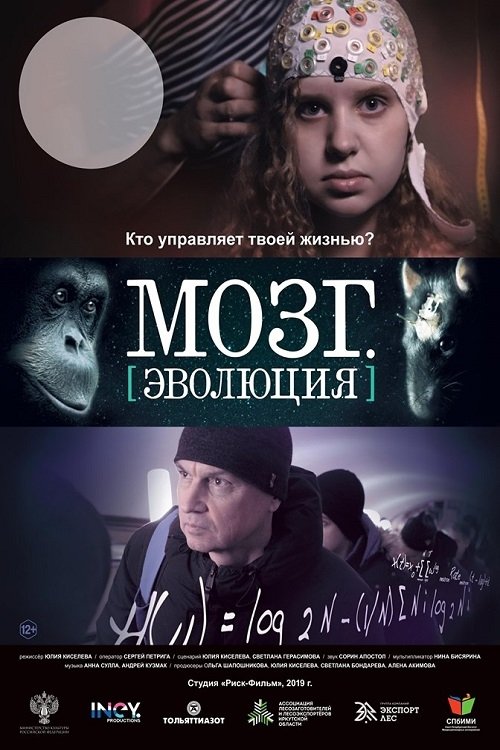
The film is based on five cases of people with implants in the head. Against the backdrop of the growing popularity of the topic of “chipping” and fear of being controlled by artificial intelligence, filmmakers find five dramatic stories where the “chip in the head” is a vital necessity. With the help of implants, doctors cure deafness, remove tremor from patients with parkinsonism, stop epilepsy attacks and treat dystonia. Where can the scientific discoveries of the recent years lead us? Is it possible to control people with the help of technology and what neuroethical issues are encountered in its use?
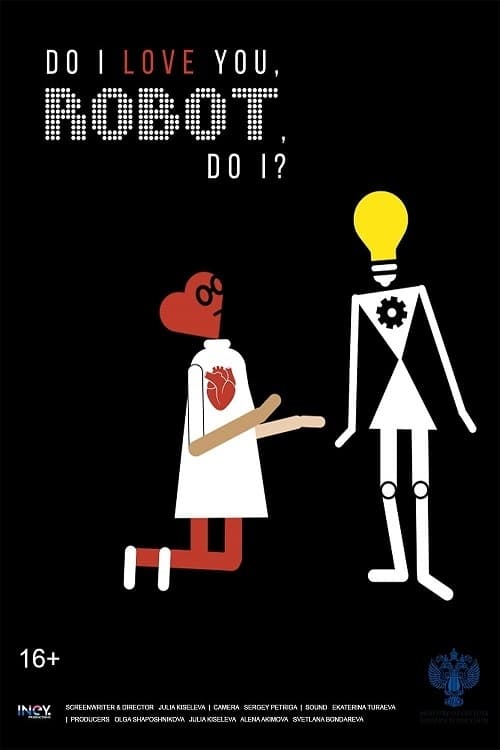
Anthropomorphic robots are increasingly being introduced into our lives: they meet us at the reception, educate children and even live in families as partners. Scientists are trying to make robots as human-like as possible. In the late 80s, scientists studying the emotional reaction of people to robots discovered the "uncanny valley effect": the most humanoid robots caused dislike and even fear in people. But what will happen when they become indistinguishable from a person? And will they?
The film tells the story of a veteran of military operations in Chechnya. The main character of the film is a two-time recipient of the Order of Courage. A retired colonel. Friends habitually call him "Combat", although he has not commanded anyone for a long time. He has three wars, seven wounds and two concussions behind him. The usual statistics of a simple officer's fate.
Eight-year-old Lyubochka is waiting for her father, the captain, but no one believes she has one.
What is a human brain? Is it just a part of central nervous system, super computer or master who controls human's life? Modern neuroscience researches will help us answer this questions.
Three physicists in search of the grail, each - his own. One hopes to find gravitational waves, the other - axions, the third is looking for magnetic monopoles. Each of these waves and particles is predicted by theorists, but whether it exists in nature in reality, no one knows for sure.
Icon restorer Begun lost everything — his wife, his son, and his beloved profession. And after getting involved in smuggling a batch of stolen icons abroad, he ended up owing a large sum of money to the bigwigs of the criminal underworld. He was given a condition: to find and bring to Moscow the miraculous icon “Siberian Savior,” which had been left in one of the villages lost in the remote Siberian taiga a hundred years ago.
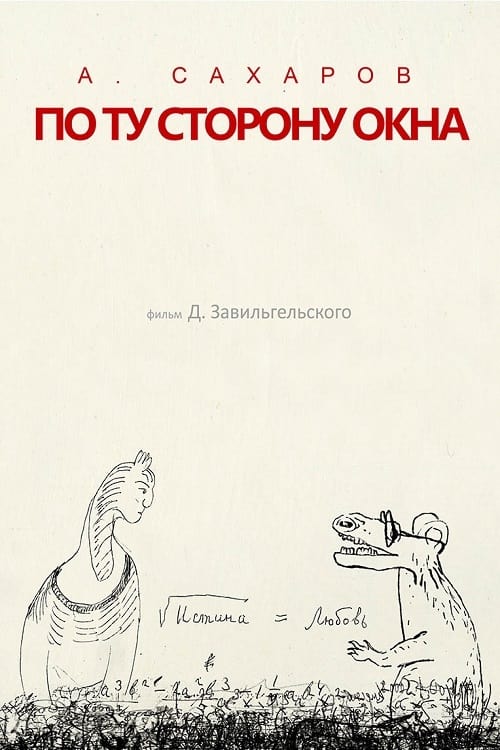
The film about the great scientist, thinker, human rights activist is based on the memories of his associates, declassified documents of the Central Committee of the CPSU and the KGB of the USSR, a chronicle shot by the KGB in the city of Gorky, and most importantly, animated drawings that Andrei Dmitrievich left on the margins of notebooks with formulas, in letters to children and grandchildren, as well as simply inventing some fantastic characters.
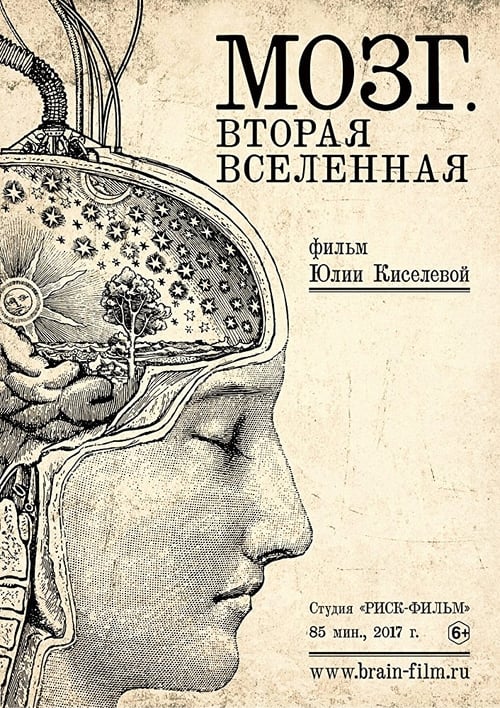
In the film, we look into the future. How does scientific knowledge change our worldview, culture and environment? On the one hand, the development of technology expands our boundaries of freedom - we live longer, learned to establish communication with paralyzed people, etc. But the more scientists learn about the brain, the more questions arise. Back in the 1980s, Benjamin Libet conducted experiments that, according to many scientists, proved that man does not have free will. Neuroscientists say that our behavior and decisions depend only on the activity of neurons.
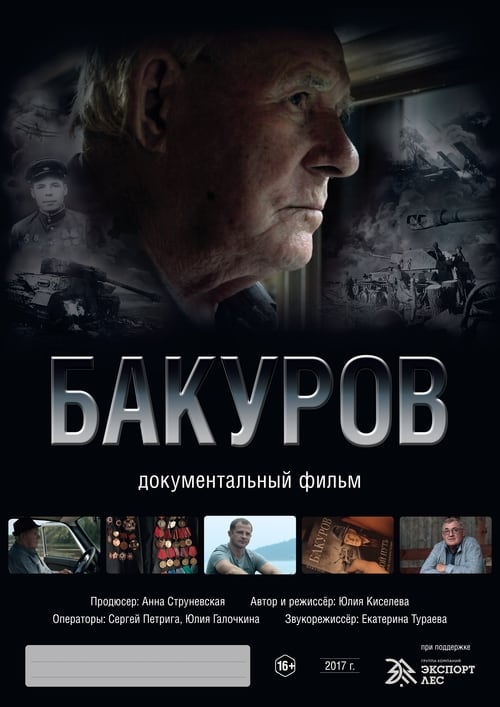
He went through the war from Leningrad to Germany. He was awarded two medals of valor and the Order of The Patriotic War of the 2-nd Class. Vladimir lives in a small village of the Irkutsk region. Sometimes he goes to the city to his son, grandson and great-grandchildren by the train. But sometimes there are the moments of silence to sit and remember all the living and the dead. And the more silence, the more the memories, the ghosts of war.