Yann Beauvais
Directing
Biography
Born in France in 1953. As a teacher in the United States, he became conscious of the need to lead a "cultural battle". Filmmaker and film critic, he organizes experimental cinema events in France and other countries. After his film and philosophy studies, he became very influenced by contemporary art (Russian formalism and minimal structuralism) and learned music, as well as by his friendship with Paul Sharits. He strives to find a balance between formalism and lyricism. He himself explains that the common denominator between all his films is that they are all constructed according to the principle : "fragility" - "disappearance" - "disintegration". In 1982 he co-founds Light Cone with Miles McKane. Among others he has published: Musique film with Deke Dusinberre (1986), "Mots: dites, image" with Miles McKane (1988), Poussières d'images (1998) and finally, "Monter/Sampler" with J.-M. Bouhours (2000).
Known For

Cinématon is a 156-hour long experimental film by French director Gérard Courant. It was the longest film ever released until 2011. Composed over 36 years from 1978 until 2006, it consists of a series of over 2,821 silent vignettes (cinématons), each 3 minutes and 25 seconds long, of various celebrities, artists, journalists and friends of the director, each doing whatever they want for the allotted time. Subjects of the film include directors Barbet Schroeder, Nagisa Oshima, Volker Schlöndorff, Ken Loach, Benjamin Cuq, Youssef Chahine, Wim Wenders, Joseph Losey, Jean-Luc Godard, Samuel Fuller and Terry Gilliam, chess grandmaster Joël Lautier, and actors Roberto Benigni, Stéphane Audran, Julie Delpy and Lesley Chatterley. Gilliam is featured eating a 100-franc note, while Fuller smokes a cigar. Courant's favourite subject was a 7-month-old baby. The film was screened in its then-entirety in Avignon in November 2009 and was screened in Redondo Beach, CA on April 9, 2010.
Cinématon

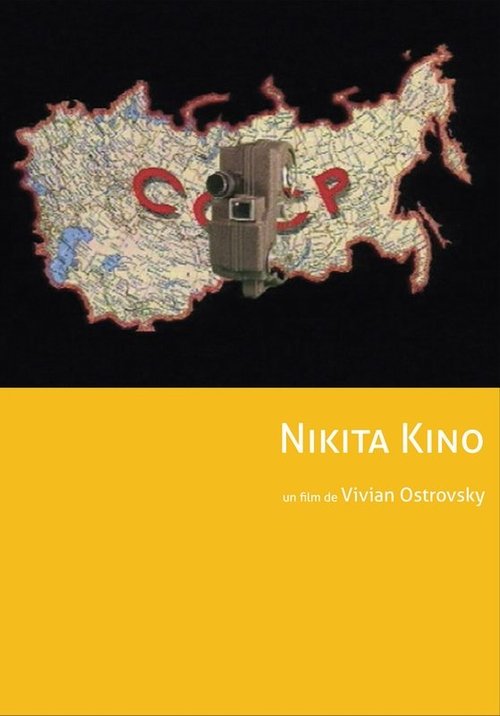
"The film is a travelogue of sorts. In 1960 my family lived in Brazil when my father discovered his sister and brother in Moscow, who he hadn't seen for 40 years, were still alive. Since they couldn't leave the USSR we went to visit them regularly for about 15 years. At the time I had my 8mm then a super 8 camera with which I filmed the family, our outings, picnics, markets and their homes… I decided to use this material, which was not very interesting per se, by mixing it with Soviet found-footage of the same period (1960's, 1970's, 1980's). I used feature films, propaganda footage, newsreels, etc. The result is a kind of Khruschev-era mix with a collage of Soviet music and a voice-over of my memories of the Cold War period."
Nikita Kino

A single-screen version of the Portraits / Mirrors multi-projection. Featuring portraits of: Aloual, Gaël Badaud, Raphaël Bassan, Yann Beauvais, Jean-Michel Bouhours, Gérard Courant, Berndt Deprez, Bertrand Gadenne, Mythia Kolésar, Christian Lebrat, Stéphane Marti, Pascal Martin, Michel Nedjar, Dominique Noguez, Vivian Ostrovsky, Bernard Roué, Martine Rousset, Alain Sayag, Unglee, and Catherine Zbinden.
Portraits / Mirrors

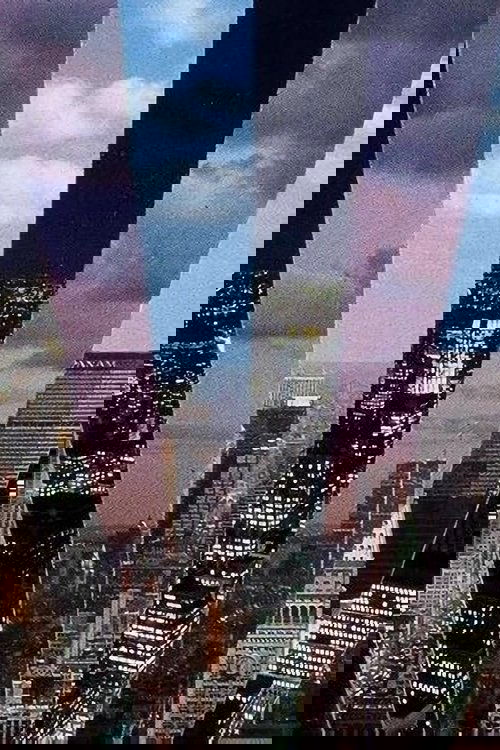
A film about my relationship to New York since 1962. It deals with the distance between a memory and the image of this memory, a distance one always tries to abolish. In this personal film we see the images of a city from a close distance, with autobiographic fragments on the soundtrack. The distance of recollection. The trace of this distance shapes the memory as much as the places, haunted by so many stories, so that our marks will blow up in a crash. A crash leading to a collapse in a vortex of affects.
New York Long Distance
Film boundaries explore the garden geometry of the royal paths at Versailles, wandering among gilded statues and dry fountains. Nostalgia for bygone splendor is interrupted by a list of rules describing the married life of slaves. By confronting image and text, the film thus takes an abstract view of the disturbing anachronism of the distribution of power.
Entre-deux-mondes

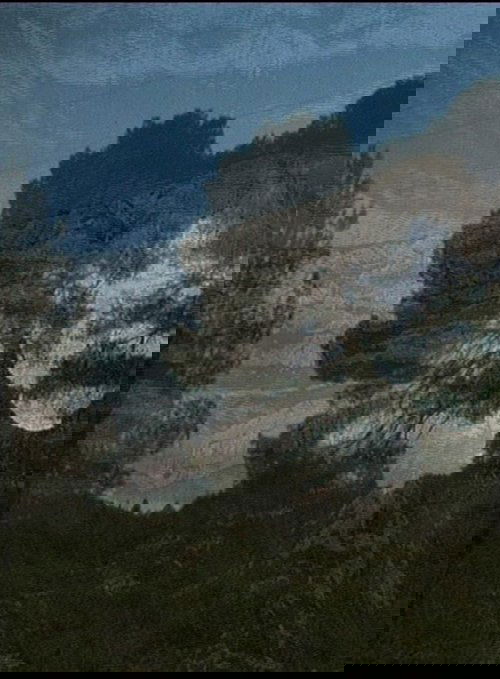
For around fifteen years, I have been filming a forest of imburana de cambão trees that has been progressively disappearing, located on the border between the states of Bahia and Pernambuco. The visual saturation created through image overlaps and the division of the screen into three parts fosters the emergence of a particular rhythm, in which pulsating texts impose other forms of escape.The gradual disappearance of this forest echoes texts evoking the consequences of climate change, while also inscribing fire and logging as human acts contributing to this impoverishment.The basis of this film was the installation of the same name presented as part of an exhibition at the Frans Krajcberg Space in 2025. The film is denser. The imburanas de cambão burst into flames as the sertão turns into desert.
Salitre não mais!
Reel 33 of Gérard Courant’s on-going Cinematon series.
Cinématon XXXIII
A found footage film about the war. A film which inscribed his refusal of the manipulation of the media coverage of the last holy war of the American and their allies. No image of that war which was also a media propagandist war. An evocation against the stupidity of war in seven parts.
Soft Collisions Dream of a Good Soldier
Initial situation: models were invited to participate in their portrait by the contribution of personal objects and a great freedom of expression before the camera. This initial situation was conceived by Catherine Rebois. Graffon: I propose to film in a fragmented way these sessions of pose. Participants agree to be filmed at the same time they are photographed. Deliberately sharpened shift between an initial situation in its own duration and its filmic recording. The sequence of photographic shooting sessions is shattered.
Portraiture

Disjet uses the movement of an anonymous figure in isolated environments to examine metaphysical journeys through the landscapes of the mind.
Disjet
An activist piece dealing with the Palestinians' right to exist. Gaza, March-April 2018.
basta

Mainly sketches of different places crossed: the United States, Versailles and Paris. The film ends with a sculpture by Miles McKane.
Journaux 1983-1985

No description available.
Spetsai
The winter Place Sqaure. Two cameras spinning, at the sound of musicians from an orchestra tuning their instrument.
Spin

"...the Arc de Triomphe. Among many variations offered, we have selected about thirty which were cut vertically, horizontally and diagonally. The film, very dense, compact, tries to shape perception by means of specific cinematographic treatments which accumulate contradictory, divergent and paradoxical information." -YB
Enjeux
"It is above all a portrait of Miles McKane. Making a portrait, shooting a portrait are all modes of perpetuating/appropriating a person's image. Could a cinematographic portrait escape this rule?" -YB
Miles

Filmed in August 1997, in the New South Wales, then left to decay for several years in other tropical climates, before being scanned and finally edited in Recife in 2023. A fog partially covering a tropical forest. When I seized these elements twenty years later, the question of the existence of this same forest arises.
EVANESCENT NSW

Since October 7, 2023, Israel has been waging war in retaliation for Operation Al Aqsa. The scale of this war and the massacres being carried out are taking on proportions that make it a genocide that does not speak its name. Drawing on a variety of sources, the film aims to question these acts, which refuse to be called into question.
Néantir
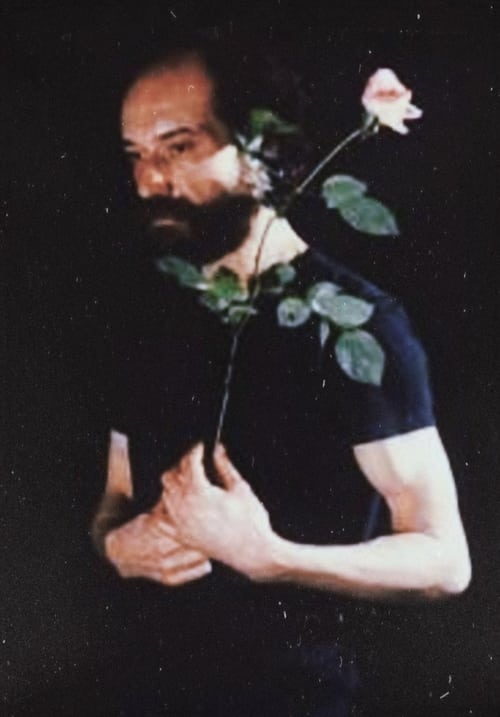
Portrait of French filmmaker Yann Beauvais, shot in Paris (France) on April 12, 1984 at 4:00 PM.
Cinématon n°322 : Yann Beauvais

Remarks on the recent war in Lebanon.