Margit Carstensen
Acting
Biography
Margit Carstensen (29 February 1940 – 1 June 2023) was a German theatre and film actress, best known outside Germany for roles in the works of film director Rainer Werner Fassbinder. Carstensen was born and raised in the northern German city of Kiel. Upon graduation from the local high school in 1958, she studied acting at the Hochschule für Musik und Theater Hamburg. This education led to her first stage appearances in Kleve, Heilbronn, Münster, and Braunschweig. In 1965, Carstensen began a four-year engagement with the German Playhouse in Hamburg. In 1969, she gained a local profile for her work in the Theater am Goetheplatz in Bremen, where she first met director Rainer Werner Fassbinder. She then worked under his direction in a comedy by the 18th-century Venetian Carlo Goldoni, The Coffee Shop (which was recorded for television in 1970), bringing her national attention in West Germany. She subsequently played the role of serial murderess Geesche Gottfried in the premiere of Fassbinder's own play Bremen Freedom (also televised, in 1972), and then in the title role of his Henrik Ibsen adaptation Nora Helmer (televised in 1974) derived from A Doll's House. Outside of theatre, Carstensen played leading roles in the Fassbinder films The Bitter Tears of Petra von Kant (1972), her best-known role for him; Martha (1974), analysing a traditional marriage in a contemporary setting; Fear of Fear (1975); Mother Küsters' Trip to Heaven (1975); Satan's Brew (1976); Chinese Roulette (1976) and Women in New York (1977). She also appeared in episodes of two Fassbinder television productions: Eight Hours Don't Make a Day (1972), and Berlin Alexanderplatz (1980). From 1973 to 1976, Carstensen held a steady acting engagement in Darmstadt. In 1977, she moved to West Berlin where she performed on the highly regarded Staatliche Schauspielbühnen. In 1982, she moved to Stuttgart in order to work with director Hansgünther Heyme, where she appeared in a series of plays directed by him. During this time, Carstensen also worked in international film productions, such as Andrzej Żuławski's Possession (1981) and Agnieszka Holland's Angry Harvest (1985); the latter was nominated for an Academy Award for Best Foreign Language Film. By the late 1980s, she had developed ongoing working relationships with German directors Werner Schroeter, Christoph Schlingensief, and Leander Haußmann. For the 2003–04 season, Carstensen appeared in the Vienna Burgtheater, in the premiere of Elfriede Jelinek's play Bambiland under the direction of Schlingensief. During the 2007–08 season Carstensen assisted with the Austrian-German TV documentary Mr. Karl – A Person for People, directed by Kurt Mayer. In 2016, she was still on television, appearing in the long-running series Tatort. Carstensen received many awards in her career. Among these were the 1973 German Film Awards (Gold), for her acting in The Bitter Tears of Petra von Kant, and the 2002 Bavarian Film Award, for her acting in Scherbentanz. In 1972 she was chosen by the German Film Critics Guild as Best Actress of the Year. In 2019, she was awarded the Götz-George-Preis for her life's work. Description above from the Wikipedia article Margit Carstensen, licensed under CC-BY-SA, full list of contributors on Wikipedia.
Known For

Tatort is a long-running German/Austrian/Swiss, crime television series set in various parts of these countries. The show is broadcast on the channels of ARD in Germany, ORF in Austria and SF1 in Switzerland.
Scene of the Crime

Derrick was a German TV series produced by Telenova Film und Fernsehproduktion in association with ZDF, ORF and SRG between 1974 and 1998 about Detective Chief Inspector Stephan Derrick and his loyal assistant Inspector Harry Klein, who solve murder cases in Munich and surroundings.
Derrick
No description available.
German Film Award

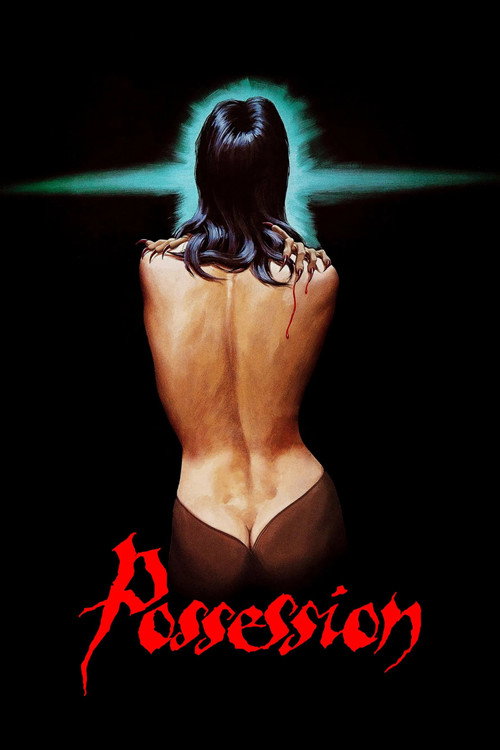
A young woman left her family for an unspecified reason. The husband determines to find out the truth and starts following his wife. At first, he suspects that a man is involved. But gradually, he finds out more and more strange behaviors and bizarre incidents that indicate something more than a possessed love affair.
Possession
No description available.
Bavarian Film Awards

In late 1920s Berlin, Franz Biberkopf is released from prison and vows to go straight. However, he soon finds himself embroiled in the city’s criminal underworld.
Berlin Alexanderplatz
Anwalt Abel is a German television film series, broadcast on ZDF between 1988 and 2002. 20 television films were produced, based on the detective novels of Fred Breinersdorfer.
Anwalt Abel

In the future, Simulacron, a computer project simulating reality, encounters strange occurrences after its leader's death. Dr. Stiller questions the sudden disappearance of a friend and wonders if Simulacron holds the answers.
World on a Wire
No description available.
Vorsicht Falle!

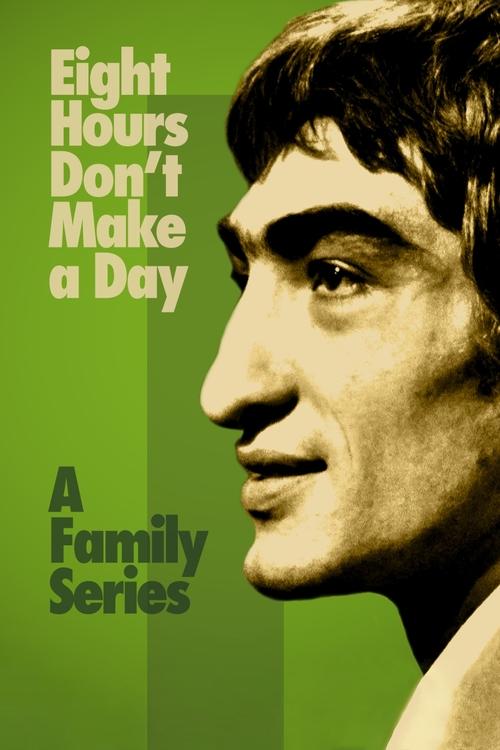
Eight Hours Don't Make a Day (German: Acht Stunden sind kein Tag) is a West German television drama miniseries written and directed by Rainer Werner Fassbinder. Commissioned by Westdeutscher Rundfunk, it broadcast in five episodes between 1972 and 1973. In Cologne, West Germany, young toolmaker Jochen's world is explored, including those around him: the woman he loves, his eccentric family, and his fellow workers, with whom he bands together to improve conditions on the factory floor.
Eight Hours Don’t Make a Day

Petra von Kant is a successful fashion designer -- arrogant, caustic, and self-satisfied. She mistreats Marlene (her secretary, maid, and co-designer). Enter Karin, a 23-year-old beauty who wants to be a model. Petra falls in love with Karin and invites her to move in.
The Bitter Tears of Petra von Kant

Ariane and Gerhard Christ, a wealthy Munich couple, plan for the weekend on separate trips, lying to the other about their trysts. However, their itineraries are complicated when they both arrive at the family's country home with their respective lovers.
Chinese Roulette

A group of kids grow up on the short, wrong (east) side of the Sonnenallee in Berlin, right next to one of the few border crossings between East and West reserved for German citizens. The antics of these kids, their families, of the "West German" friends and relatives who come to visit, and of the East German border guards, all serve to illustrate the absurdity of everyday life on the Sonnenallee, and therefore throughout the former East Germany.
Sonnenallee

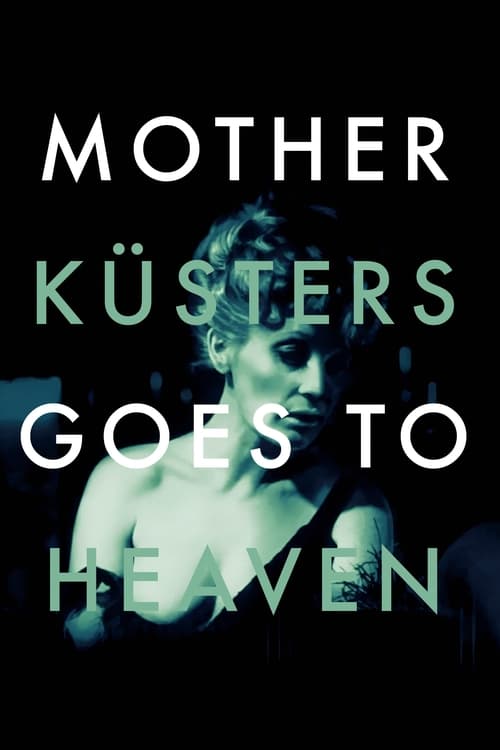
Frau Emma Küsters prepares dinner late one seemingly-ordinary afternoon in her seemingly-ordinary Frankfurt kitchen. She wants to add canned sausages to the stew; her irritating daughter-in-law thinks otherwise. But the point is moot: Ernst Küsters has not only murdered the personnel director at the soap factory where he's employed but succeeded that by committing suicide.
Mother Küsters Goes to Heaven

After the death of her abusive father, lonely librarian Martha finds herself caught up in a strange, sadomasochistic relationship with a monstrous husband whom she begins to suspect may be trying to murder her.
Martha

A German serial killer preys on boys and young men during the so-called years of crisis between the wars. Based on the true story of Fritz Haarmann, aka the Butcher of Hanover and the Vampire of Hanover.
Tenderness of the Wolves

Using unpublished and newly digitalised archive footage and film material, Bettina Böhler has brilliantly assembled this film about the life and work of the exceptional artist Christoph Schlingensief, who died in 2010.
Schlingensief – A Voice That Shook the Silence

Paul, a man suffering from cerebral palsy, lives an unfulfilled life in a nursing home. Sitting in his wheelchair, he fantasizes about a life in which people understand him, women find him irresistible, and he is be a force to be reckoned with. He places this imagined self in four different sexual fantasies, each with a different woman.
It Is Fine! Everything Is Fine.

Germany, right after the re-unification. The people are out of control, blind hatred towards immigrants is common sense. In this time, a social-worker, with the mission to bring a Polish family to their destination (an immigration camp in a little provincial town called Rassau), gets kidnapped just as the family. Chief inspector Koern and his girl-friend start to investigate in this matter in Rassau, exploring a world of obsessive sex, mislead lust and an over-whelming irrational love to the German nation, infiltrating anyone's mind. Rascism doesn't start with shaved hair and boots but rather in the middle of society itself...
Terror 2000

A very stylized TV version of the Fassbinder play. The set consists of a few pieces of furniture in front of a large screen on which coastal scenery is back projected. Geesche is a nineteenth-century woman who wants to have a mind of her own. She defies convention and will do anything to achieve her freedom from oppression by her family and friends.