Acting
No description available.
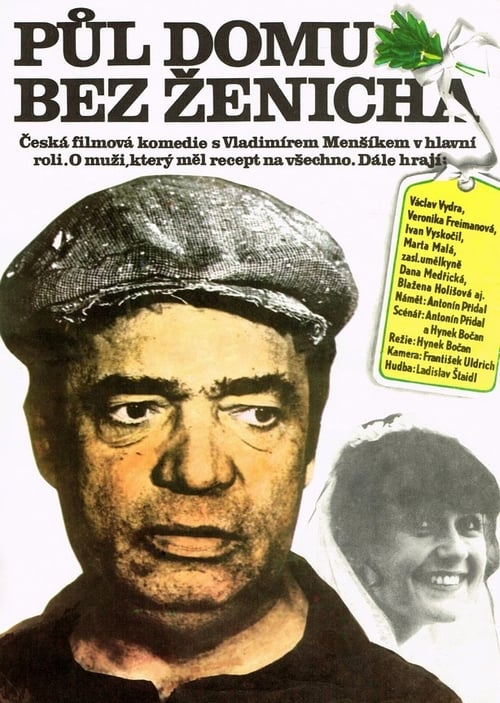
The Francs with their daughters Olina and Jirina are building a villa in the village of Rezkovice. Father Franc (Vladimír Mensík) doesn't allow himself a minute's respire and restlessly forces to work his wife, both daughters and Zdenek, Jirina's suitor. Zdenek does not protest against it and, in addition, he is skillful. On the contrary, Olina's boyfriend Libor is worse at work. He studies at the Technical College and he does not succeed much in grasping the building handicraft. Franc, proud of his pursuits, decides that he will arrange the wedding for both daughters and then hand them over the key of the villa in which both pairs have luxuriously furnished flats.
The film was based on the novel "Milión" by Karel Štorkán. The book and the film depict the events surrounding the great construction disaster in Prague in 1928, in which 46 construction workers died. The disaster thrilled the entire republic at the time, yet was never fully explained. The filmmakers focus on the story of Ing. Vondrák, the designer of the construction.
The urn supposedly containing the remains of Alice's grandfather falls out of the window and breaks. To Alice's great surprise, the urn is empty and the girl learns that the grandfather didn't die but disappeared under mysterious circumstances on the 2nd September 1946 in the town of Telc. Her grandmother claims that a mysterious young man with dark glasses was implicated in her husband disappearance. Alice is determined to solve the mystery. Grandmother's story leads Alice to a shoemaker who hands her Professor Jeník's - her grandfather's - invention, called the Force-fields Accelerator. Alice tells her boyfriend Petr about the device and the young man creates a time machine following the professor's instructions. The young couple then travel back to 1946 and there they indeed meet Alice's grandfather, and his daughter Blanka, who will later be Alice's mother.
A short film about Prague, Prague residents, and the beginning of the weekend.
A comedy concerning a down on his luck bookshop owner with a penchant for women who decides to make some money by pretending to be a waiter and collecting cash from unsuspecting diners.
A romantic fairy tale about how a castle lady found her lost son, who demonstrated rare bravery, kindness of heart and intelligence. He answered the White Fairy's difficult riddles and thus obtained a miraculous seed, which was to restore Princess Johanka's speech. He was also able to forgive the chamberlain's son for depriving him of the seed and never forgot the cottager Blažej, who raised him for years when he was deprived of his castle home by intrigue. Milena Medová, the author of many television fairy tales, managed to write an original story about human calculation, envy and resentment, but also, and most importantly, about wisdom, courage, the art of forgiveness, i.e. about qualities that should be valued.
It doesn't help to have an exacerbated situation like a family losing their only son - killed in a motorcycle accident. His parents, however, don't know the girl who survived, now being treated at a local hospital. Especially the honest and principled father, presented as a model worker and responsible official, cannot come to terms with her superficiality and carelessness, with her dubious life values...
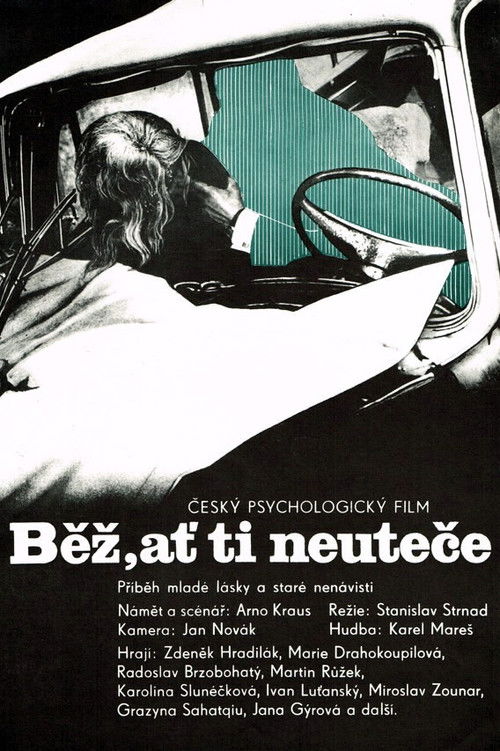
The film from 1976, a film that is exemplary in its devotion to the canons of normalised cinema, is the work of director Stanislav Strnad. He brought to life the script of an unusual author - the secretary of the SČDU, Arno Kraus - in this psychological drama. The protagonist of the story also has his cadre materials in order according to the requirements of the time - he is a worker director Kabát, who besides problems at the workplace also copes successfully with difficulties in his private life - a break-up with his wife.
Young Mordechai Mayzl has long been in love with Sarah, the daughter of the Prague chief rabbi of the Jewish community. But Mordechai is very poor, so he can only dream of marrying the girl he loves. Or rely on a miracle. Fortunately, in the Rudolfine era in which our heroes lived, magic and miracles abounded. And so it happened that the miserly primate, on one of his returns from a business trip, stumbled upon the coveted golden treasure in the forest. What the primate's greed causes and the intricate paths the treasure takes to reach its rightful owner are told in this fairy tale, which was filmed based on a story by E. Petiška.
The subject of this film, which takes an analytical look at the life of all of us with an analytical eye, is the evil microbe that has slowly infiltrated the organism of the Czech nation. Through the intertwining fates of three couples, it evokes domestic life before November 1989, burdened by a suffocating atmosphere of unfreedom, and after November, when relatively nothing has changed because people have not changed. The bleak conclusion suggests that the plague epidemic is still ongoing.
A sad story about love between Czech boy and German girl during 1944.
The common theme of the short story film is the famous duels between two important historical figures: Pushkin and Casanova. Pushkin's tragic duel, which ended his life prematurely, is portrayed in connection with the creation of his short story "The Dirty Shot", while Casanova's story is conceived in a rather ironic and humorous way. The point is that the famous seducer never actually seduced, on the contrary, all his life he was in a constant battle with female seductions.
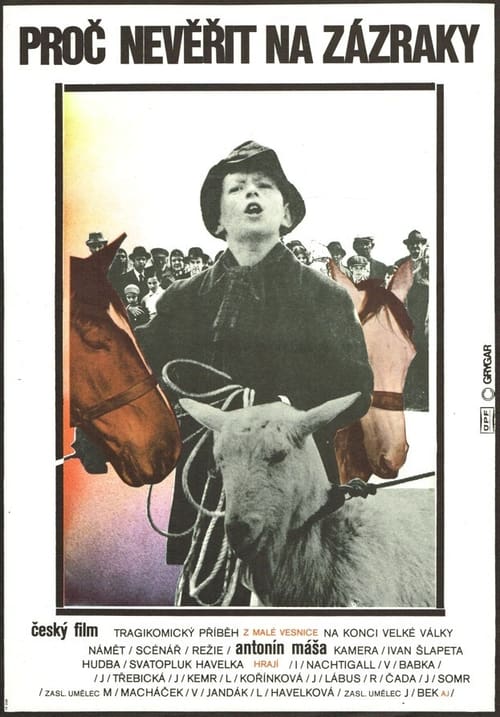
Wartime events from a child's perspective were a popular theme during the previous regime - here it is a twelve-year-old village boy who experiences dangerous situations with retreating Nazi troops in picturesque South Bohemia... Any attempt to achieve a more believable depiction is destroyed by the staging's grandeur, and in the end the result is an awkward piece, suitable at most for celebrating the relevant national holidays. A longer copy with a tragic ending is stored in the NFA. Milda is shot unnoticed by an SS major.