Evžen Plítek
Crew
Known For
About the retrial of convicted members of a partisan group and its commander, Viliam Žingor.
Žingorov proces
No description available.
Setkání

No description available.
Opus pro smrtihlava
No description available.
Praha Jana Kříženeckého
No description available.
Otázka cti
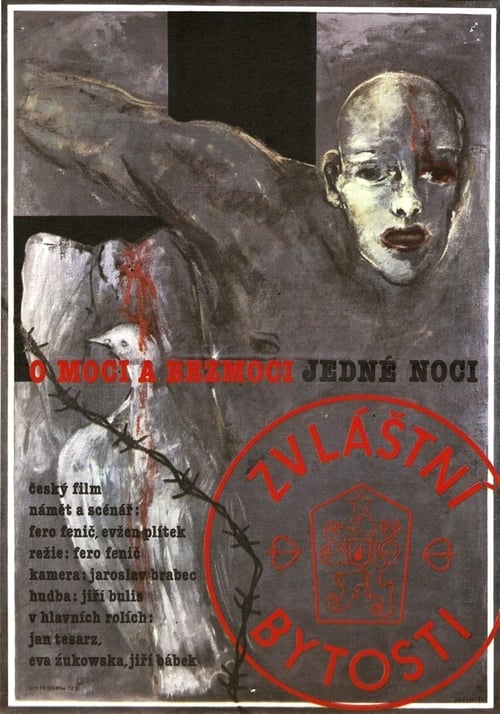
A parable for the end of totalitarianism. Three protagonists - a high official, a secretary, and a border guard - representative of three generations (1948, 1968, 1988) are forced to confront their ideals and places in society through the events of one strange night.
Strange Creatures
No description available.
Havran v panelovém domě
In 1990, filmmaker Jan Špáta headed to the North Moravian border region to join photographer Jindřich Štreit. His social humanist black-and-white images of the most ordinary life situations were close to his heart and offered themselves as a means of bearing witness to the social and spiritual state of Czech society on the threshold of freedom. "By allowing myself to be carried away by the world of Štreit's photographs, it is, in terms of content, one of my most raw films", Špáta rightly says. Štreit recalls, "I showed him different settings, what he would be interested in, what he would like, and it is true that he had a very easy job in two ways. Firstly, because these people were used to being photographed, and secondly, I chose the most attractive settings and the most attractive people. I knew that they were photogenic and that these were carrying situations".
Mezi světlem a tmou
The second film from in this category, Etudes for the Electron Microscope (20 min., 1988), is is characterized by formal experimentation in both image and sound.
Etudy pro elektronový mikroskop
No description available.