Alisa Berger
Directing
Known For

"RAPTURE I - VISIT" revolves around Ukrainian Vogue dancer Marko and the confrontation with his abandoned and inaccessible apartment in the region of Donbas, Ukraine, where the war is going on for ten years. This apartment, rendered through a 3D scan of original photographs, becomes a digital reconquest of territory as Marko visits it through VR for the first time since 2018. He cannot return to Ukraine or Donbas (now Russia) due to the ongoing war caused by Russia's aggressive full-scale invasion. To inherit the apartment Marko needs to enter the country of Russia, where he immediately will be conscripted and forced to go to war to fight against his own country Ukraine.
RAPTURE I - VISIT
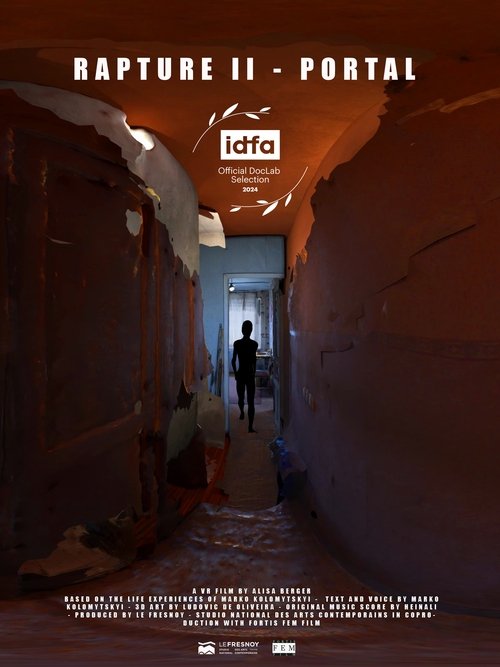
“RAPTURE II - PORTAL" revolves around Ukrainian Vogue dancer Marko and the confrontation with his abandoned apartment in the region of Donbas, where the war is going on for ten years. It fuses the idea of a physical lost home and the body of a dancer as an infinite eternal home. The film is contextualized by the self-commented tour of Marko, structured as a hypnosis session.
RAPTURE II - PORTAL
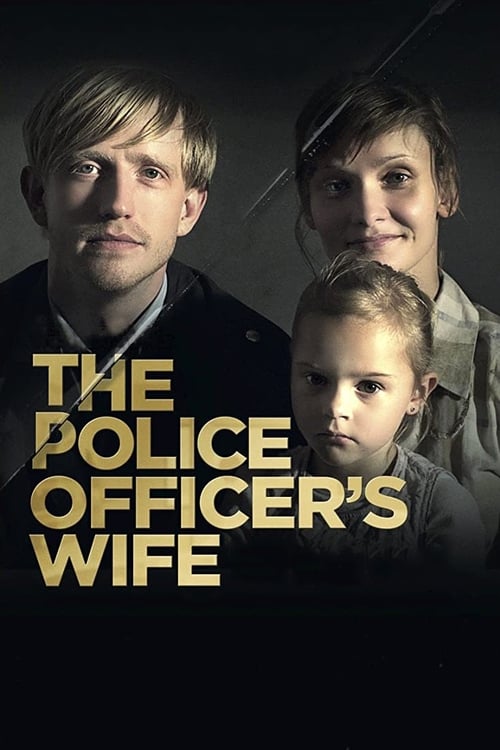
The story of a young couple who live in a small town with their four-year-old daughter. The husband is so caught up in his work as a policeman that he gradually becomes increasingly alienated from his wife and daughter who become ever closer to one another as they discover the new town. It is only a matter of time before the conflicts within the family manifest themselves.
The Policeman's Wife

Invisible People is a multi-layered depiction of the unique Japanese contemporary dance Butoh that flows between revolt, eroticism, trance, prayer, ancestral experience, and physical anonymity. The film gradually drifts away from its core issue and becomes a general portrayal of life itself, with all its unforeseen strokes of fate and strange micro-connections.
Invisible People

When his two mature children Anton and Linda start leaving the house, after graduation, father Michael stops taking care of his body. Anton sacrifices his body for a bed-rest-study to contribute to spacetraveling, while Linda is in search of her first sexual experience.
The Astronauts' Bodies
The ambitious doctor and scientist, Lucy, develops the mom-ballon, an artificial womb, which disconnects the ability to give birth from the female body, thus freeing women from the natural order. Archaic, dislocating figures drive her to either sacrifice her own child for her scientific research or to finally face her own life as a housewife.
The Housewife
RAPTURE tells the story of Marko, an exiled Ukrainian vogue dancer, and his abandoned apartment in war-torn Donbas, Ukraine. In a VR experiment, Marko visits his inaccessible home. The two-channel installation unfolds as a diptych in two parts. In RAPTURE I – VISIT (an 18min video projection), Marko confronts his abandoned apartment, recreated through 3D scans and original photographs from the occupied area. This digital reconquest offers a powerful reflection on displacement, raising questions about recovery and loss in the face of war, as well as the possibilities and limitations of technology and its ultimate emotional impact. RAPTURE II – PORTAL (a 19min VR piece) shifts the viewer into Marko’s place and explores the body as an eternal home. Guided by Marko in a hypnotic session, the viewer moves through a virtual reconstruction of his apartment. Vogue dance elements juxtapose the strength of the human body in dance with its vulnerability in the face of war technology.
RAPTURE

RETRODREAMING examines the common phenomenon of ghostly, abandoned schools due to demographic change in the countryside of Japan. Empty schools in deserted villages tell their own story: May it be during the pandemic, after a nuclear catastrophe, or just due to depopulation. The film references the Japanese tradition of telling "Kaidan "(ghost stories/scary stories) and the multiple school-themed "Kaidan "(Gakkō no Kaidan, Japanese for "Scary School Story") in Japanese mainstream culture, which encompass the idea of entities and memories remaining in these architectures. The film focuses on the visual quality of the Showa-era architecture of the abandoned Sawada School in Nakanojo. A voice from a tape recorder recalls the reality of a secret experiment during a pandemic that resulted in further mysterious events. The audiovisual experience draws the viewer into a strange, suspenseful atmosphere somewhere between an unlived retro-future, a sci-fi dream, and an unfinished mystery tale.
Retrodreaming
A narrator gives the account of a strange tale of a couple on a transformative journey into a world of paradise with no language. Animalistic gesticulations and instinctive expression emanate from the body until both of them grow apart and then into other versions of themselves, never to be the same again. A grainy vintage-like feel permeates the alien world and mixes it with the assumed real world. - Jaqueline Valencia
Island Story

An experimental documentary film dedicated to Japanese Butoh dance: a multi-layered portrait of a unique contemporary movement within the gray areas between rebellion, trance, ritual, meditation, prayer, philosophy, ancestral experience, and physical anonymity.
GHOSTS

Three Borders highlights the plurality of diasporic experiences and the suppressed narratives of racialised displacement in the USSR.
Three Borders
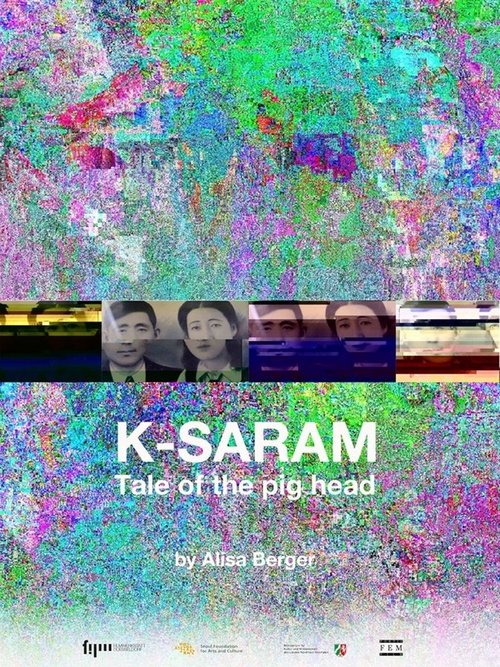
About 500,000 Koreans reside in the former Soviet Union. Most of their ancestors were forced to flee during the Japanese occupation / annexation (1910-1945). The name they gave themselves is Koryo-saram. Their language, Koryo-mar, is descended from the Hamgyöng dialect (province of North Korea) and many other variants of Northeast Korean. The documentary sets up a multi-voice narrative characterized by shamanic rituals, digital glitches, voiceovers, texts and sound panoramas. At the same time inter-subjective and deeply personal, the film recounts migration, the diaspora and death with humor and lightness.