Directing
French current affair show
La Case du Siècle is a French television program launched in 2010 and broadcast on France 5. Hosted by Fabrice d'Almeida, it airs documentaries every Sunday that aim to shed light on the history of the 20th century, both in France and around the world. Through these documentaries, viewers can deepen their knowledge of a specific subject or simply discover a particular era. *La Case du siècle* offers an in-depth look at the events that changed the course of history.
No description available.
This is the “embedded” French Revolution that we want to share: an exceptional, immersive experience seen through cameras that dive into the heart of history, following its every jolt. It's the story of the fall of the world's most glorious, most powerful ad most ancient monarchy.
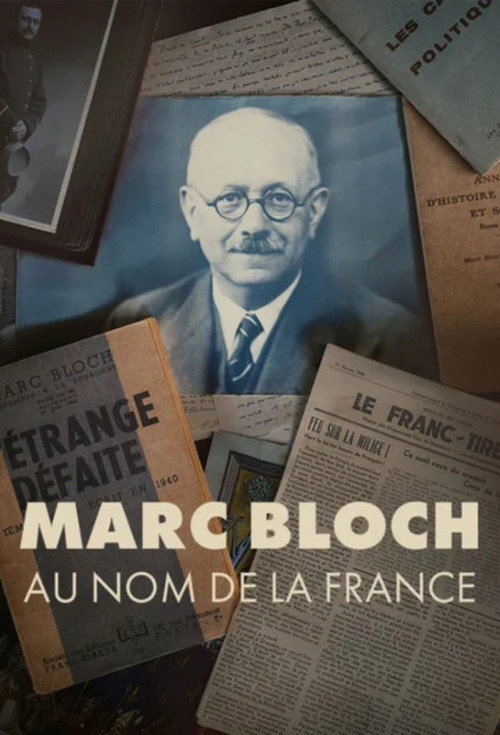
Marc Bloch is one of the 20th-century French intellectuals best known abroad. He fought in both World Wars: though wounded during World War I, he remained on the front lines until victory, and he enlisted as a volunteer during World War II before joining the Resistance. This historian, who revolutionized the way history is viewed, written, and told before being murdered by the Nazis for being a member of the Resistance and a Jew, left a profound mark on his century. It is this exemplary life, dedicated to the Republic he cherished, that will earn him a place in the Panthéon—and that is the story this film tells.
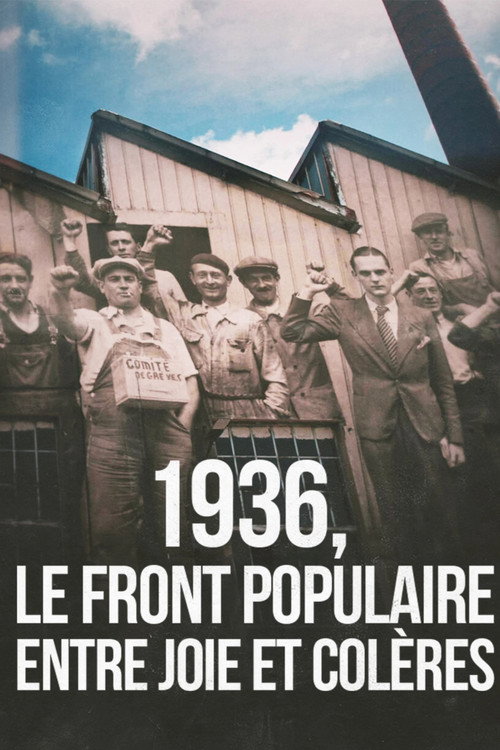
This brief period in French history (1934–1938), known as the “Popular Front,” has left an indelible mark on the nation's collective memory. Set against the backdrop of a polarized and divided France, this film chronicles a social and cultural revolution, traveling back in time to uncover the places, testimonies, and hidden archives of this formative experience that permanently transformed French society.
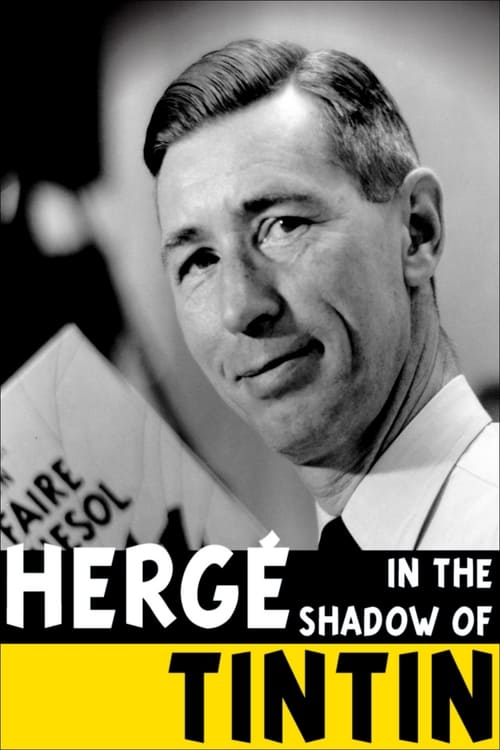
Georges Remi, known as Hergé, a complex and complicated artist, created Tintin, one of the most famous characters in the world. With exceptional access to the archives of Studios Hergé and Moulinsart, this documentary looks at Remi's life and the way he changed the art of comic.
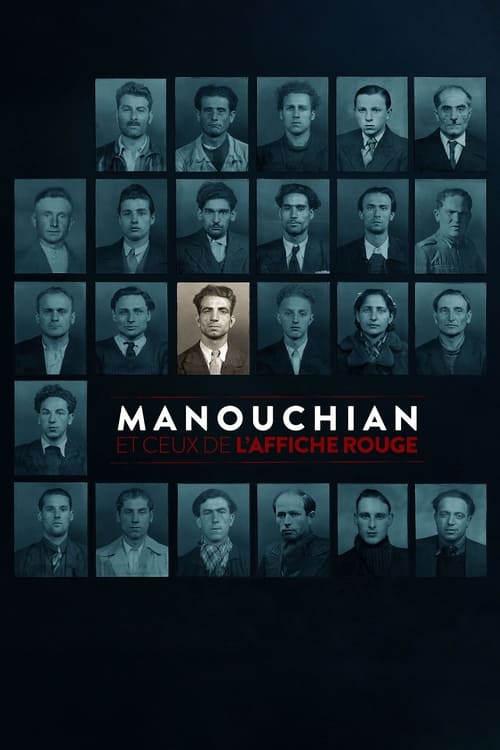
In February 1944, in a courtyard at Fresnes Prison, the Germans staged a spectacle to stigmatize a group of communist resistance fighters—all foreigners and mostly Jewish—who had been arrested a few weeks earlier. The propaganda aimed to discredit these fighters, portraying them as terrorists and criminals, even though they had managed to carry out numerous attacks against the occupiers in Paris. The red poster, plastered in thousands of copies across the country, would immortalize them in legend. They were subsequently executed at Mont-Valérien, near Paris. Missak Manouchian, the Armenian who led these fighters, now embodies this group in the collective memory as he is enshrined in the Panthéon, on behalf of all his comrades, 80 years after their execution.
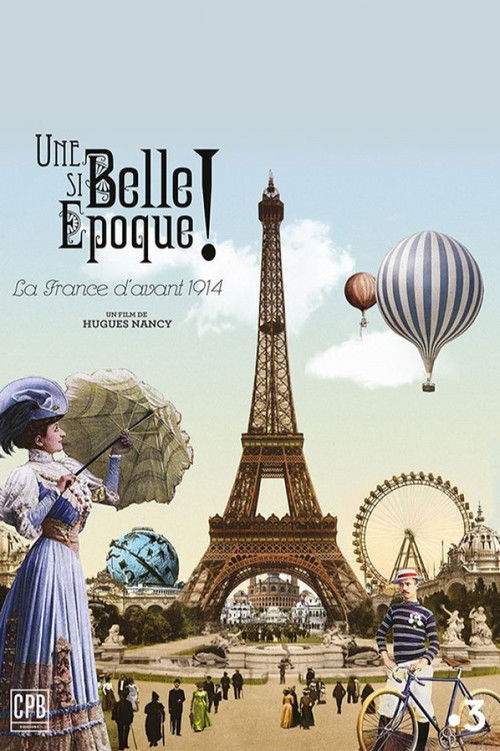
In 1900, the eyes of the whole world are on Paris. The World's Fair welcomed 50 million amazed visitors, and the city celebrated itself in a glamorous era. This period went down in history as the "Belle Époque." Elaborately restored and colorized historical photographs bring to life the exciting life in Paris between the end of the 19th century and the beginning of World War I in 1914. Bicycles, cars, airplanes, moving pictures, newly founded film studios, revolutionary composers and painters, avant-garde ballet performances, fashion houses, summer resorts on the Atlantic coast – life was intoxicating. People celebrate in the variety shows, cabarets, and revue theaters of Paris. Moulin Rouge, Folies Bergères, Bal Tabarin—in Paris, the nights are long and life is too short to sleep through. It is a dance on the volcano, given the political developments in the world.
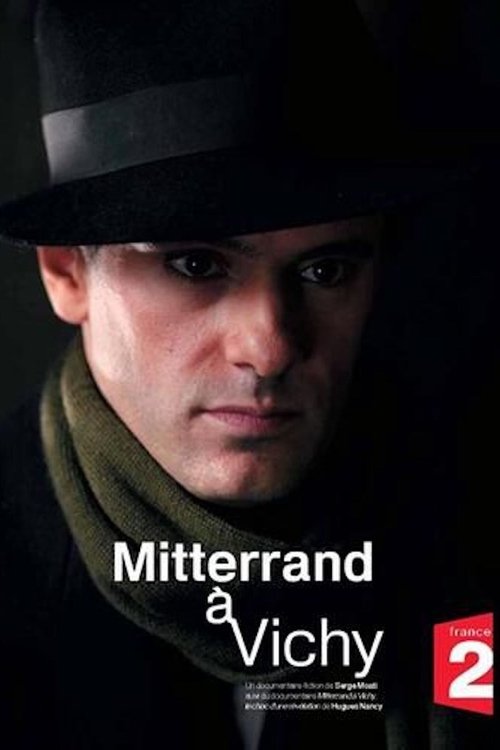
The dark years, those of war. This film, which combines fiction and archives, tells the story of the unusual trajectory of a young man from the provinces. Prisoner of war, escaped at the age of 24, he found himself in Vichy, capital of the French state. A convinced Pétainist, he will become a leading resistance fighter.
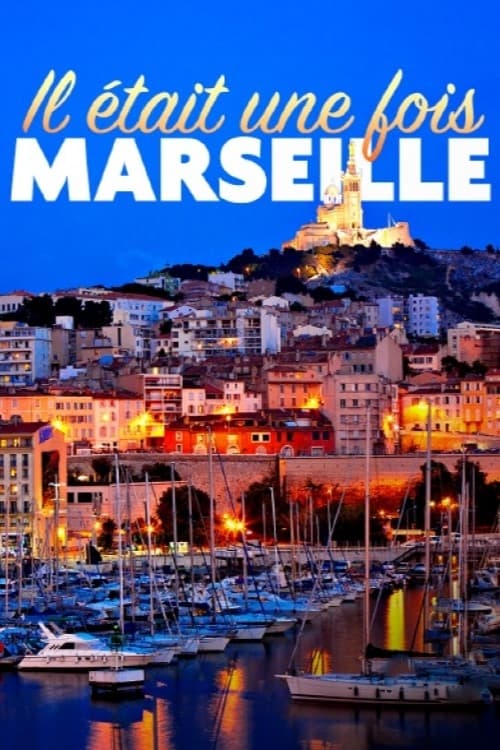
The heroine of this film is immortal. She is over 2600 years old. This is the self-portrait of the oldest city in France. A city whose landscapes bear the scars of a destiny that has spared it no trials. Gateway to the Orient, crossroads of trade and immigration, Marseille is a mosaic with 111 districts and 200 nationalities. Rebellious, chaotic, in turn desired, torn apart, transformed, it is reborn each time from its ashes. Marseille tells us more about the history of France and sheds light on what France is today.
April 15, 1874, boulevard des Capucines, Paris: a group of young feverish painters shunned by the official Salon and mocked by the classical masters, chose to come together to exhibit their paintings freely, in the studio of photographer Nadar. At the end of a teeming century, when modernity was emerging, this group of rebellious artists, revolutionized the world of art.
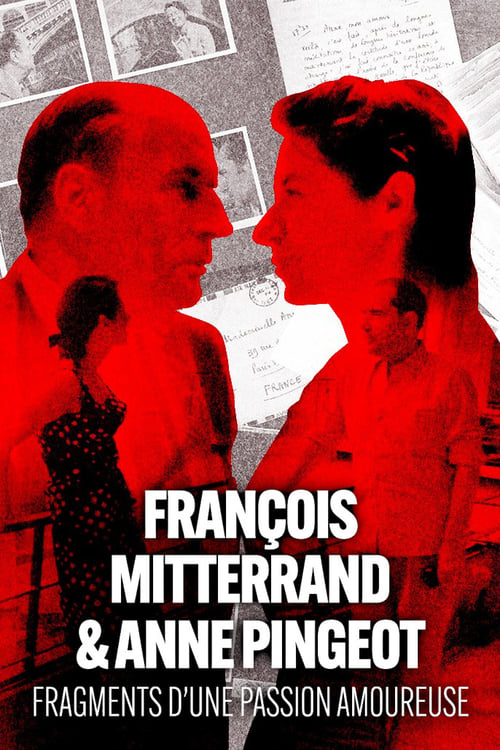
In the summer of 1963, François Mitterrand was going through a deep existential crisis. His political career was at a standstill and, after 19 years of marriage, the couple had grown apart. It was at this point that François Mitterrand met the woman who was to give new meaning to his life. Anne Pingeot, aged 19, was to become the companion of a lifetime, a woman who would be with him throughout his rise to power and who would remain by his side until his last breath. For the first time, Anne Pingeot has agreed to allow the fragments of this passionate love story — hundreds of letters and a diary — to be shown on television, before being donated to the National Library.
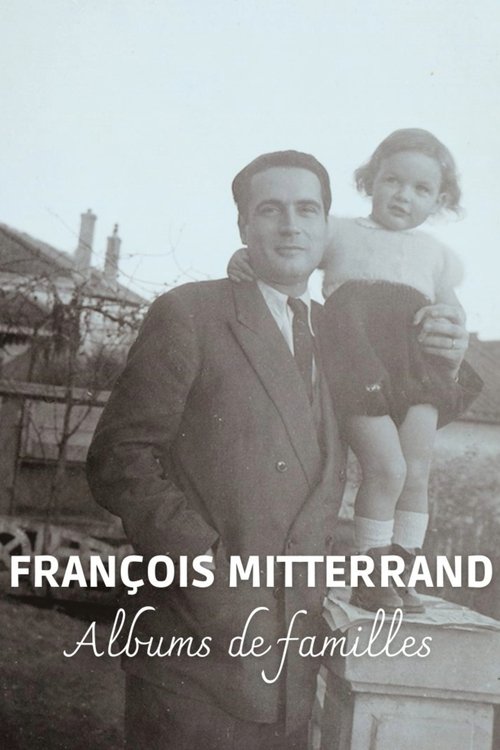
Twenty years after his death, François Mitterrand remains an enigma. Never before has a French politician generated so much contradictory comments, both during his lifetime and after his death. Beyond his political career, his complex and mysterious personality continues to fascinate. To lift a corner of the veil, Jean-Christophe and Gilbert Mitterrand and Mazarine Pingeot agreed to share some private memories of their father. By leafing through François Mitterrand's photographic albums, it is possible to reconstruct his personal journey, from his childhood years through to his life with Anne Pingeot and his daughter Mazarine.
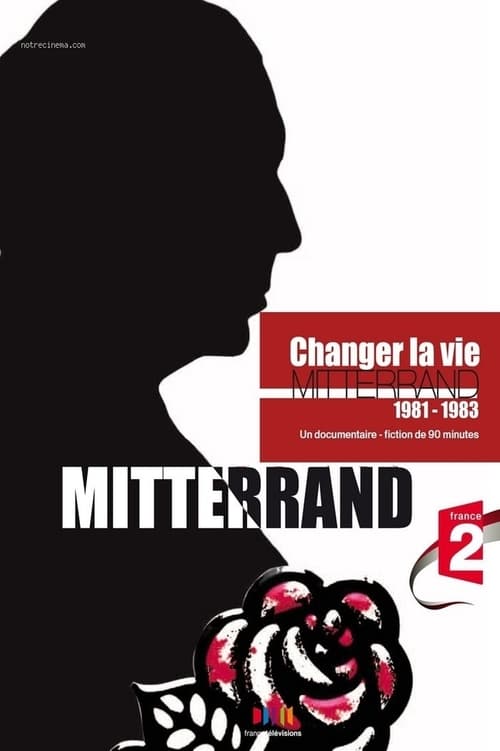
A documentary drama retelling the shift of Mitterand's policy. In May 1981, F.Mitterrand is elected President of the Republic, after more than twenty years in the opposition. He wants to change the life; he believes in the supremacy of politics over economics. He wants it to be fast and executes his programme to realise the socialist transformation. Two years later, Pierre Mauroy and Jacques Delors introduce an unprecedented austerity plan and open the parenthesis of austerity... that would never be closed.
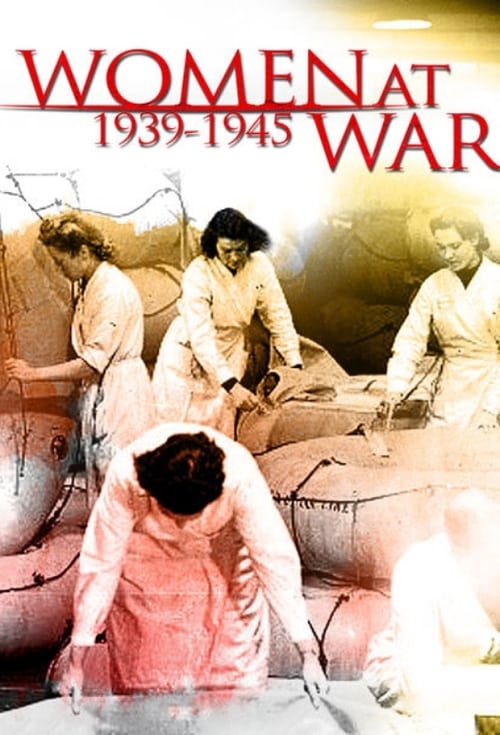
Mothers, nurses, soldiers and deportees - these women fought against persecution for freedom and survival amid the turbulence of World war II.