Directing
The Letter (2019) moves between video, performance, sound, and text. It takes as a starting point the haunting reminiscence of a group of West Africans in 19th century Vienna. By following the traces left, an analysis of archival structures and the objects housed within them is opened up, pointing to an understanding of the past as not past but as a gateway for interrogations of Diasporan temporalities.
The film departs from Carl T. Dreyer's La Passion de Jeanne d'Arc (1928), Sergej Eisenstein's Battleship "Potemkin" (1925), October (1928), and the Mexican film material (1930), as well as Friedrich W. Murnau's Nosferatu (1922). Conceptualised in three parts, it draws viewers into landscapes populated by ghostly communities, shadows, and intermediate beings acting as transitions to revolutions and dreams in the past, future, and present. Produced and realised as a framework for the que_ring drama project – Dark Revolutions which premiered on 14 Nov. 2019, at studio brut, Vienna, Austria.
Landscapes from Murnau’s Nosferatu: A Symphony of Horror (1922) are accompanied by reflections on the ghosts of political struggles of the past, vision as an instrument of colonisation and the true meaning of the decolonising gaze that upends all order.
“Rock, water, fire, air…” – the rhythmic singing of a children’s song echoes on. This film intertwines play and the memory of the forced baptism of three African girls in 1855 Bruneck, Tyrol, into acts of resistance.
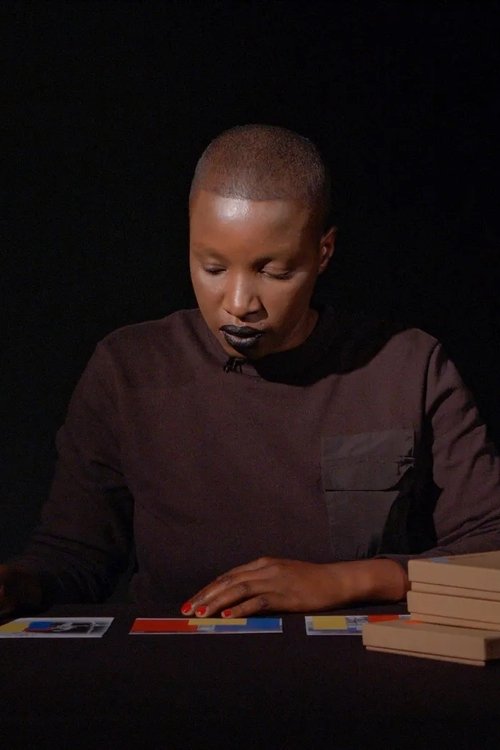
The seats in the theatre are still empty when the performer – the artist – enters the frame. She speaks about a colonial flashback. She is haunted by a series of historic photographs of or taken by the Austrian ethnographer Paul Schebesta in the 1930s, in the Belgian colony of the Congo.
The iconic depiction of Joan of Arc in Carl Theodor Dreyer’s film. Joan, destined to become a symbol of faith, patriotism and self-sacrifice. The separation of flesh and spirit. A little more and she would be a proto-feminist martyr. Is that too much to ask of you, Joan?