FEEL IT.STREAM
Patrick Juvet

Patrick Juvet

Acting

Biography

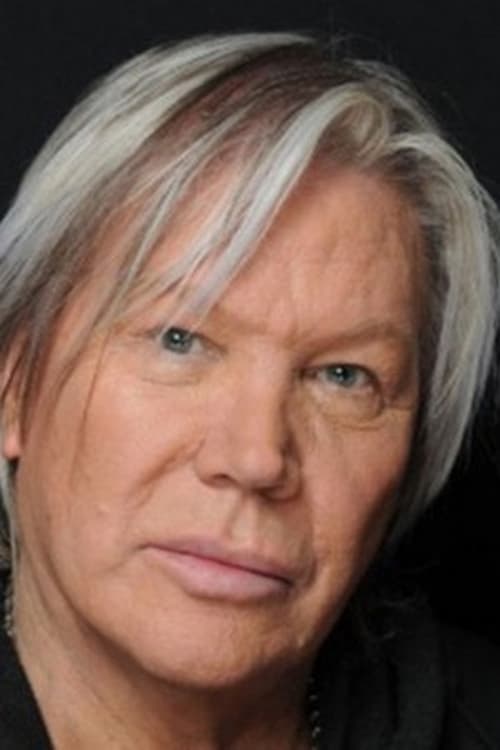
Patrick Juvet (21 August 1950 – ca. 1 April 2021) was a Swiss model and singer-songwriter, who had a string of hit records in Europe. While his early career was focused on making pop records, he found international success as a disco music performer in the latter half of the 1970s. His biggest hit, "I Love America", made the top twenty in France, Sweden and the UK, and the top ten in the US disco chart. Born in Montreux, Switzerland, Juvet grew up in nearby La Tour-de-Peilz, with his parents, Robert and Janine, his brother Daniel, and his sister Nancy. Juvet's father sold radios and televisions, which sparked an early interest in music for the young Juvet. Juvet began studying piano at age 7; later he developed an interest in the music of The Beatles. Juvet moved to Paris in 1968 at the age of 18 with little money. A friend encouraged him to become a model in Germany, and Juvet pursued this career in Düsseldorf, Germany, for two years. He returned to Paris in 1970. In Saint-Tropez he met French music producer Eddie Barclay, who allowed him to record a first single in 1971. He wrote "Le Lundi au soleil", sung by Claude François. Later, Juvet began collaborating with French composer and musician Jean-Michel Jarre with this new material featured on Juvet's album, Love, which was released in 1973. Juvet represented Switzerland at the Eurovision Song Contest 1973 with "Je vais me marier, Marie," placing at no. 12 in the competition. In 1977, Juvet collaborated again with Jarre on the French-language album, Paris by Night, which featured the hit song, "Où sont les femmes?" In 1978, he worked with noted disco producers Jacques Morali and Henri Belolo, who also produced Village People and The Ritchie Family, among other acts. As a result, Juvet soon experienced international success with the disco tracks, "Got a Feeling" and "I Love America". In 1978, the aforementioned "Où sont les femmes?" was re-recorded in English under the title, "Where Is My Woman?", and was featured on Juvet's English-language debut on Casablanca Records in the U.S. Victor Willis, original lead singer of Village People, was the lyricist for the project. His soundtrack score to David Hamilton's art house film Laura featured disco musicians Marc Chantereau and Slim Pezin of Voyage and Space session bassist Jannick Top. Although the music from Laura was never released on compact disc and was never released in the United States, it nonetheless sold 650,000 copies. Parts of the music were written and produced by the New Zealander Brian Southcombe (now deceased) who was once married to Charlotte Rampling. Southcombe, David Hamilton and another New Zealander (Hamilton's business manager) were at one time actively trying to set up a sequel movie to Laura and are said to have approached Juvet for more music. With the decline of disco in the early 1980s, Juvet returned to the French music scene in 1982 with the album, Rêves immoraux. While selling respectably, the album failed to match Juvet's earlier commercial success. A time of financial and personal decline followed, with Juvet suffering periods of depression and alcoholism and relocating from mainland Europe to London, then to Los Angeles and finally, in the latter half of the 1980s, back to Switzerland. ... Source: Article "Patrick Juvet" from Wikipedia in English, licensed under CC-BY-SA.

Known For

Champs-Elysées
6.8

No description available.

Champs-Elysées

1982
Eurovision Song Contest
7.2

The Eurovision Song Contest is an international song competition, organised annually by the European Broadcasting Union (EBU) and featuring participants representing primarily European countries. Each participating country submits an original song to be performed on live television and radio, transmitted to national broadcasters via the EBU's Eurovision and Euroradio networks, with competing countries then casting votes for the other countries' songs to determine the winner.

Eurovision Song Contest

1956
Midi Première
9.0

Midi Première is a French variety show presented by Danièle Gilbert, directed by Jacques Pierre and broadcast from January 6, 1975 until January 1, 1982 on TF1. The program was generally broadcast between 12:15 p.m. and 12:55 p.m., then giving way to the 1:00 p.m. TV news. However, the broadcast schedule could change, depending on the guests, and the setting where the recording of the program was shot. Certain performances by artists who have become cult like the one where Ringo jostles with a demonstrator in interpretation (1977), that of Dalida with the title There is always a song with the soundtrack that does not start, twice, at the right speed (1978), Claude François and his Clodettes, who, in the provinces, are unable to join "the set" in order to interpret his song, the latter being taken by the crowd of delirious fans (summer 1977) . The group Supertramp performed there with the title "Dreamer" on March 8, 1975.

Midi Première

1975
Sacrée soirée
5.7

No description available.

Sacrée soirée

1987
Les Rendez-vous du dimanche
6.0

A talk show presented by Michel Drucker

Les Rendez-vous du dimanche

1975
Le monde est à vous
N/A

No description available.

Le monde est à vous

1987
Numéro un
7.5

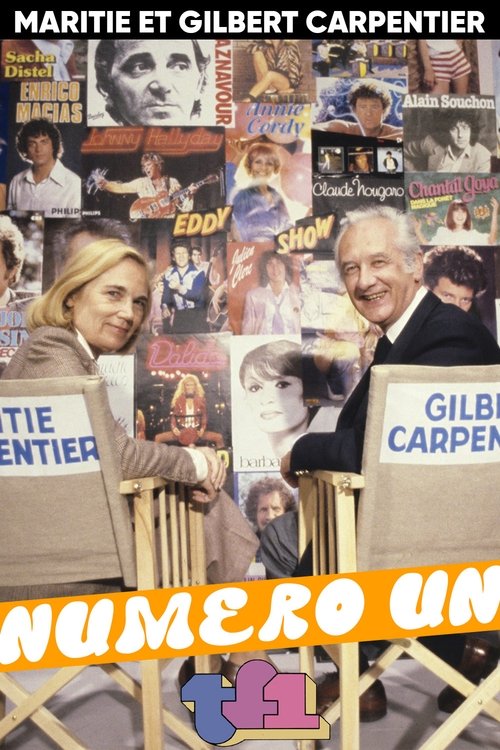
A French variety show.

Numéro un

1975
No image
6.0

No description available.

Midi trente

1972
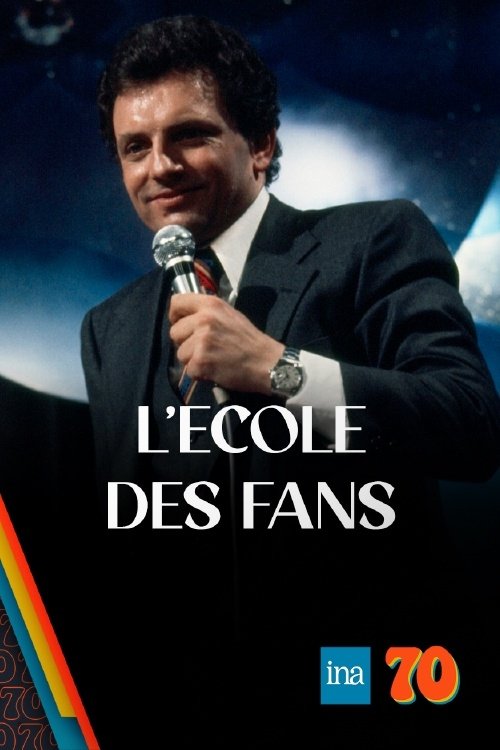
Fan School
7.2

Host Jacques Martin invites different talented children from various backgrounds to showcase their beautiful voices. The participants entertain and wow the audience with their lovely performances.

Fan School

1977
No image
6.0

No description available.

Samedi soir

1971
Eurotrash
6.5

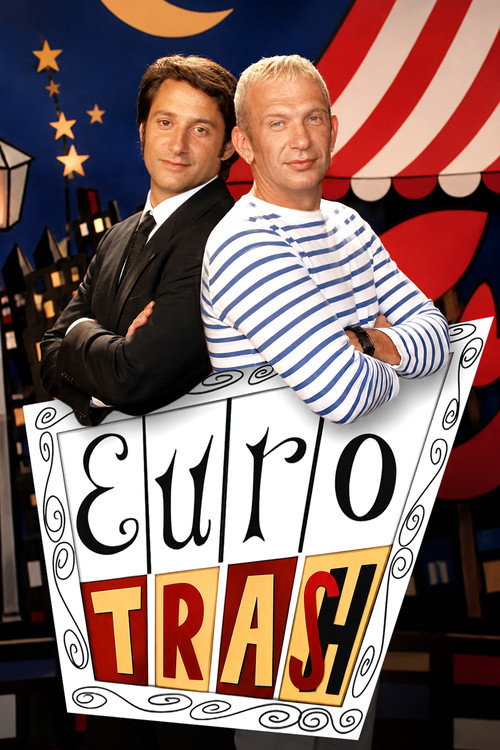
The likes of Antoine de Caunes, Jean Paul Gaultier, Davina McCall, and Lolo Ferrari are your guides to the weird and wonderful in Europe and beyond. How else would you learn about pubic hairdressers, the Penis Olympics, or the latest Japanese sex toys?

Eurotrash

1993
No image
N/A

No description available.

Système 2

1975
Stars 90
6.2

No description available.

Stars 90

1990
La chanson de l'année
9.0

No description available.

La chanson de l'année

2004
Laura
4.9

A blinded French sculptor completes a statue of a friend's daughter by using his sense of touch.

Laura

1979
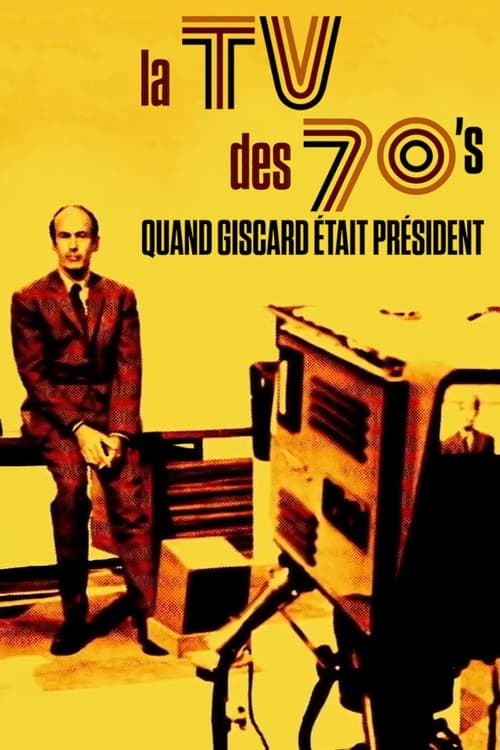
La TV des 70's : Quand Giscard était président
7.2

In May 1974, Valéry Giscard d'Estaing became President of the Republic and wanted to bring about a new era of modernity. One of his first decisions was to break up the ORTF with the creation of three new television channels: TF1, Antenne 2 and FR3. Three new public channels but autonomous and competing. It is a race for the audience which is engaged then, and from now on the channels will make the war! This competition will give birth to a real golden age for television programs, with variety shows in the forefront. The stars of the song are going to invade the living rooms of the French for their biggest pleasure. This unedited documentary tells the story of the metamorphosis of this television of the early 1970s, between freedom of tone, scandals, political intrigues and programs that have become mythical.

La TV des 70's : Quand Giscard était président

2022
Les Enfoirés - Les Enfoirés en chœur de 1985 à aujourd'hui
8.0

No description available.

Les Enfoirés - Les Enfoirés en chœur de 1985 à aujourd'hui

2014
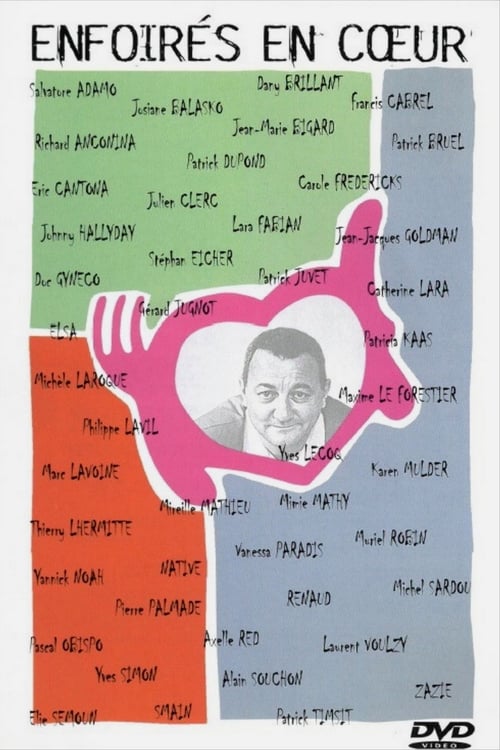
Les Enfoirés 1998 - Enfoirés en cœur
7.6

No description available.

Les Enfoirés 1998 - Enfoirés en cœur

1998
La tournée triomphale des idoles
8.0

No description available.

La tournée triomphale des idoles

2022
Remue-ménage
N/A

No description available.

Remue-ménage

2002