Acting
Yim Woon-hak (January 20, 1906 - April 20, 1987) was a South-Korean actor.
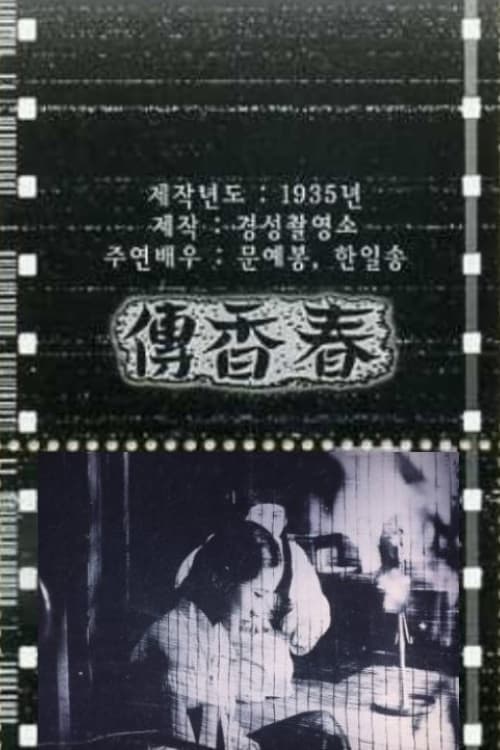
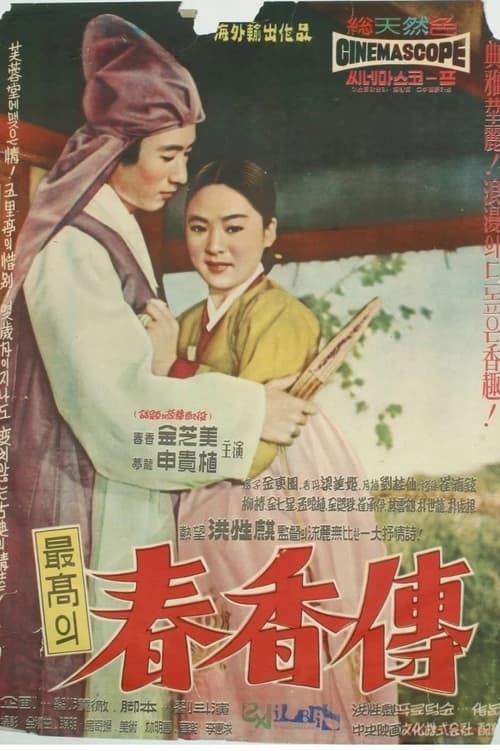
Chun-hyang, the daughter of a geisha in the Namwon region, and Lee Mong-ryong are engaged. When Lee Mong-ryong goes up to Seoul with his father, Byeon Hak-do, the newly appointed magistrate, attempts to take Chun-hyang. Chun-hyang rejects his pleas for her to come serve him and he throws her in jail. Meanwhile, Lee Mong-ryong becomes an undercover detective after placing first on his national exam and goes to Namwon to arrest Byeon Hak-do and rescue Chun-hyang.
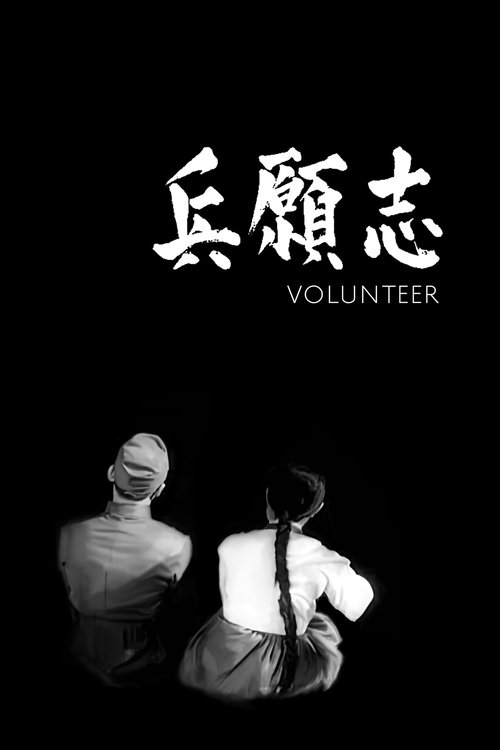
A young man is anguished that Koreans cannot volunteer to join to Japanese Imperial Army.
Film directed by Ha Chon Woi
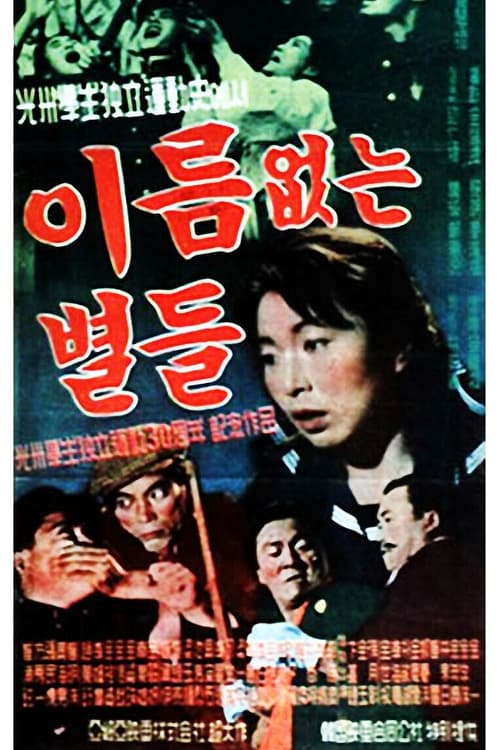
The son of a freedom fighter, Sang-hun is a member of an anti-Japanese resistance group called "Seongjinhoe," composed of students who share a dedication to the cause of liberation. Their spiritual guide is a teacher named Song Un-in. One day, Yeong-ae, whose brother is a detective in the Japanese police force charged with monitoring independence movements, joins their group. Following a series of sporadic incidents, the students gather one night to resolve on an uprising, but are discovered by the police. Young-ae is wrongfully accused of betraying their plans, but she risks her life in order to allow the group members to escape. The morning after, the students of Gwangju rise up against the Japanese government.
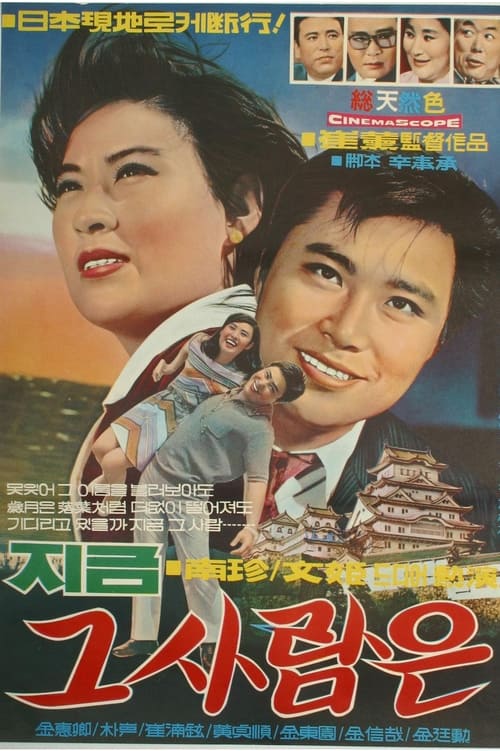
During a concert in Japan a singer encounters his childhood sweetheart and their old love is rekindled with new passion. However their love is a problem for the singer because he is already engaged to the daughter of his mentor.
Middle-class housewife Ae-soon is excessively vain and neglectful of her duties as a homemaker. Unable to tolerate her any longer, Ae-soon's husband kicks her out, and she leaves him and their daughter Jeong-hee to take up with her lover in a hotel.
In this film, based on the novel by Alexandre Dumas-son "The Lady of the Camellias", the action is transferred to Korea.
Wolmae is a gisaeng living in Namwon. Her daughter, Chun-hyang, is secretly engaged to marry Lee Mong-ryong. Lee leaves for Seoul with his father and the new governor, Byeon Hak-do, begins coveting Chun-hyang.
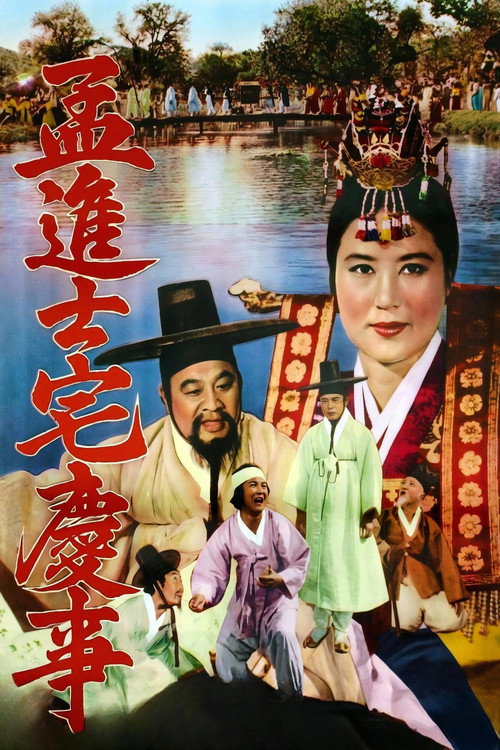
Jinsa Maeng's daughter is contracted to marry a nobleman's son, however, Jinsa Maeng is upset when he hears about a rumor that the fiance of his daughter is lame. Finally, he decides to take on the idea of arranging his maid to take his daughter's place in the wedding.
No description available.
Chang-hwan, who came down from the north, calls his mother and lover Sung-hee's brother and friend Sung-ho (the beneficiary) of Sung-hee, to North Korea, but they refuse to do so. When June 25 broke out, Sung-ho served as the commander of the Korean Army and was isolated in battle. However, with the participation of the UN forces, the charter is improved, and the name that saved Captain Brown from the wounded moves to join the national army. The Sung-ho party, who accidentally defeated the Changhwan Workers who brutally killed the people of his hometown, rescues Sung-hee, who was in crisis. In order to save the wounded black soldier, Sung-hee's mother loses her eyes, and Sung-hee becomes a nursing officer.
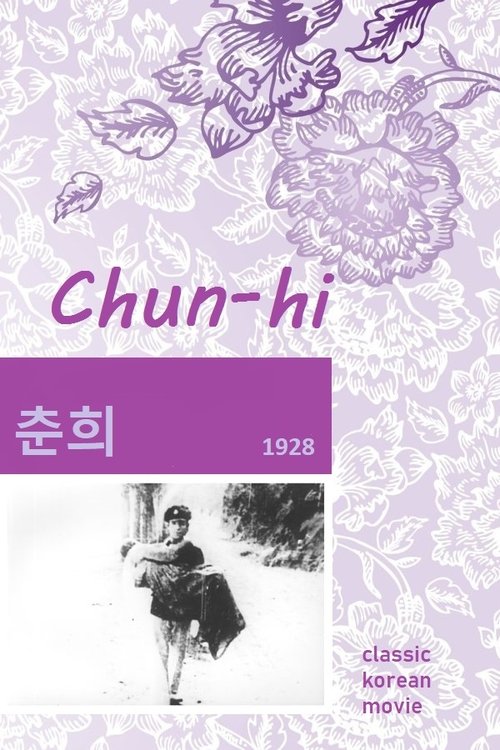
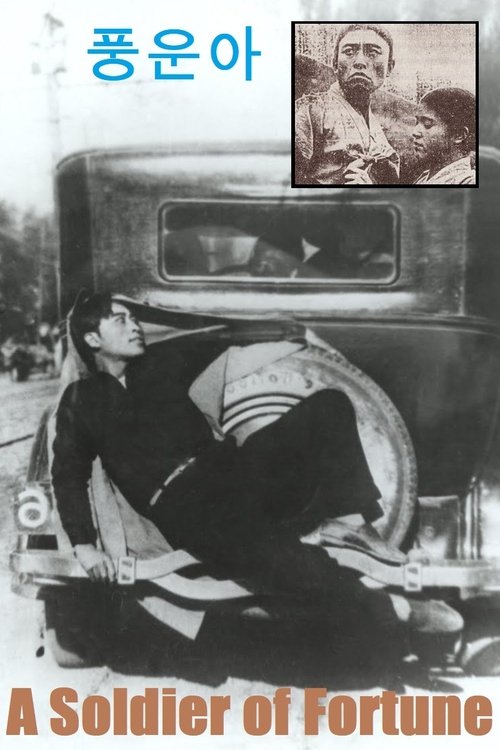
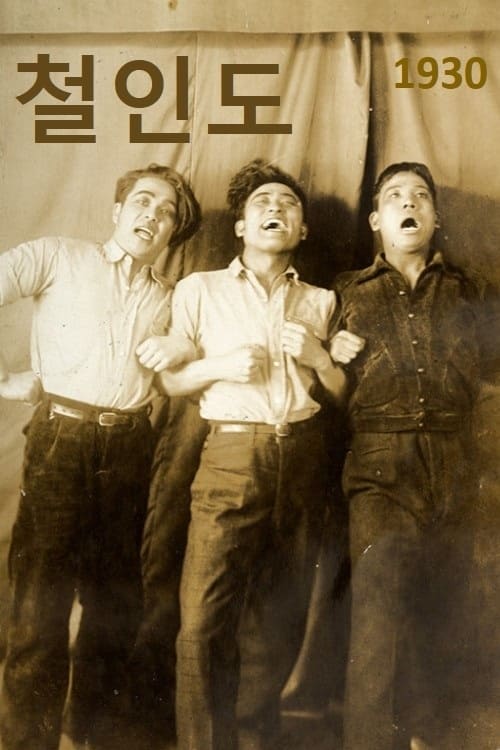
Na Woon-gyu plays the role of Nicolai Park, a veteran of the Russian army, who has returned to Korea from European battlefields. Broke, hungry, and unable to find employment, he is taken in as a boarder by Kim Chang-ho. Chang-ho's friend, Cha-duk becomes romantically involved with Hae-ok, who had sold herself to support her parents. Cha-duk's wife, Yeong-ja becomes involved with Nicolai, who rejects her proposal to run away with him. The romantic complications spiral until Yeong-ja kills Cha-duk. The film ends with Nicolai departing for destinations unknown while the other boarders bid him farewell.
The heroine loses the property documents left by her father. A street bum picks up these papers. Two men, in love with the heroine, arrange a scuffle over these documents, during which they fall from a cliff and die.
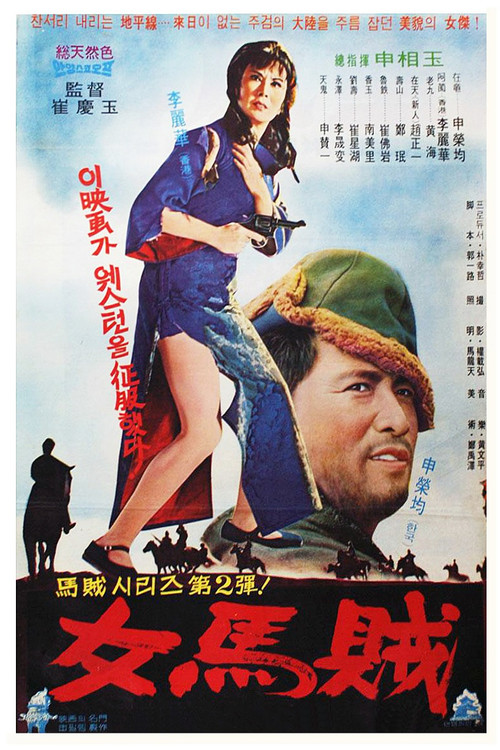
During the Japanese occupation of Korea, the daughter of a British diplomat is kidnapped by bandits. A Japanese commander offers to free some Korean prisoners of war if the Korean Independence Army rescues the woman.
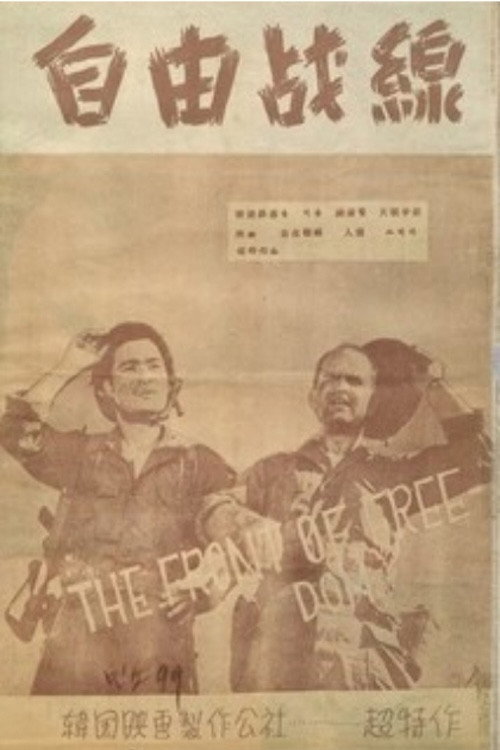
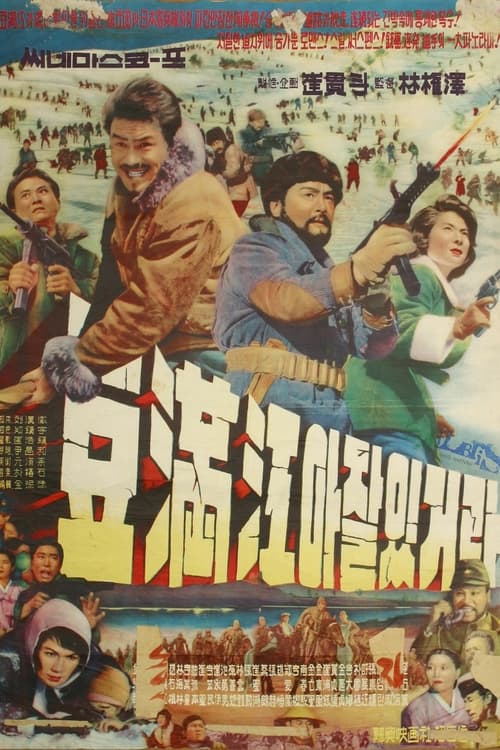
Patriotic university student Youngwoo and his friends, led by their teacher Lee Sung, along with a British friend bid farewell to their families and become freedom fighters in Manchuria fighting against the Japanese occupation around the Tumen River.
Hong Kong and South Korean co-production war film starring Li Li-Hua.
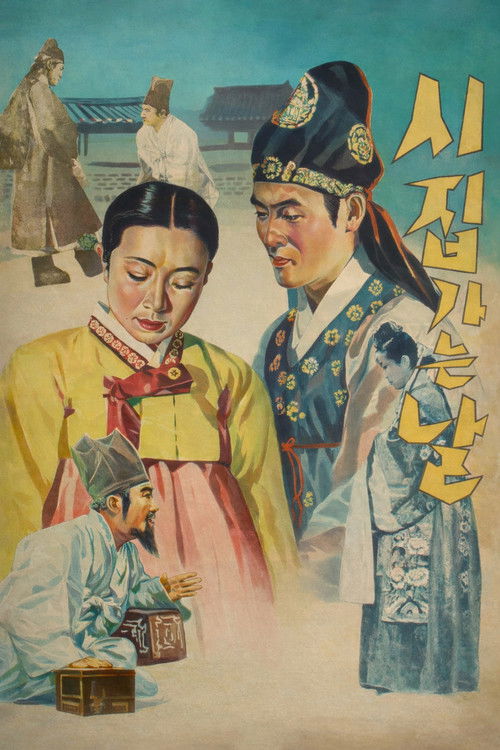
Master Maeng is very proud that an influential family will soon be his esteemed in-laws when his loving daughter, Mi-yeon, marries their son. A few days before the wedding Maeng hears a rumor that his future son-in-law has a cripple leg. Regretting that he can't give his lovely daughter to a cripple, he decides to marry his maid to him instead. Unexpectedly the future son-in-law shows up at the wedding hall and he is not a cripple, but a healthy and handsome youth. Feeling embarrassed, there is no way but to wed the maid to him. The Wedding Day is a recreation of A Happy Day of Jinsa Maeng, a comical play by Oh Yeong Jin. The first Korean film to win an international film award, the Best Comedy Award at the 1957 edition of the Asian Film Festival (now Asia Pacific Film Festival).
Yeong-shin and Dong-hyuk graduate from college with a cause. They plan to bring education and modernization to farmers living in the rural area of their hometown. When they arrive, the pair immediately get to work, Dong-hyuk builds a village hall and starts aiding the farmers while Yeong-shin tries to gather the children to form a school. However, the villagers at first resent and resist the pair. It is not until one child, Ok-bun, takes the initiative and and learns to read under Yeong-shin’s care that the villages trust the pair and allow their children to be taken from the fields and taught reading, writing and math.
About the pastor's daughter, who reconciled the irreconcilable fighters - the inhabitants of two neighboring villages.