Acting
French mannequins showcase French fashion and explore Helsinki's attractions.
Ruins of St. Olav's Monastery in Turku, paintings revealed under the plaster. Paintings by artist Nikolai Kaario. Yläne Manor, pictures found in the manor.
A moving and passionate documentary about March 20, 1948, when the Finnish delegation left for Moscow to negotiate the YYA agreement under the leadership of Prime Minister Mauno Pekkala. The seriousness of the situation can be felt concretely, as the delegation is seen off at the Helsinki railway station by the entire nation in miniature. "And so the train left, taking the negotiating delegation to its important mission."
Christmas sign homes were special shelters for newborns whose mothers had contracted tuberculosis. The film presents the operation of a Christmas sign home.
Fertilizer factory operations, agriculture.
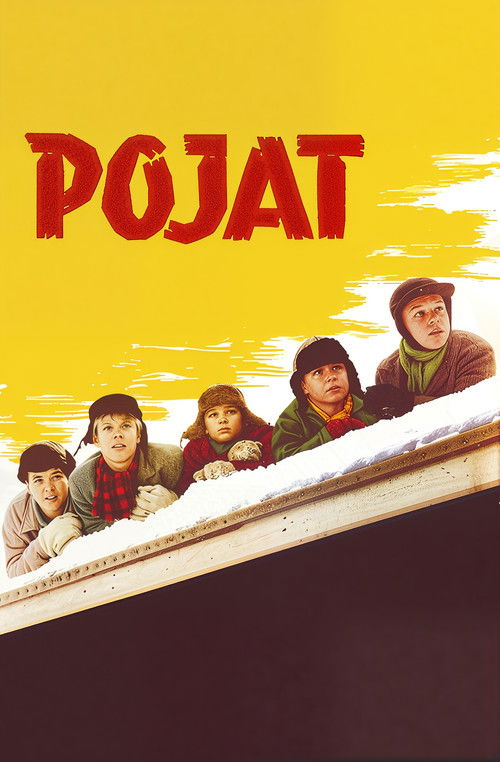
When Continuation War started in Summer 1941, German soldiers arrived to Oulu. With their charm they conquered women and town boys. Finnish boys communicated with them on many levels: had trades, worked as interpreters, rotated business, spied on German love adventures and fought with each other about the favor of soldiers. In autumn 1944, the war was ending. Germans left Oulu by leaving behind fragile relationships, bastard kids and unfinished businesses. The most shocking of all was the faith of young Jake...
Uses of plastic and its manufacture.
The Olympic film presents the broadcasting of the Helsinki Olympic Games to Finland and abroad. The temporary radio center built at the Olympic Stadium for the Games is described as the largest in the world. The film also shows the lighting of the Olympic flame and covers the sports such as diving, canoeing, cycling, steeplechase and marathon.
Shoes are made from leather purchased with funds donated by Finnish Americans and distributed to children from poor families.
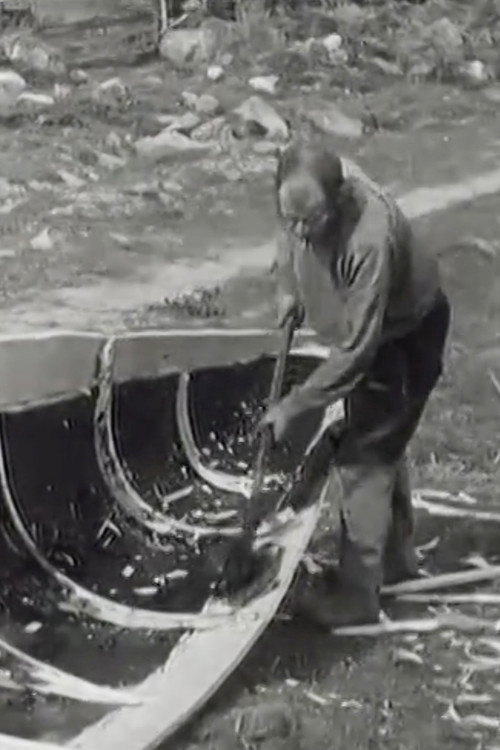
A well-known documentary by Eino Mäkinen (1908-1987), produced by Ethnological Film, describes the ancient process of making ruuh using a Stone Age method by hollowing out aspen logs. This is a 1950 re-release of "Elettiinpä ennenkin - ruuhen synty" (We lived before - the birth of ruuh), narrated by Carl-Erik Creutz. The original version has not survived to this day.
Manufacturing of ceramic objects at the Arabia factory.
The first Finnish 35 mm color short film from May 1951, directed by Felix Forsman and produced by Felix-Film. It was commissioned by Paulig Oy to celebrate the company's 75th anniversary. It is a large-format commissioned film of its time, and no expense has been spared. The story of Finnish coffee begins in 1756 and continues with carefully dramatized episodes to 1951. The film ends grandly with the Paulig March, written by Uuno Kaila.
After the Continuation War and the Lapland War, Eino Mäkinen photographed the devastated Lapland rising from the ashes in 1945-1947. Lapin sisu is a harrowing depiction of a family arriving at the ruins of their home. But a new home is quickly built by a volunteer team. “Remember, Kansanapu is calling you too!”
A film about how jewelry telegrams convey health to children. Care for premature babies, the opening of the Christmas Sign Home, children with brain damage in the yard of the Children's Palace, graduation ceremonies of a childcare school, a traveling dental clinic, children on the beach.
Pictures from the art exhibition on Mexican art at Lilje Valki Art Salon in Stockholm.
Car exhibition at the Helsinki Exhibition and Convention Center in 1952.
Pictures from the London Olympics, the preparation for the Helsinki Olympics, the construction of the Stadium and other sports venues, and an introduction to Finnish society. The beginning of the film is in color, the Finnish section is in black and white.
The film presents Finnish design and interior design accessories.
Opening of the Helsinki Fair at the Helsinki School of Economics. President Paasikivi visits the exhibition in the Fair Hall. Presentation of the various sections.
Finnish castles.