
Lisa Truttmann
Directing
Biography
Lisa Truttmann is an artist and filmmaker based in Vienna. She weaves documentary elements into staged settings and essayistic montages, tracing the structures of social, urban and natural landscapes. Trad studied Transmedia Arts at the University of Applied Arts in Vienna and received a Fulbright scholarship for her graduate studies in Film/Video at California Institute of the Arts. Her moving images and installations have been shown at venues such as CPH:DOX, Viennale, New York FF Projections, Images Festival Toronto, Jihlava IDFF, Bertha DocHouse London, Ann Arbor FF, Alianza Francesa Buenos Aires, MAK Vienna, and Kunsthalle Project Space. Truttman teaches at the University of Art and Design Linz, the University of Applied Arts Vienna and is a member of the Golden Pixel Cooperative.
Known For
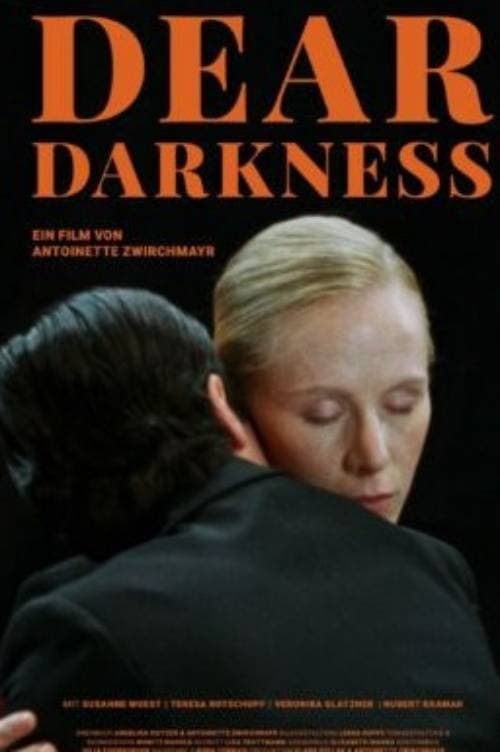
The white, gray and black rooms of a common past and the separate present, the surrounding dreams and fantasies about one‘s own life and the lives of others: when Olga, Yvonne and Manon - three former best friends meet again after twenty years, the facades of their life contracts are removed layer by layer. But they separate again before the résumés collapse.
Dear Darkness

“Babash is a parrot. He lives in Los Angeles. Kept by an Iranian family, he speaks mostly Farsi. Sometimes Babash mixes English and Azeri into his conversations. Behrouz Rae has made friends with Babash over the years. The short film Babash is an associative portrait about a special relationship and the domestic surroundings in which it grew. Observing Babash and Behrouz, intervening upon them with color panels, inventing a common language, a focus emerges of a shared misplacement within this genuine friendship.” —Lisa Truttman & Behrouz Rae
Babash

Nighttime. Dogs are barking in the distance. We hear motor sounds and the headlights of a car clicking on and off, and see little sceneries along the road briefly illuminated. An unseen driver connects these momentary landscapes. The headlight beams remain the only light source and actual character throughout the approximately four minutes of rhythmic imagery, in an eerie audiovisual composition. Nothing is incidental, but at any moment Anything Can Happen.
Anything Can Happen
Water Fields is a rhythmic audiovisual composition, taking place in California’s dry landscape. Filmed at State Route 126, Henry Mayo Drive Los Angeles County, California
Water Fields

Tabula Rasa is an exploration of space both on and off the screen. As a rhythmic composition of silent white surfaces, mumbling pine trees, humming motors, babbling crows and unsettling rain in the desert, it questions the current state of its own media, but at the same time portrays a location: Smith’s Ranch Drive-in Theater, Twentynine Palms, California
Tabula Rasa
In 2019 Lisa Truttmann’s apartment and studio space were destroyed in a major fire. In her ongoing work series Memorabilien she takes up this decisive life event in order to reflect upon the meaning of personal things and their value as possible art objects.
Memorabilien (Excavate)
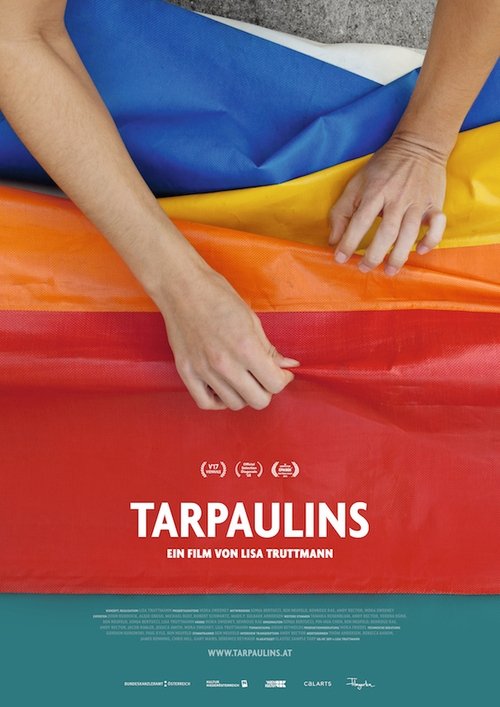
As an essay film, 'Tarpaulins' is a minute look at Los Angeles' tiniest inhabitants, termites, and at the same time a zig-zag attempt to grasp the macrocosm of the city's vast landscape.
Tarpaulins
Behrouz Rae cuts to the heart of the matter in the artist’s ongoing series of works dealing with immigration and objective observations.
Untitled
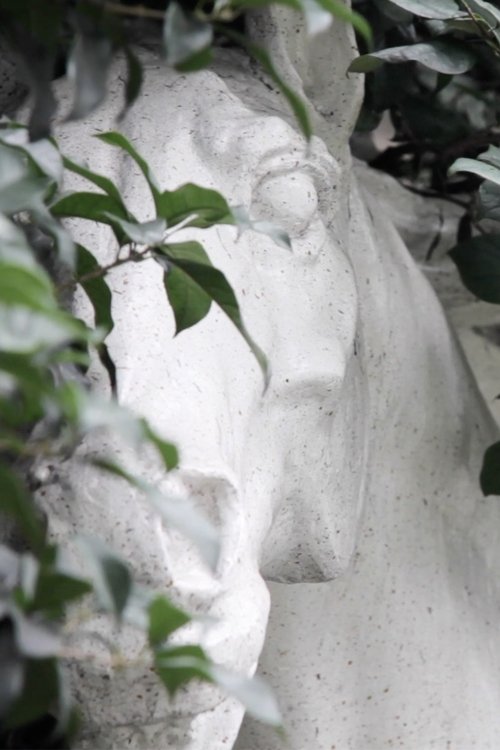
We see white stone structures and hear the sound of horses at full gallop, snickering from afar. The sound volume increases rapidly and sets the large group of lithic sculptures in motion. Heavy traffic noises eventually mix with the animal sounds and just when they are about to take over the soundscape entirely, images and sounds introduce the actual location: Shanghai, at the intersection of Yan’an Elevated Road and Inner Ring Elevated Road, two major, multi-leveled, urban freeways. Amidst the massive architectural structures and immobile horses underneath it, we may remember Eadweard Muybridge and his early moving image studies.
The Courser

Whirring and flashing in the night sky. Wild foliage on a moist forest floor, rapidly passing by. Nervous encounters at a redwood tree, gurgling chatter with turkeys at dusk. Casually coiffed horses, unpredictable flying objects and flapping rotors. Speckled skin scrabbles, covered in lush ferns. Swirling fog, dripping haze, old man’s beard, light – diffracted. Sassy badgers, strings and figures. Lead by questioning the so-called “species problem”, Truttmann investigates the (im)possibilities of taxonomic categorization of living organisms from an artistic point of view. This way she creates a fictional ecosystem of rhythmic montage and unruly composition, in which the species raise their voices against imposed classification. Audio and video recordings have been collected during artist residencies in southern Estonia (Maajaam Project Space, 2019) and in the Santa Cruz Mountains in California (Djerassi Resident Artists Program, 2022).
Critters Chorus, Cycle 1

Unconsciously the human eye adapts to different light conditions, while cameras need adjustment through white balance. The color temperature of different light sources is measured in Kelvin. 6500 Kelvin corresponds to the value of overcast daylight and is used as a standard for the neutral registration of white surfaces. 6500 is an essay film on the relativity of words, questioning the application of absolute values in an argument, visualized through a play on colors, their spaces, and their highly subjective perception. Quotes from Ludwig Wittgenstein’s “Remarks on Colour” emphasize this rhythmic flickering and slightly absurd conversation between colour and language.
6500
“If you speak in a low voice, no one hears you.” Two narrow alleys in Istanbul. A crowd of men, yelling. Screaming, shouting, chaotic gesticulation, grimacing faces, a deafening buzz of wild voices. The verbal noise dominates the scene. A communicative situation, incomprehensible at first to the alien bystander who doesn’t speak the language. Apparently they are traders, I find out. And they call it “the walking stock market”. But what does it really mean? “Today it’s a very quiet day. Everything is still at rest."
Golden Boys

Hú Zhǎng Zū writes ancient Chinese poems with water on the ground in Fuxing Park, Shanghai. After a few minutes the characters dry out and disappear. Almost everyday she comes here and practices her handwriting with her friends and colleagues. Together they have lively discussions about the strokes and shapes—amongst each other and with the many spectators. Hú Zhǎng Zū is the only woman within the turmoil of men, and due to her high writing art she is respected and highly admired. I come back to see her often, in order to learn from her and capture these ephemeral moments.