Jonatan Briel
Directing
Biography
Jonatan Karl Dieter Briel (June 9, 1942 – December 26, 1988) was a German film director, screenwriter, and actor, born in Bodenwerder, Lower Saxony, and raised in Holzminden. He is best known as a specialist of the literary biographical film, with a body of work centered on 19th-century German poets and dramatists — primarily Heinrich von Kleist, Christian Friedrich Hebbel, and Friedrich Hölderlin. After completing an administrative apprenticeship (1959–1962), Briel founded the Youth Film Studio of Holzminden in 1962. He moved to West Berlin in 1965, where he became an assistant to director Peter Lilienthal before being admitted to the newly founded Deutsche Film- und Fernsehakademie Berlin (DFFB) in 1966. There he studied under Wolfgang Staudte and made his debut short Der 300ste Geburtstag (1967). His graduation film Wie zwei fröhliche Luftschiffer (1969), a reconstruction of Heinrich von Kleist's double suicide, won the jury prize at the Mannheim International Film Festival and was selected for the Locarno Film Festival in 1970, attracting international critical attention. From 1970, Briel worked as an independent filmmaker with the Sender Freies Berlin (SFB). He developed a series of literary biopics — Jonatan Briels Lenz (1971, ZDF), Glutmensch (1975, SFB/LCB), and Untertänigst Scardanelli (1982) — marked by low budgets, experimental aesthetics, and intense immersion in his subjects. Working mostly in West Berlin, he combined documentary techniques with staged scenes and often shifted between black-and-white and color cinematography. From 1982, Briel was a member of the Akademie der Künste in Berlin and taught at the Universität der Künste. The Kino Arsenal in Berlin devoted retrospectives to his work in both 1976 and 1982. He died in Berlin on December 26, 1988, at the age of 46, with a final project (Hunkepiel) left unfinished.
Known For

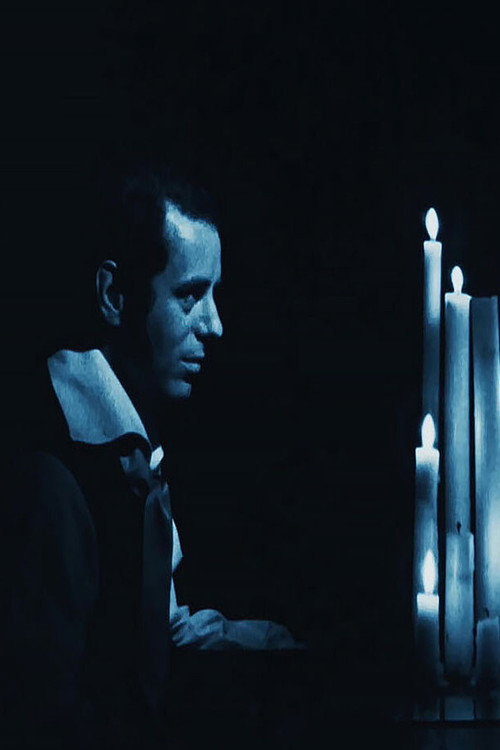
The final installment in Ulrike Ottinger’s Berlin Trilogy (following TICKET OF NO RETURN and FREAK ORLANDO) casts Delphine Seyrig as the nefarious Fritz Lang supervillain Dr. Mabuse, here the head of a powerful media empire that seeks to create headlines by manufacturing (and then publicly destroying) its own celebrity: the wealthy, handsome playboy Dorian Gray.
Dorian Gray in the Mirror of the Yellow Press
The double suicide of Heinrich von Kleist and his companion Henriette Vogel on November 21, 1811 at the Kleiner Wannsee in Berlin is the focus of this film. Based on testimonies from the preparation days and the day of the suicide, as well as the statements of the Wannsee innkeepers taken from the police records, the suicides are reconstructed - from the planning to the execution.
Like Two Merry Aeronauts
Vienna, March 18, 1863: the poet Friedrich Hebbel, weakened by fever, spends his fiftieth — and final — birthday confined to bed. In feverish reverie, he recalls his life and work. The two blend with each other as well as with the present. A demanding reflection, filmed mostly in monochrome images, on this "ardent man" (a description by Eduard Mörike) and his work.
A Man Aglow
No description available.
Berlin - Berlin - Berlin
A portrait of the life of Jakob Michael Reinhold Lenz (1751–1792), a playwright of the Sturm und Drang period and friend of the young Goethe, with evident parallels to the life of the filmmaker himself. Lenz's progressive mental deterioration and his tragic trajectory are central to the film.
Jonatan Briel's Lenz – A German Physiognomy
In the early 1970s, Briel recorded conversations on tape with the opera and concert singer Adelheid Pickert, then nearly 90 years old, in a garden house in Wilmersdorf. She recalls her greatest successes between 1915 and 1930. In 1981, Briel revisits his meeting with this artist and juxtaposes the old lady's account with his own memories of her. Format: Hörspiel (radio play)
The Stars That Smile Upon Their Cottage
First film made in Wolfgang Staudte's seminar at the DFFB. The film reflects Briel's own experience with bureaucracy — shot at his former workplace at Fehrbelliner Platz in West Berlin. The cast consisted entirely of non-professional actors. Director of photography: Gerry Schum (DFFB student). Assistant director on all his academy films: Norbert Maas, a theater student.
The 300th Birthday
No synopsis found.
The Attempt to Sing a Song
No synopsis found.
Katja
Based on a text by Susette Gontard — the beloved of Friedrich Hölderlin, who signed her letters under this name. This places the work in direct continuity with Briel's interest in Hölderlin.
As Long As You Love Me, I Cannot Go Wrong
An adaptation inspired by Charles Baudelaire's Les Fleurs du Mal. TV film.
A Quite Strange Case of Love
Briel's first independent production after leaving the DFFB, made for the Sender Freies Berlin. The title is a biblical reference (Daniel 5 — "you have been weighed in the balance and found wanting"). TV documentary
Weighed and Found Too Heavy
A story revolving around the assassination of socialist leader Jean Jaurès in Paris in 1914. The script was improvised, and the film was shot on location in Mainz, Reims, Paris, Ibiza, and Formentera. The title refers to an islet near Ibiza in the Balearic Islands where part of the film was shot. Not to be confused with the 1971 album of the same name by the German group Can.
Tago Mago
The film presents three faces of Berlin as a visual puzzle: the old imperial and fascist Berlin; the newly reconstructed Berlin around Breitscheidplatz; and finally, Berlin as evoked by the elderly Adelheid Pickert, an opera singer of almost 90 who was famous as a Mahler interpreter around 1910. This third Berlin is that of a future European center freed from the weight of the past. Pickert's portrait — whose statements are described as "strangely brilliant" — creates a counterpoint to the atmosphere of Berlin in the summer of 1970.
Berlin, Berlin, Berlin
No synopsis available.
Das Geheimnis
A drama about Friedrich Hölderlin, a poetic genius caught between madness and withdrawal from the world. "Scardanelli" was the pseudonym used by Hölderlin during his years of seclusion in Tübingen, where he lived from 1807 until his death in 1843.
Your Humble Servant Scardanelli
A visit to another world: that of transvestites, leather men, costume artists, and exotic tourists from around the world — a carousel that has been sounding through the nights of the Berlin SO 36 district for nearly fifty years. Hidden behind a grey, crumbling postwar facade near the Görlitz railway station in Kreuzberg lies "Elli's Bierbar." The proprietress, known to all as "Elli," recounts the origins and development of her establishment and introduces her long-standing clientele. Format: Originaltonhörspiel (documentary radio play).
Elli, SO 36
Not documented. The title suggests a documentary or artistic project around Heinrich von Kleist in Berlin, a recurring theme throughout Briel's work.
Kleist Project Berlin
A film about the successive stages of the inner loss of one's homeland.