Production
No description available.
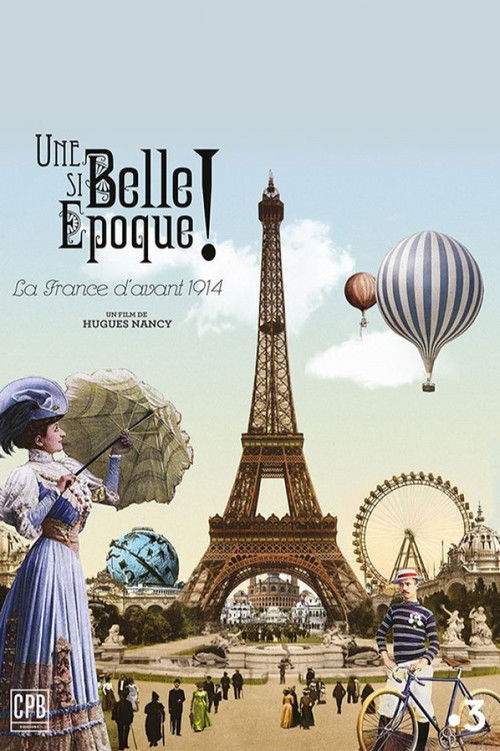
In 1900, the eyes of the whole world are on Paris. The World's Fair welcomed 50 million amazed visitors, and the city celebrated itself in a glamorous era. This period went down in history as the "Belle Époque." Elaborately restored and colorized historical photographs bring to life the exciting life in Paris between the end of the 19th century and the beginning of World War I in 1914. Bicycles, cars, airplanes, moving pictures, newly founded film studios, revolutionary composers and painters, avant-garde ballet performances, fashion houses, summer resorts on the Atlantic coast – life was intoxicating. People celebrate in the variety shows, cabarets, and revue theaters of Paris. Moulin Rouge, Folies Bergères, Bal Tabarin—in Paris, the nights are long and life is too short to sleep through. It is a dance on the volcano, given the political developments in the world.
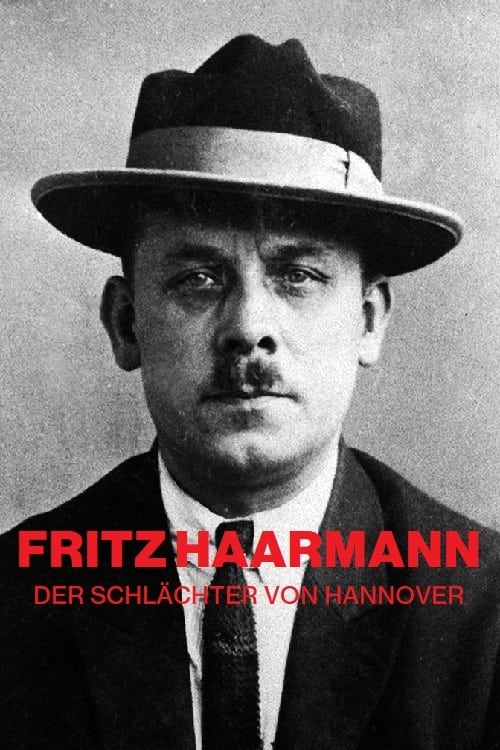
In Hanover, Germany 1924, the discovery of bones and skulls catches the authorities’ attention. Media covers the case and a suspect – Fritz Haarmann – is quickly arrested. Haarmann is a local butcher who manufactures his own sausages. Friedrich Heinrich Karl "Fritz" Haarmann (25 October 1879 – 15 April 1925) was a German serial killer, known as the Butcher of Hanover and the Vampire of Hanover, who committed the sexual assault, murder, mutilation and dismemberment of a minimum of 24 boys and young men between 1918 and 1924 in Hanover, Germany.
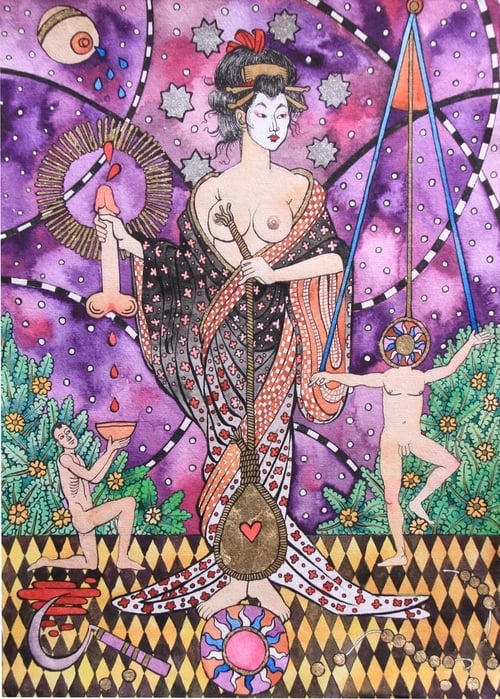
On May 18, 1936, Abe Sada, a former geisha, kills her lover by "erotic asphyxiation", then slices his sex and inscribes his name in his flesh. In an ultra-controlled and militarized Japan, the press is passionate about this transgressive incident, while the murderer defends herself, presenting her crime as an act of "crazy love". Relayed to the West, this murder conveys the image of a fantasized Japan, where all impulses are given free rein.