Stefano Miraglia
Directing
Biography
Stefano Miraglia (Málaga, 1988) is an Italian-Spanish artist, curator and writer based in Paris. His activities focus on artists’ film and video. His work has been presented internationally in exhibition spaces such as the Taiwan Contemporary Culture Lab (Taipei), Fabrica research center (Treviso), Centrum (Berlin), and in numerous film institutions and festivals such as CINEMATEK - Cinémathèque royale de Belgique, Beijing International Short Film Festival, Prismatic Ground, ICDOCS, Vienna Shorts and Festival des Cinémas Différents et Expérimentaux de Paris - where his film Anoche received an award in 2017. He has curated several exhibitions, the most recent being a solo exhibition of Spanish artist Carlos Casas. Since 2018 he has curated and presented several programs of experimental and artists’ films. Stefano is the founder of Movimcat, an online project for the dissemination of artist’s cinema. Since 2019 he has been working on the rediscovery and reappraisal of the work of writer and filmmaker Ellis Donda (1947-2023). He is a member of the selection committee for the Pesaro Film Festival in Italy, and was a member of the committee for the international competition of the Festival des Cinémas Différents et Expérimentaux de Paris from 2020 to 2022. Stefano Miraglia is a member of the French association of art curators C|E|A. He studied at Roma Tre University and the École Normale Supérieure de Lyon. He is a lecturer at Université Paris 1 Panthéon-Sorbonne.
Known For

An experimental music ensemble is recording an album. They want a very specific sound: the sound of thick air. The sound engineer struggles to understand and to find that sound. A tale of sleepless nights and loud music, a noise-injected collage composed of diaristic footage, a found narrative (memories of a popular 60s band), original music and field recordings.
Thick Air

An exploration of Rodez Cathedral and its stained glass windows: praying figures and scientific imagery. A study on color, repetition and flickering consisting of 292 photographs.
Rodez

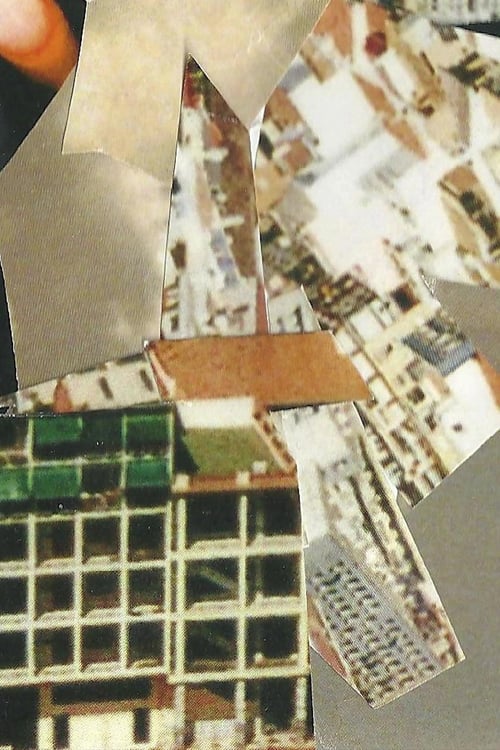
Considerations on collage as a cognitive act in artists’ cinema. A pedagogical film adrift: 35mm photographs and other materials collected over the last fifteen years by artist Stefano Miraglia meet a text written by Baptiste Jopeck and the voice of Margaux Guillemard.
Collage

Three memories that become one. An attempt to merge heterogeneous materials: a film sequence shot in Rome, a photo from the 1930s, a noisy soundtrack. Fragmented lines, exploding bass frequencies and flickering.
Anoche

In 1907 Herman Hesse spent a few days mediating and fasting in a cave near Monte Verità. During these days he collected the visions and insights that went on to be very influential in his thinking and shaped some of the most important works of his literary career. The images and sounds of this film were shot there and are a homage to this cave and its possible invocations. Grotta is part of Fieldworks, an ongoing experiment with ambient video and radio frequencies.
Grotta

A flock of memories activated by various musical exercises, to strike the past to the heart, to build something utopian: the future, a sonic architecture. Music as a tool, transcriptions of YouTube tutorials as poetry, percussion exercises as descriptions of reality.
Double Around the Interlude

A group of artists settle in a swamp on the banks of the Indre River. Meanwhile, a voice describes a utopian world.
I'll See You Again

Commissioned by Harald Inhülsen for MasterclassFilm. A companion piece to Leandro Varela's Self Portrait, also part of the same commission.
Self-portrait

A description of some parts of the world - explored, visited, documented, imagined. An abstract attempt at finding them again. The title refers to geographer and civil servant of the Republic of Venice Giovanni Battista Ramusio (1485-1557).
Ramusiana

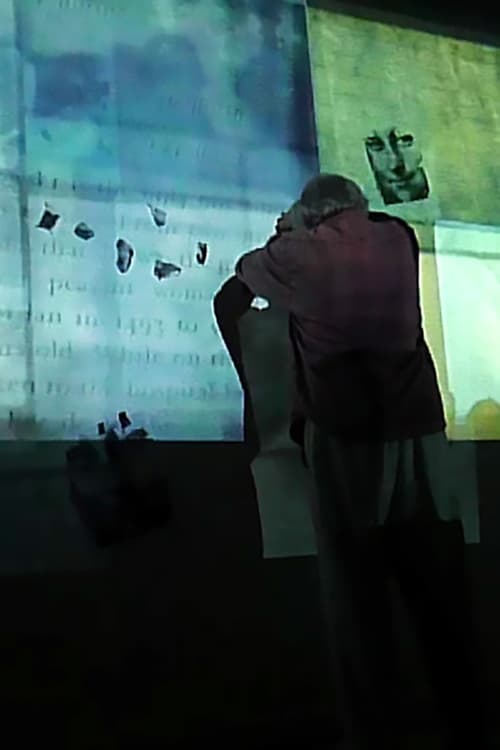
"This installation or performance work puts my own earlier film of the Mona Lisa (1973) through another stage of transformation – my own irretrievable self of some 34 years ago is now also part of the subject I first saw the ‘actual’ ‘Mona Lisa’ when I was about thirteen. Of course I had seen dozens of reproductions in books and postcards by then and the popular mythology of the enigmatic smile was already well engrained in my mind. My strongest impression, as I recall, was how small and unsurprising it was – a heavily protected cultural icon – no longer really a picture – and I was much more excited by the painting of the distant landscape than by the face. My own ‘version’ of ‘la Giaconda’ was never an homage, nor like Marcel Duchamp’s ‘L.H.O.O.Q’, an attack on its cultural power. Instead it came from a fascination with change and transformation – maybe also with arbitrary appropriation." Malcolm Le Grice
Eighteen fragments from Malcolm Le Grice’s After Leonardo

A text, some images, and an unstable arrangement of durations to which one can devote a fluctuating form of attention.
Screen Glare

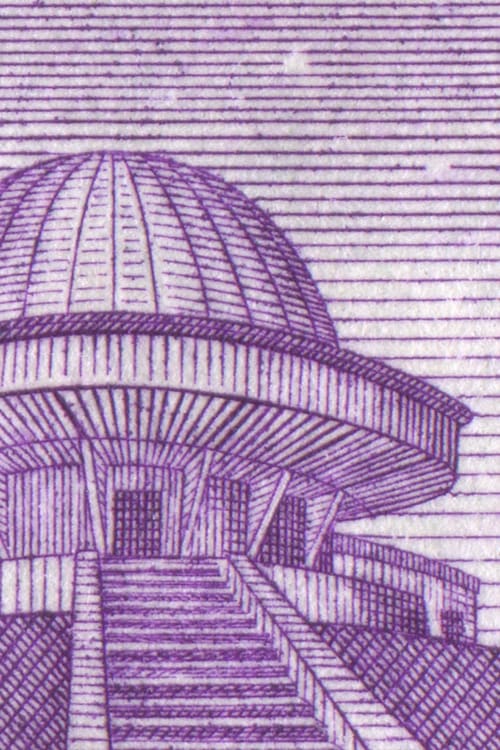
Black giants break classical architecture and rebuild them into Brutalistic structure.
Brutalism

No description available.
Untitled / Aubrac

No description available.
memoria e imaginación

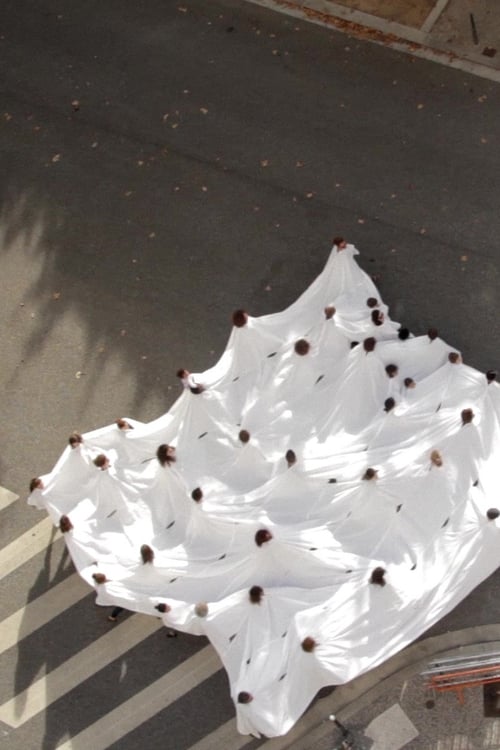
Documentation of Lygia Pape’s 1968 performance Divisor - reactivated in the city of Villeurbanne (France) in October 2014. Commissioned by Institut d'Art Contemporain de Villeurbanne / Rhône-Alpes.
DIVISOR / VILLEURBANNE

No description available.
Katokino

A variation on paroptic vision (the ability to see with the skin, without the aid of the eyes), telepathy, colour theory and the theremin. The various sequences introduce the hypothesis of an imaginary cinema. The film is presented as a series of rushes, suggesting an unfinished film in progress.
Fragments pour un film imaginaire

In the vain hope of breaking a smartphone with a film, I present to you a series of truthful images and sounds. City lights set out to communicate something, details of sixties paperback books meet the title of a French science fiction novel, and the bottom of a bridge is the beginning of the cosmos (and I walk on it).
J'écoute l'univers

Early/alternate edit of what became the final sequence of the film I'll See You Again.
Perenne

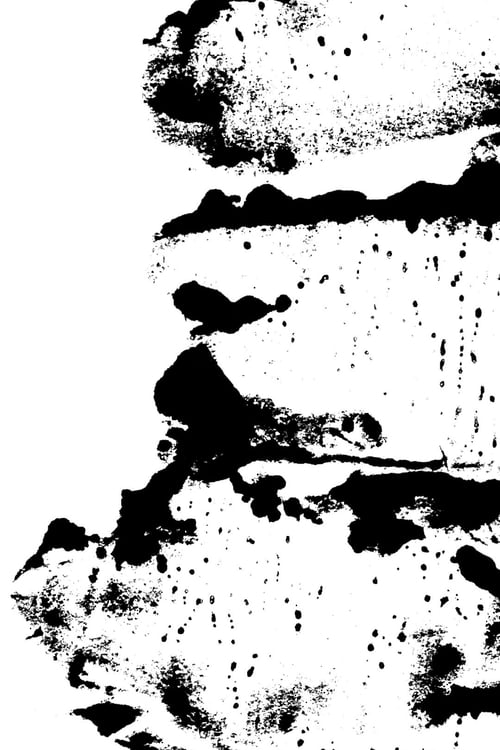
Claire is composed of digital scans and blow-ups of a series of three ink-on-paper artworks created in 2012 by French-Spanish researcher, publisher and artist Claire Latxague. While collecting drawings, written documents and other printed materials for a (yet unreleased) project called Un film de papier, I’ve stumbled upon Latxague’s artwork, entitled À la renverse. The blow-ups were made in an attempt of unearthing cartographic imagery in abstract compositions.