Directing
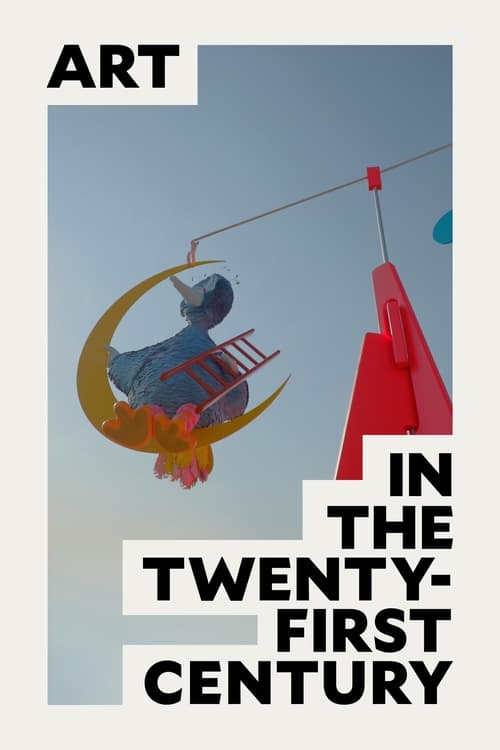
The first series on television in the U.S. to focus exclusively on contemporary visual art and artists, "Art in the Twenty-First Century" is a Peabody Award-winning biennial program that allows viewers to observe the artists at work, watch as they transform inspiration into art, and hear how they struggle with both the physical and visual challenges of achieving their visions. "Art in the Twenty-First Century" airs on PBS and online in the U.S. Full episodes are available to watch on Art21.org and YouTube.
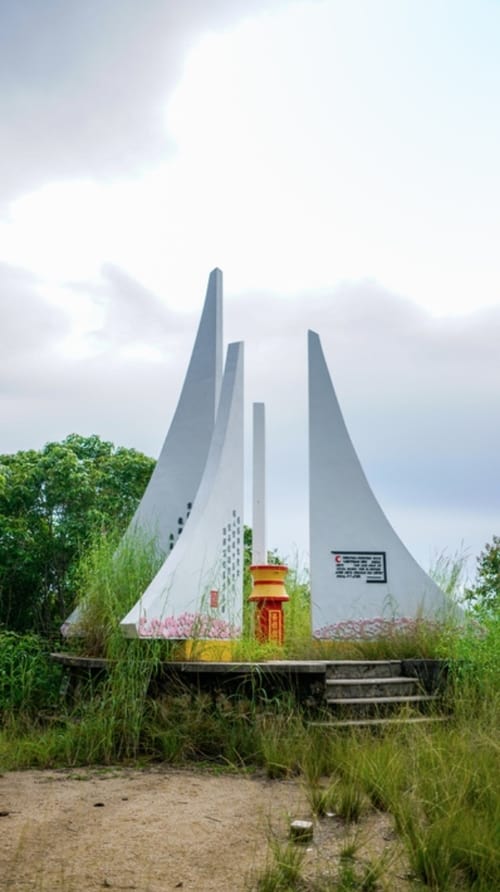
The Island is a short film shot entirely on Pulau Bidong, an island off the coast of Malaysia that became the largest and longest-operating refugee camp after the Vietnam War. The artist and his family were some of the 250,000 people who inhabited the tiny island between 1978 and 1991; it was once one of the most densely populated places in the world. After the United Nations High Commissioner for Refugees shuttered the camp in 1991, Pulau Bidong became overgrown by jungle, filled with crumbling monuments and relics. The film takes place in a dystopian future in which the last man on earth - having escaped forced repatriation to Vietnam - finds a United Nations scientists who has washed ashore after teh world’s last nuclear battle. By weaving together footage from Bidong’s past with a narrative set in its future, Nguyen questions the individual’s relationship to history, trauma, nationhood, and displacement.
Because No One Living Will Listen follows Habiba, a Vietnamese woman whose father was a Moroccan soldier who defected from the French army. The film is based around a speculative letter written by Habiba to her father—who died when she was a baby—as a way to speak to him in his absence. Because No One Living Will Listen centers on Moroccan soldiers who defected from the colonial army and whose repatriation to Morocco was hindered by the outbreak of the Vietnam War. [Overview Courtesy of the New Museum]
The Porcelain series takes its starting point in actual historic events surrounding a shipment of porcelain from Asia to Europe in the 17th century. On the morning of Christmas 1601 the San Jago set sail from Goa bound for Lisbon. The cargo included the first consignment of South East Asian porcelain destined for the European market. On 14 March 1602, off the coast of St. Helena, the San Jago unexpectedly encountered three Dutch ships and a fierce battle followed. After three days of fighting the Portuguese surrendered and the Dutch took possession of the San Jago. This historic event formed the basis for a three-part television series called "Porcelain" filmed in Vietnam and broadcasted on Vietnamese television in March 2010.
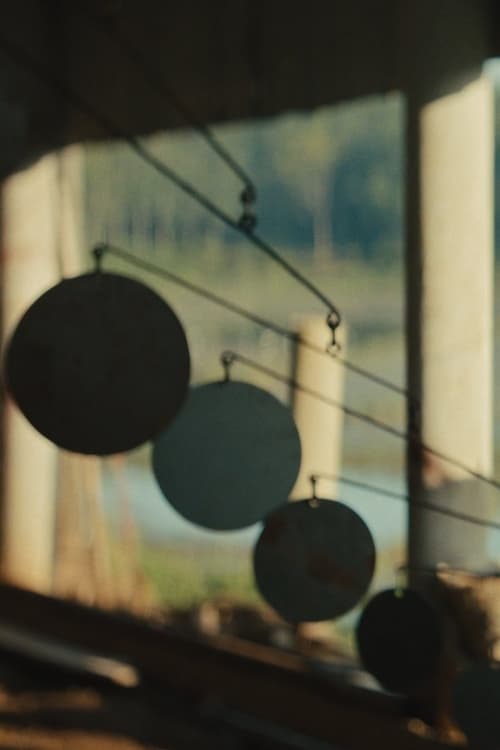
The film explores the ways in which material contains memory and holds potential for transformation, reincarnation, and healing. It is inspired by the people of Quang Tri, on the North Central Coast of Vietnam, one of the most heavily bombed areas in the history of modern warfare. The story centers around a woman named Nguyet and her mother, who run a small junkyard on the outskirts of Quang Tri, and Nguyet's cousin Lai. Nguyet earns her living by scavenging and selling pieces of UXO (unexploded ordnances). She also compulsively crafts hanging mobiles from the remnants of the UXO. By chance, she discovers she that these sculptures, which are drawn from her own imagination, hold a remarkable resemblance to the works of Alexander Calder. She embarks on a journey to uncover the source of this uncanny likeness. [Overview courtesy of James Cohan Gallery]
The bombing of several regions in Vietnam, Laos, and Cambodia during the Vietnam War (1955 to 1975) by the United States Armed Forces—what is considered the largest aerial bombardment in human history—left hundreds of thousands of unexploded ordnances hidden underground, that still pose a tremendous threat to local inhabitants today. In this film, Tuan Andrew Nguyen juxtaposes archival footage from the US army with recently recorded images of an unexploded ordnance (UXO) deactivation in the Vietnamese coastal province of Quảng Trị. The province is one of the main UXO hotspots in the Mekong region, with 8,540 casualties and 3,431 deaths recorded since the end of the Vietnam War. More widely, it is estimated that UXO explosions have caused 40,000 deaths in Vietnam; 29,000 in Laos, of which 40% are believed to be children; and more than 64,000 in Cambodia since the end of the war.
Made in collaboration with THAO and Marion Hoàng Ngọc Hill, Nguyen's film Amongst the Disquiet, 2024, speaks to the ties that bind within a multigenerational Vietnamese family based in New Orleans. Through interwoven vignettes told through dialogue and songs, the film winds through the challenges, longings, and affections between family members.
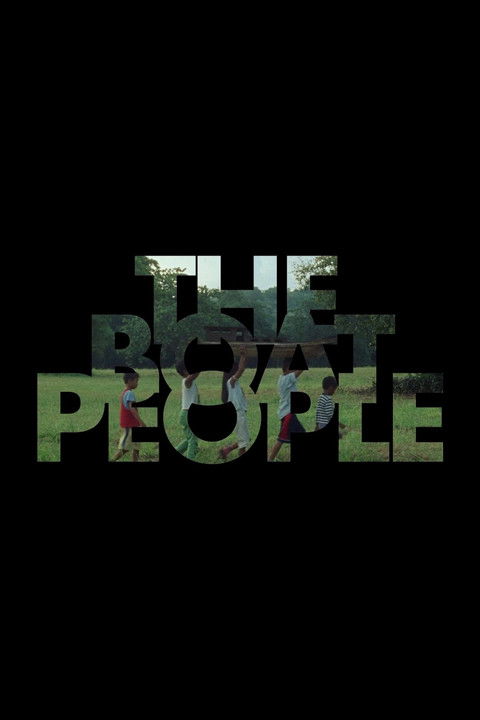
Set in an unspecified future at the precarious edge of humanity’s possible extinction, "The Boat People" follows a group of children led by a strong-willed and resourceful little girl, who travel the seas and collect the stories of a world they never knew through objects that survived through time.
A four-channel video installation that continues on from the echoes of French colonial subjects. Senegalese soldiers, or tirailleurs, were among the forces deployed to Indochina to combat the Vietnamese uprising against French rule. During the war and after the French defeat at Dien Bien Phu (when Frantz Fanon declared the beginning of the end of the French Empire), hundreds of Vietnamese women and their children migrated to West Africa with Senegalese husbands who had been stationed in Indochina. Many other soldiers left their wives and took only their children, while still others took mixed or Vietnamese children not their own and raised them in Senegal without connection to their origins.
The Ngurrara Canvas II is many things to many people. But to the Ngurrara people it is a map, made from memory, of a place where their ancestors lived for over 60,000 years. It is a direct connection to their land - a country where kartiya (non-Aboriginal people) could not live in, because the desert is an impossible environment without knowledge of how to hunt, gather, and find water. The canvas is a strong symbol of solidarity, and of resistance to the colonial project that attempted to decimate the Ngurrara’s connection to their land - now known generically as the Great Sandy Desert. We Were Lost in Our Country explores questions of personal agency, inherited trauma, and intergenerational transmission, through a conversation among ancestors and descendants. As the voices of the young find their bearings and make their mark on the words of their ancestors, Tuan Andrew Nguyen accesses a past-and-present history of the canvas - a history of displaced memory and of its recreation.
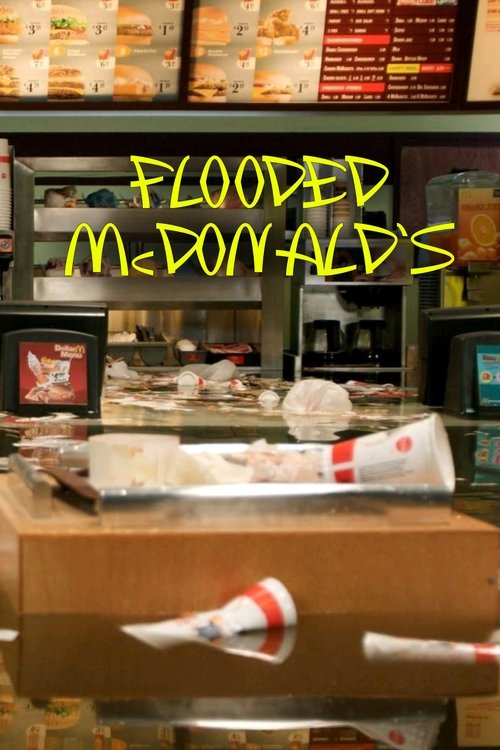
Flooded McDonald's is a new film work in which a convincing life-size replica of the interior of a McDonald's burger bar, without any customers or staff present, gradually floods with water.
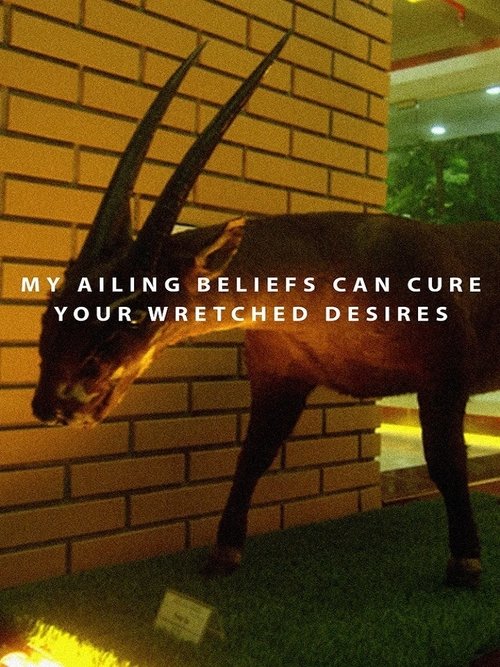
Told through the point-of-view of the wandering spirit of the last Javan rhino that was poached in the jungles of Vietnam in 2010, the film takes us through a complex structure of narratives and visuals, both gruesome and beautiful, real and mythological, that have built and upheld certain Vietnamese traditions. From Chinese colonialism and its assertion through the practice of medicine, to French colonialism and their obsession with trophy kills, and throughout the Vietnam war, the animals tell a different side to the story.
The Living Need Light, The Dead Need Music is a visual and musical journey through the fantastical funeral traditions and rituals of south Vietnam.
The Financial Crisis (Session I-IV) is a 12-minute filmwork in which SUPERFLEX addresses the financial crisis from a therapeutic perspective. A hypnotist guides us through our worst economic nightmares. During four sessions, the audience is invited to speculate on the hypnotic forces of global capitalism, as well as experience the fear, anxiety and frustration of losing control, economic loss and personal financial disaster. In “Session 1: The Invisible Hand,” we are introduced to the backbone of capitalism, the idea of the “invisible hand” as the benign force of self-regulation that prevents markets and people from spinning out of economic control. We are asked to interrogate our faith in this force, and to imagine a world no longer governed by this invisible hand. In the following sessions we are guided deeper and deeper into the subconscious of the financial crisis with “Session 2: George Soros,” “Session 3: You,” and “Session 4: Old Friends.”