Directing
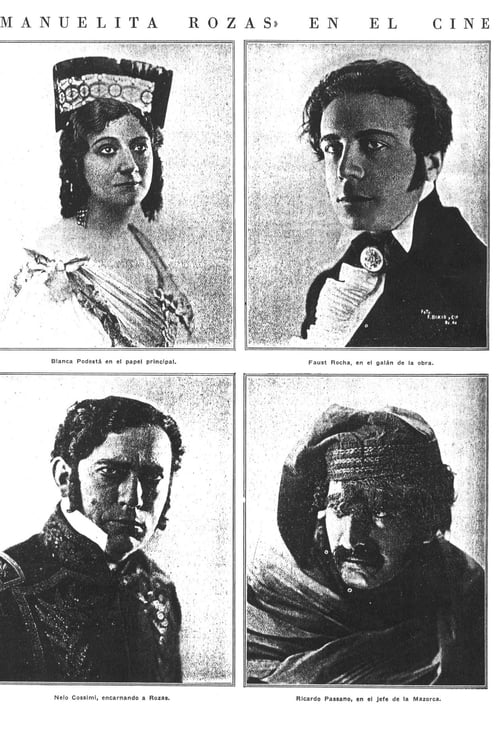
The life and times of Manuelita Rosas.
A 1920 film.
A 1922 film.
A 1925 film.
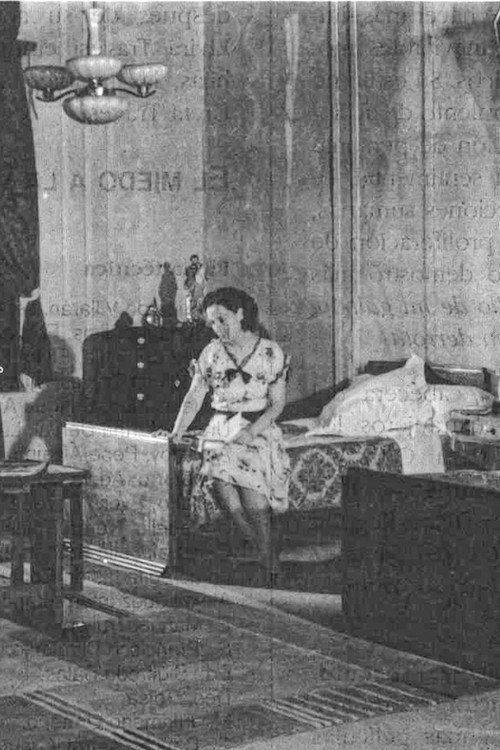
In a wealthy bourgeois home live Doña Trinidad, her children Carlos, Pedro, and Graciela, and three grandchildren. The elderly woman is accustomed to ruling the lives of her family, but also to overlooking their faults. She loves her granddaughter Inés, who is an orphan. She must listen to the complaints and worries of her grandson Carlos, who is a businessman in crisis. Her grandson Raúl, a medical student, is in love with a young woman who doesn't notice him and prefers other companions. His disappointments lead him to seek compensation in morphine injections. The grandson Pedro, who was fired from his job, receives a lottery ticket as payment for a debt, which wins a prize of fifty thousand soles. In turn, another of Doña Trinidad's luxuries, Enrique, comes to his mother's house to lament his weakness of character, which causes him marital problems.
No description available.
Don Manuel, an old and wealthy landowner residing in Lima, is an uncompromising father. He has married off his eldest daughter, Victoria, to a diplomat who is actually a cynic who exploits her. Victoria's affection for Toledo, a friend of the family, is rekindled. Fernando, the second son, is forced to study law. Don Manuel wants to marry off the youngest, Clara, who is in love with Pedro, the administrator of a hacienda, to a lawyer. Toledo is blackmailed by Victoria's husband, who knows about their relationship. Fernando fails his exams, and Clara confesses to her sister that she cannot marry the lawyer because she is in love with Pedro. Victoria confronts her father, putting him in a dilemma: either her sister marries Pedro or she runs away with Toledo. The fear of scandal makes the landowner give in, and Clara marries the administrator, Don Manuel.
Pedro Cortez, known as Tafichán, a resident of the Perene jungles, is on the run from justice, accused of a crime he committed in self-defense to protect a child. Tafichán is married to Rosa, a woman of Chinese descent, with whom he has a young son. Juan Tremolada, Tafichán's godfather, warns him that a group of the governor's men are searching for him. In a bar, Tafichán encounters Maldonado, the governor's son. They argue and engage in a musical duel, reciting aggressive and offensive verses. They fight, and Maldonado falls wounded to the ground. The governor learns of Tafichán's hiding place and captures him. Tafichán is brought before the governor, who challenges him to a musical contest of bitter and biting rhymes. Maldonado shoots at Tafichán, who is hit in the arm, but returns fire and escapes in the ensuing chaos.
Julio leaves prison after serving time for a fraud he didn't commit. He seeks to win back the love of the woman from whom he was separated. Reintegrating into daily life proves difficult, but two friends who know his singing talent get him an audition on the radio. He is hired and begins a successful musical career. Very soon, Julio Campos becomes a famous singer who tours Peru accompanied by his friends and protectors. The police finally capture all the criminals who acted to harm Julio. This is enough to clear his name and reestablish his former romantic relationship. The couple's final reunion takes place during a musical tribute presented by Radio Lima.
A wealthy man from the provinces dies, leaving a will. He bequeaths his fortune to Pepe, a nephew from Lima who lives a very comfortable life. But the will contains a condition: Pepe must marry a cousin of his, living in Huancayo, whom he doesn't know. Pepe, a staunch Limean, imagines his cousin is a mountain girl, "with a face as round as the moon." Since the inheritance consists of a hacienda valued at over a million soles, accepting the legacy means residing in Huancayo, which Pepe is also unwilling to do. He decides to renounce the inheritance.
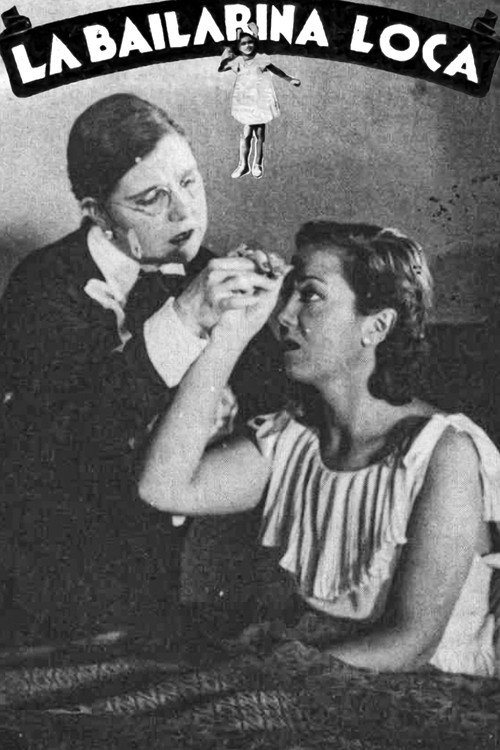
A young girl loses her mind when her long-absent father tries to separate her from her mother. During the attempted kidnapping, the father kills the mother, which traumatizes the girl. After her father is imprisoned, the girl is cared for by neighbors who are unable to prevent a wicked man named Karkow from kidnapping her and taking her to a remote location. The girl grows up with a mental disturbance and becomes an accomplished dancer. One day, she is seen by a doctor of fortune, Dr. Zevallos, who decides to cure her, despite Karkow's opposition. Dr. Zevallos manages to heal the girl, but a physical confrontation with Karkow ensues, similar to the one between her parents. The shock of the experience restores her sanity, and the dancer begins a new life.
A 1923 film.
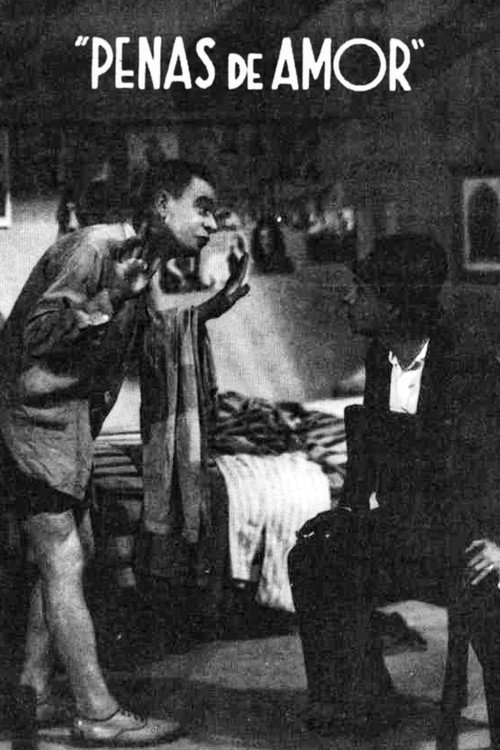
One of the oldest comedies in Peruvian cinema, it tells the story of Esther, a young woman with a troubled life who tries her luck in show business, though things don't go as planned. Directed by Ricardo Villarán and produced by Amauta Films, the film was well-received by critics and audiences at the time, as it was a lighthearted story that allowed actress Carmen Pradillo to showcase her talent as a professional singer. An interesting fact about this feature film is that it took the opportunity to critique the Lima entertainment industry.