Acting
No description available.
Vincent tells the story of Jean, a character who is a part of him, without being him. In this story Jean meets Stacey. Among the echoes of today's society the professional and private relationship of a filmmaker and an actress at work is growing. Notre Histoire is a modern tragi-comedy, a love letter to a woman, a tribute to a neighborhood victim of terrorism, a self-portrait, a social criticism, the description of a relationship between a filmmaker and an actress, in the center of which desire and urgency to work mix.
“I am a woman who does not know where she is going, but who, always, looks for beauty. As long as she does not flee me. Moritz, your beauty fled me. But I caught it and I carry it in me.”
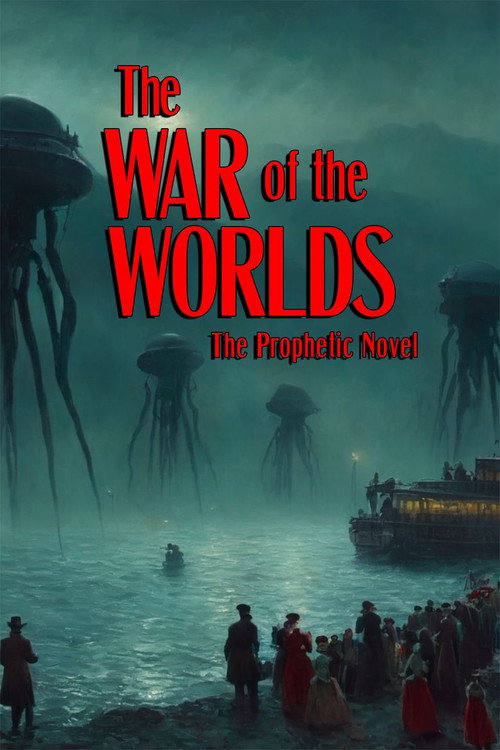
First published in 1898, H.G. Wells’s The War of the Worlds was a veritable literary and cultural revolution. It laid the foundations for modern sci-fi by telling the first- ever story of an alien invasion. A political and moral fable, the novel uses science fiction as a tool to raise our awareness and alert the modern world to the dangers and risks inherent in industrial, scientific and technological progress. It is high time to rediscover this seminal book.
Hsiao-Kang, a Taiwanese film director, travels to the Louvre in Paris, France, to shoot a film that explores the Salomé myth.
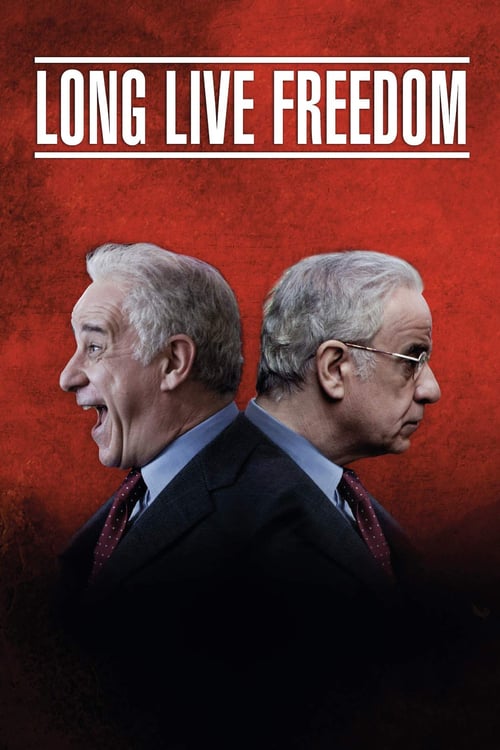
Elections are approaching and things don't look too good for the opposition. Their leader can't stand the pressure and disappears. To avoid a scandal, the upper echelons of the party concoct a risky plan: to replace him with his identical twin, a philosopher with BPD, whose eclectic ideas and direct approach unexpectedly make the party surge in the polls.
After a freak accident changes his perspective on life, a Parisian filmmaker meets a stranger who brings him to a commune that's populated by free-spirited women.
A portrait of the legendary actor Jean-Pierre Léaud, icon of the French New Wave and closely linked to the work of François Truffaut and Jean-Luc Goddard.
Like Pelléas and Mélisande, two young men meet up in the building's parking lot at night to confess their love and flee from the master of the house. How to reappropriate Maeterlinck's burning symbolism, with male bodies and in the half-light of today's Paris? By blurring the lines...
Wonderful piece of film noire. Great acting, París, well, as beautiful as ever. Love the plot gaps, force you to thunk. To imagine. The whole story is never revealed. Highly recommended. Marie is delicious.