Directing
Testimonials of terror and repression from the Argentine port city of Bahía Blanca.
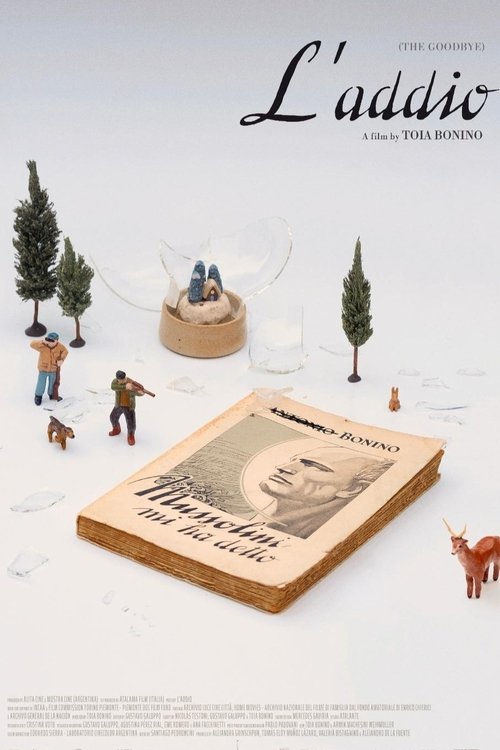
After the death of her grandfather, Antonio Bonino, Toia found six negatives proving that he was a member of the Fascist Party and an aide to Benito Mussolini. Influenced by this discovery, the director sets out to trace her male family lineage, whom the end of World War II brought to Argentina. Instead of a clarification, however, the past crumbles and disintegrates into a mosaic of archival material, family films, excerpts from personal diaries and fragments of the works of Roberto Rossellini or Luchino Visconti. But it is the meanings that emerge from the combination of disparate images that offer answers and fill the information vacuum that has shaped generations of the family. The dynamics of the Bonino family's male-female relationships have a much darker basis than the social context of the time. In the story of grandfather, father, cousins and sons, Toia also finds a story of identity and of the role of wives, mothers, grandmothers and daughters in a history shaped by men.
Extension is a film about the Pampas plain or about the impossibility of accounting for that landscape. A bubble that bursts in the torrent. Thousands of birds shake the air. The storm rushes over the camera. How to represent a territory in our eyes unfathomable, in which everything changes and at the same time remains? Right there, between the detail and the panorama, between the short shots and the shots that seem to never end, the well-trodden “Argentine countryside” emerges in its elusive condition. A space filmed almost outside the human presence, in which words would be expendable except to mention an absent God.
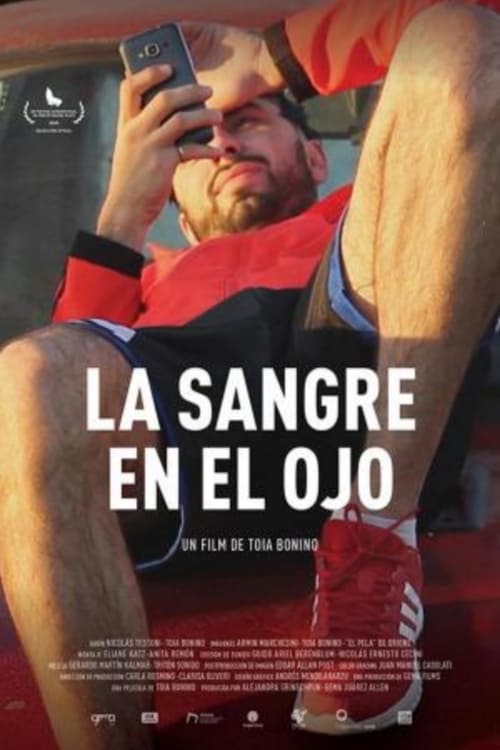
After fourteen years, Leo is released from jail, but he remains imprisoned by an idea: to avenge the death of his brother, Ale. The blood in the eye is the continuation of Orione. The second act of a drama that reunites two brothers in crime and punishment.
In this film, some of our neighbors remain silent, they refuse to speak or they simply ignore us. But in their absent attitude, in the visages of these males from the Pampas whose masculinity seems to be seized by a haunted trance, an intangible presence, perhaps, surfaces. “—Do shadows speak? — Shadows go silent, but we hear them hushing.”
A film about the plains as an abyss and the night as a hiding place where darkness seems to keep a blazing secret and carry the imminence of an event perpetually postponed. An inquiry about the imaginary line that separates the provinces of Buenos Aires and La Pampa.
There is an hour of the afternoon when the plain is on the verge of saying something. It never says it, or perhaps it says it infinitely, or perhaps we do not understand it, or we understand it and it is as untranslatable as music… The last hour is a movie about ghosts. A documentary about the light that brightens the last inhabitants of a remote corner of the Argentine pampa.
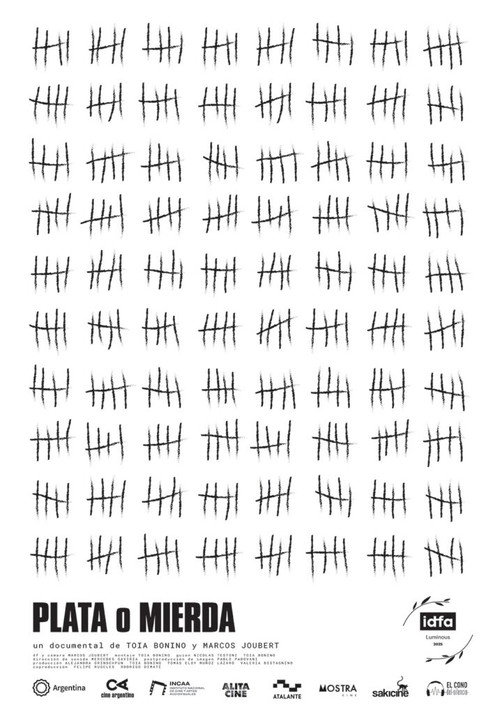
In the Argentinian prison where he's serving a sentence, Marcos cherishes his smartphone, which he uses to keep in touch with family and loved ones. It's also the device with which, at the request of filmmaker Toia Bonino, he documents his daily life. His video recordings and back-and-forth voice messages with Bonino form a precious link to the outside world.