Sound
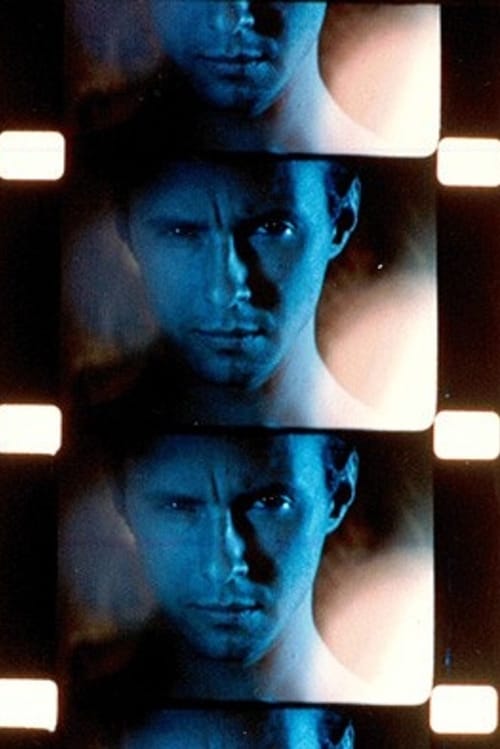
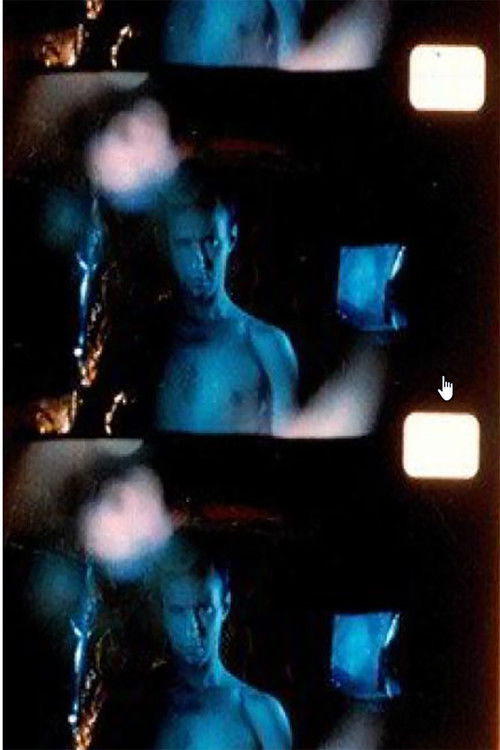
“Faust Part 2” reveals the modern Faust in a romantic interlude, an idyll (from the Greek idein, "to see"); also, a journey of the id. A sense of story is inferred through the complex interweaving of human gesture, expression, and bodily movement within vibrantly shifting colours and rhythmic development, creating multiple levels of metaphorical meaning. A collaborative work with paintings by Emily Ripley and soundtrack by Joel Haertling.
This is the realization of a 30 year old dream, a wish of the young filmmaker to film a modern Faust which finally came to a fulfillment as unpredictable and as absolute as, say, three decades of living experience. Like earlier artists who have treated the Faust legend,he uses it to explore the nature of obsession. But reversing the familiar idea of Faust as an old man yearning to be young, Brakhage makes him a world-weary young man who longs to be old... What makes the film striking is its rich imagery, superbly photographed in dark-hued tones, and its insistent visual rhythms. Brakhage is close to his peak as a bard of the camera and the editing table. – David Sterritt
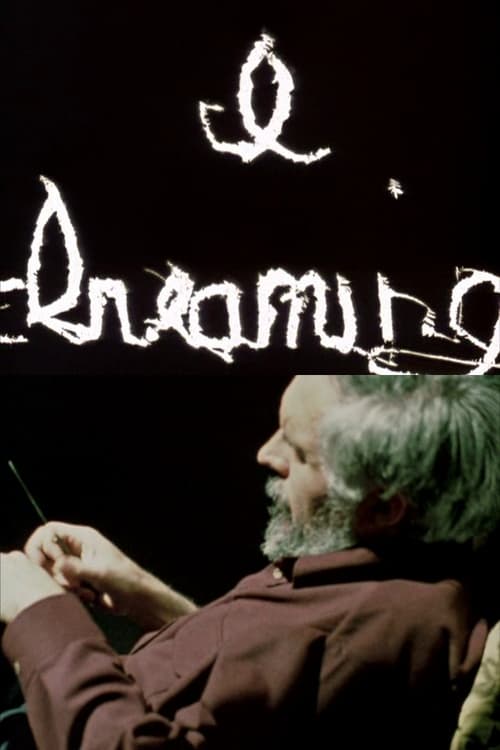
Phrases of Stephen Foster, set to music by Joel Heartling, are set to film in this autobiographical piece: a solitary female voice, occasionally joined by a chorus, sings phrases of sorrow as we watch a solitary man in shadows in an unadorned house: he stretches out, he picks his feet, he walks across a room, he rocks in a chair. Occasionally he watches two young children at play; the film sometimes speeds up. Handwritten words, like "dark void" and "waiting longing," cross the screen. Film and phrases often come in short bursts. Outdoor it looks gray and cold.
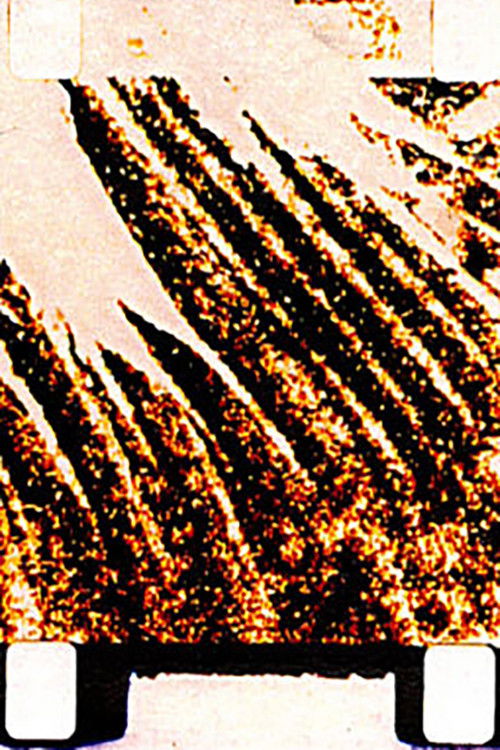
"This film is a collaboration between Joel Haertling and Stan Brakhage. It is a hand-painted film incorporating treated film images of trees in Fall colors and scratched film. It has four levels of superimposed image. Inspired by an eye aberration caused by a detached retina, this film approximates what is seen through wounded eyes. The film begins with an eye injury, followed by a multi-color dot pattern that approximates damaged-as-seen-through-a-screen eyesight. A scratch pattern is introduced that is identical with a recurring eye aberration associated with a detached retina. A flowering Agrimony plant appears, the name meaning a wound to the eye. A catharsis is reached at the point that the scratched pattern changes to its negative and transforms to color negative. This introduces other painted and sanded film sequences that resolve the catharsis of incoming images into a visual-world-unto-itself." - Stan Brakhage
Song of the Mushroom (2002), completed in December 2002, is a collaboration between filmmakers Joel Haertling and Stan Brakhage. With interest in mycology, Haertling made mushroom spore prints directly onto clear 16mm film. A 7.25-second loop was passed from Haertling to Brakhage who added hand painting. This loop was then step-processed utilizing a variety of lighting aspects. Brakhage did the final edit. This was one of the very last films Brakhage made before he left Boulder in January 2003. He died in Canada in March 2003.