FEEL IT.STREAM
Djamel-Eddine Chanderli

Djamel-Eddine Chanderli

Directing

Biography

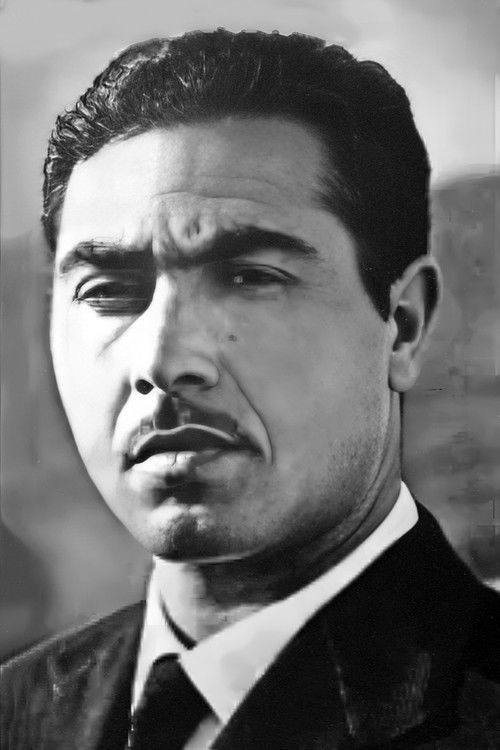
Djamel-Eddine Chanderli is an Algerian director, born in 1920 in Annaba. In 1956, in the middle of the Algerian war of independence, he joined the maquis and was considered the first Algerian to produce images from inside the country in struggle. In 1957, Djamel-Eddine was part of the team of the cinema service which was created by the GPRA (Provisional Government of the Algerian Republic). The first independent Algerian images of a documentary nature were therefore born in the maquis of the National Liberation Army (ALN) in 1957. Participating in a real war of images intended to counter colonial propaganda, they are known under the title “Ambush between EI -Arrouch and Azzaba” showing an ambush filmed in 1956. These images were intended to participate in the war against colonial France faced with the legitimacy of the Algerians' fight for their freedom; a fight that the whole world had to know about. Other notable productions took place in the middle of the war. Among them, The Ouenza Mine Attack, The ALN Nurses, The Refugees, in 1957. In 1961, there was Algeria in Flame, Sakiet Sidi Youcef, Djazaïrouna, The Rifles of Liberty , I'm 8 years old, The voice of the people, Let's go children for Algeria and Yasmina. A real war front was opened: the front of images which mobilized courageous activists like Djamel-Eddine Chanderli, Ahmed Rachedi, René Vautier, Yann Le Masson, Pierre Chaulet, Pierre Clément, Cécile de Cujis, Karl Gass, Mohamed Lakhdar Hamina and Stevan Labudovic. In 1958, Djamel-Eddine Chanderli directed with Pierre Clément "Algerian Refugees", a film about refugees at the borders. To prepare for the debate on the Algerian question at the UN, Chanderli, Mohamed Lakhdar Hamina and Pierre Chaulet were entrusted, in 1959, by the Ministry of Information of the GPRA with the production of "Djazaïrouna" (Our Algeria), a film by montage intended to enlighten the international community on the objectives pursued by the Algerian resistance fighters. In 1961, he made a short fiction film which tells the story of little Yasmina, her flight after the bombing of her village, her wandering with her chicken to the border and her life among the refugees. After independence, Djamel Eddine Chanderli was one of the heads of the Algerian news office created in 1963. In 1969, he took care of the audiovisual service of Sonatrach. In 1979, he returned to Paris. Will take care of the audiovisual service of the Algerian Cultural Center in Paris, inaugurated in 1983, until his death on November 10, 1990.
Known For

The Desert Divers
10.0

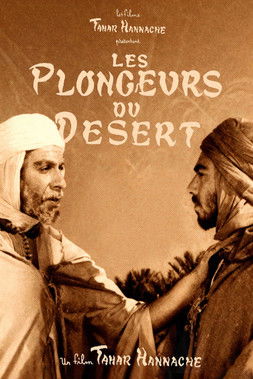
Les Plongeurs Du Désert, directed by Tahar Hannache in 1952, is considered the first entirely Algerian fiction film. It tells the story of the inhabitants of an oasis whose well has dried up. The village elder, Sheikh Messaoud, calls upon the renowned desert divers, artisans specializing in clearing sand- and silt-filled wells, to restore access to the vital water for the community. After their intervention, the water begins to flow again, bringing relief to the oasis and its inhabitants. The film depicts the contrast between the traditional techniques of the divers, embodied by Sheikh Ali and his son Mansour, and the arrival of modernity, represented by the machine that ultimately replaces their craft. This story symbolizes the marginalization of local knowledge in the face of technological progress and the social injustice of the colonial era.

The Desert Divers

1952
Our Algeria
10.0

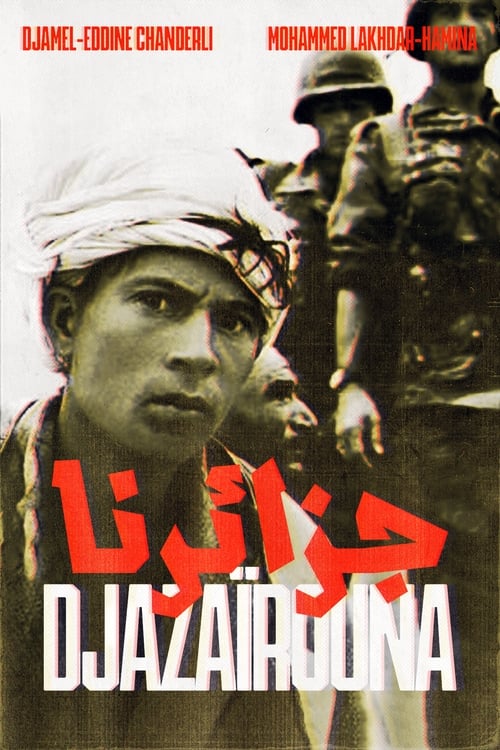
"Djazaïrouna", produced by the cinema service of the Provisional Government of the Algerian Republic (GPRA), is a montage film intended to inform the international community at the UN in 1959 on the objectives pursued by the Algerian resistance during the war of 'Algeria. Independence in Algeria (1954-1962). In 1959, Djamel-Eddine Chanderli and Mohammed Lakdar-Hamina produced Djazaïrouna (Our Algeria) from images taken by René Vautier and Doctor Pierre Chaulet. This film, completed a little later and will result in the film “The Voice of the People”. This documentary on the history of Algeria through a montage of current events, traces the political and military actions of the A.L.N, the demonstrations of December 1960, and the attack on a fortified French base on the border between Algeria and Tunisia.

Our Algeria

1959
Algerian Refugees
10.0

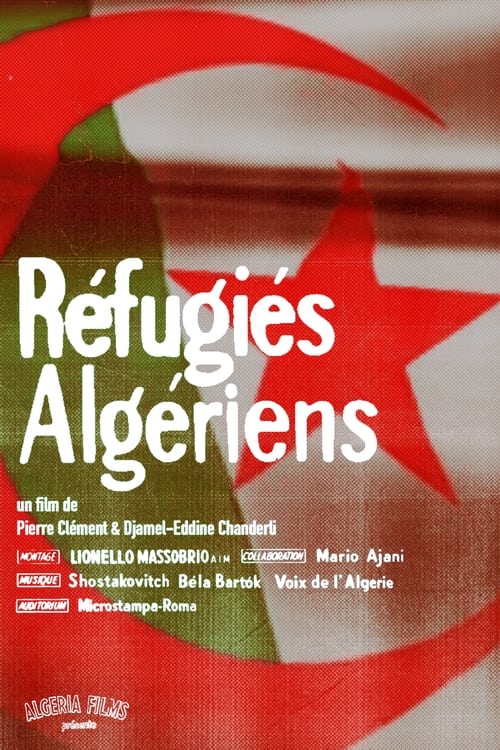
Directed by Pierre Clément and Djamel-Eddine Chanderli, produced by the FLN Information Service in 1958, this film is a rare document. Pierre Clément is considered one of the founders of Algerian cinema. In this film he shows images of Algerian refugee camps in Tunisia and their living conditions. A restored DVD version released in 2016, from the 35 mm original donated by Pierre Clément to the Contemporary International Documentation Library (BDIC).

Algerian Refugees

1958
La Corniche d'Amour
N/A

Two rich tourists, a photographer and a painter, meet during a walk in Kabylia. Their wanderings are an opportunity to highlight the many tourist and picturesque places on the Algerian coast. This film commissioned by the Defense Communication and Audiovisual Production Establishment (ECPAD), attempts to sell a tourist destination when Algeria was in flames with the outbreak of the Algerian national liberation war. Filmed with the colonial lens of the time, the natives are only one element of a picturesque setting, and the final kiss between a French woman and an Arab man is an attempt to demonstrate a pacified country. Despite everything, the film constitutes a precious archive for Béjaïa, which is the subject for the first time of a film which immortalizes a moment in its history, and to introduce the work of Tahar Hannache, actor, cinematographer and director, one of the pioneers of Algerian cinema.

La Corniche d'Amour

1955
Sawt Echaâb
10.0

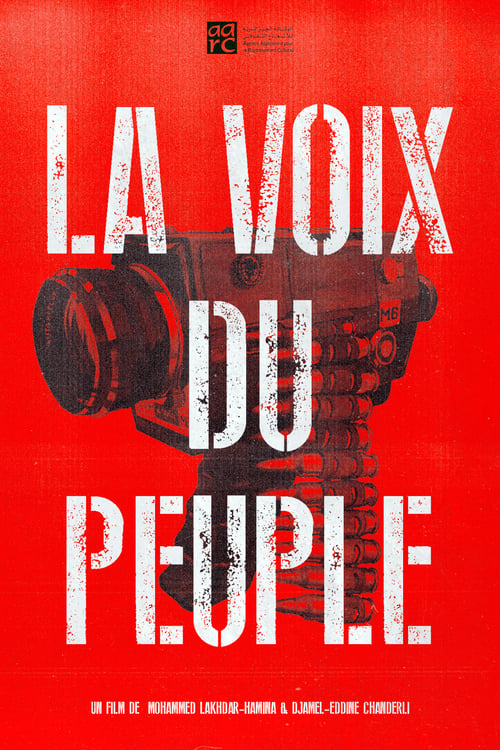
“La Voix du Peuple,” composed of archival photographs by René Vauthier and others, exposes the root causes of the armed conflict of the Algerian resistance. Participating in a war of real images against French colonial propaganda, these images aimed to show the images that the occupier had censored or distorted, by showing the extortions of the French occupation army: torture, arrests and arbitrary executions, napalm bombings, roundabout fires, erasing entire villages from the map, etc. This is what the French media described as a “pacification campaign”.

Sawt Echaâb

1961
Guns of Freedom
10.0

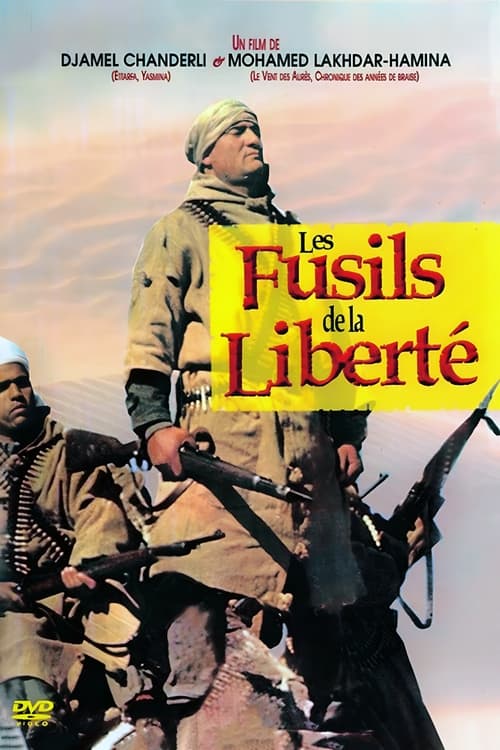
This docu-fiction recounts the difficulties overcome by an ALN ​​detachment whose perilous mission is to transport weapons and ammunition from Tunisia across the Algerian Sahara during the Algerian liberation war (1954-1962) against the French army of occupation.

Guns of Freedom

1961
Yasmina
10.0

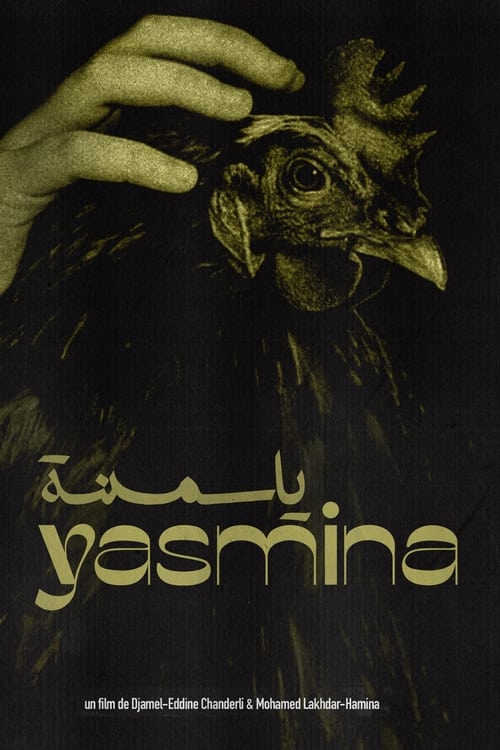
"Yasmina" filmed in 1961 in the middle of the Algerian war tells the story of a little Algerian girl with her hen and her family whose father was killed in a bombing by the French colonial army of occupation. The family, after a long journey, heads towards the refugee camps on the Tunisian border. Produced by the Cinema Service of the Provisional Government of the Algerian Republic (GPRA) in the midst of the war of independence, these films were intended to re-inform the population and international public opinion on the abuses committed by the French colonial army: torture, arrests and arbitrary executions, napalm bombings, fires in douars, entire villages wiped off the map, etc. which the French media described as a "pacification" campaign. The latter censoring or reorienting any images that could harm the colonial narrative.

Yasmina

1961