Bhudo Advani
Acting
Known For
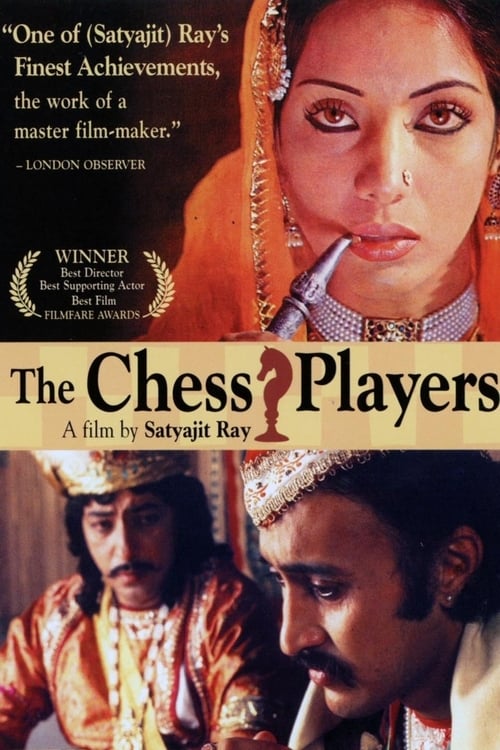
In the year 1856, Nawab Wajid Ali Shah is the King of Awadh, one of the last independent kingdoms of India. The British intend to control this rich land and send General Outram to clear way for an annexation. Pressure is mounting amidst intrigue and political maneuvers, but the Nawab whiles away his time in pursuit of pleasure and religious practice. The court is of no help either — noblemen Mir and Mirza ignore all duties and spend their days playing endless games of chess.
The Chess Players
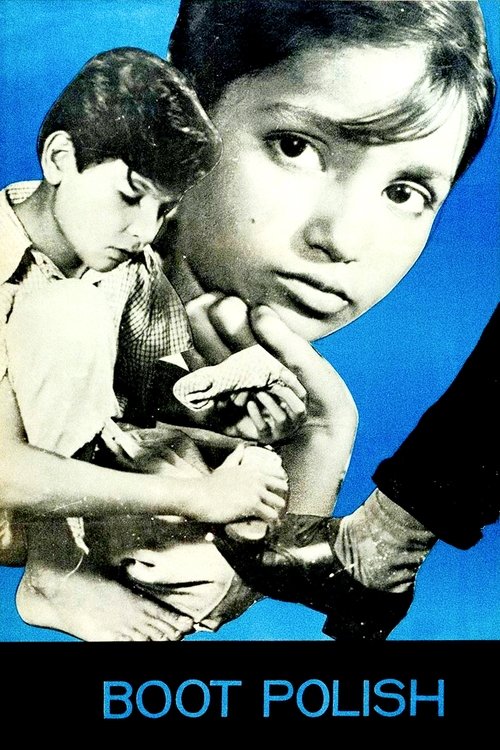
Two orphans are forced by their abusive aunt to beg in the streets of Bombay. They take up shining shoes but are separated from each other.
Boot Polish
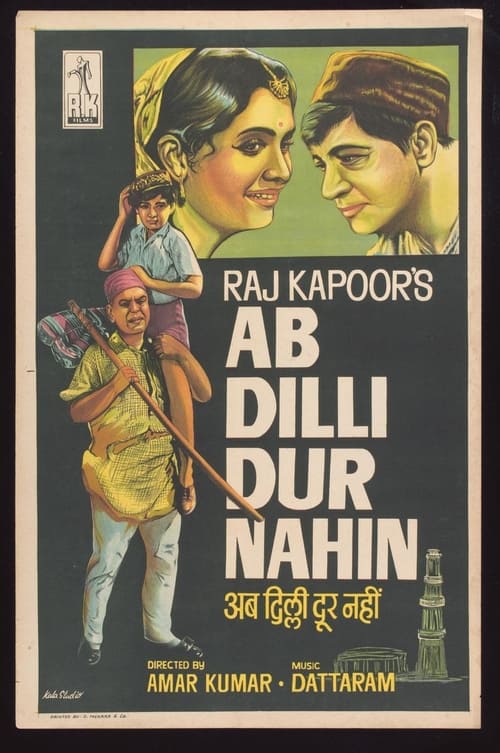
A young boy travels to Delhi, wanting to meet Prime Minister to seek justice for his father who has been wrongly sentenced to death.
Ab Dilli Dur Nahin
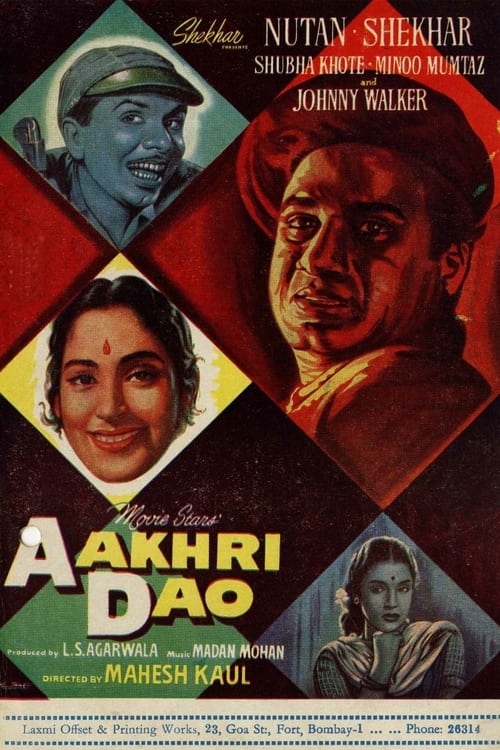
A car mechanic falls in love with a girl but discovers her father has a large debt, leading him to gamble and marry another to pay off the debt.
Aakhri Dao
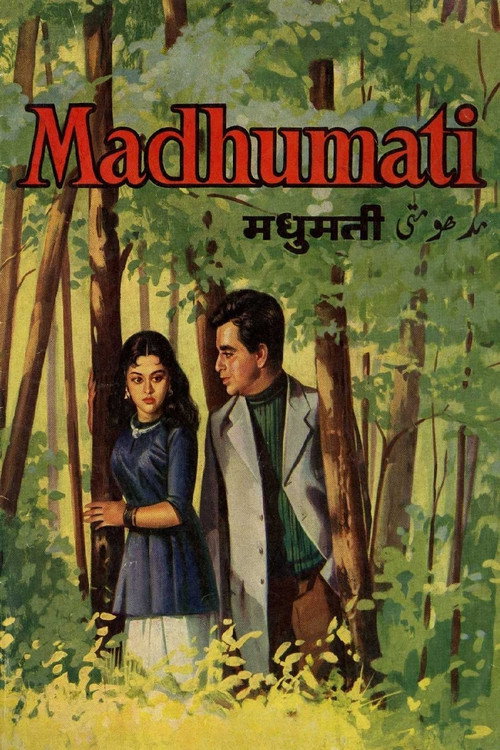
Two men take shelter in a derelict mansion situated in the countryside during a storm. One of the men suddenly becomes aware that he once visited this mansion in a past life; he recounts a story about when he was Anand, a painter, who fell in love with a tribal girl named Madhumati.
Madhumati
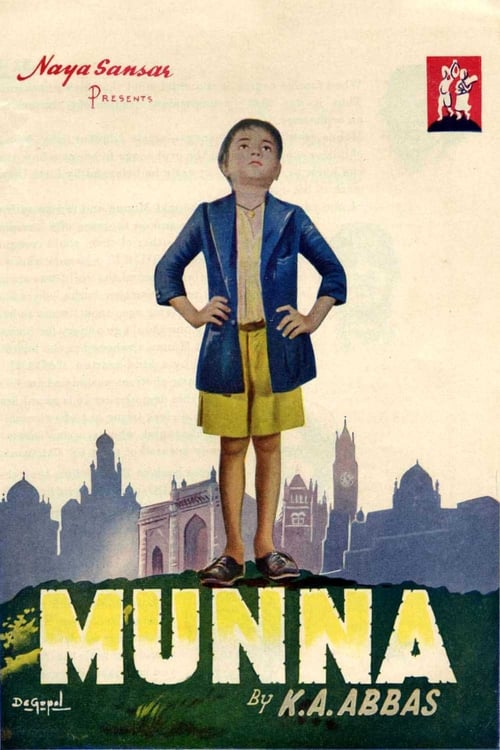
On a dark, stormy night, a young woman appeared near the orphanage. Holding her child close to her chest one last time, she left him at the door and disappeared as quietly as she had come. Only the moon and stars were silent witnesses to her deed, the cry of a desperate soul. "Munna" means "baby" in Hindi. That is what the owner of the orphanage named the foundling. Years passed. One day, a wealthy childless couple came to the orphanage, wishing to adopt one of the boys. Their choice fell on Munna. However, upon learning that the child's mother was alive, they changed their minds and left, leaving a gold amulet around the boy's neck. That night, Munna could not sleep: pain and longing weighed heavily on his little heart. The boy ran away from the orphanage and set off for Bombay in search of his mother. He was determined to find her.
Munna
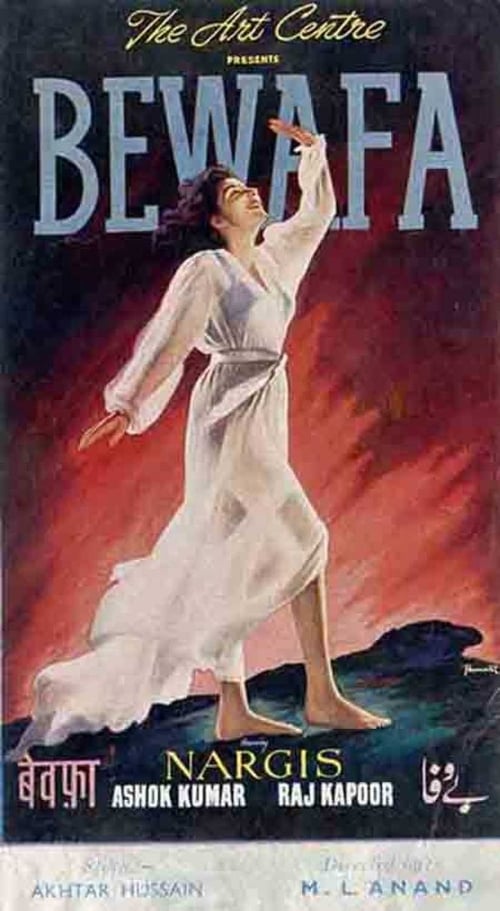
A wealthy heiress's life is tragically upturned when she discovers her illegitimate, look-alike sister—a street-wise courtesan—who quickly falls for her fiancé, forcing a crisis of identity, love, and sacrifice.
Bewafa
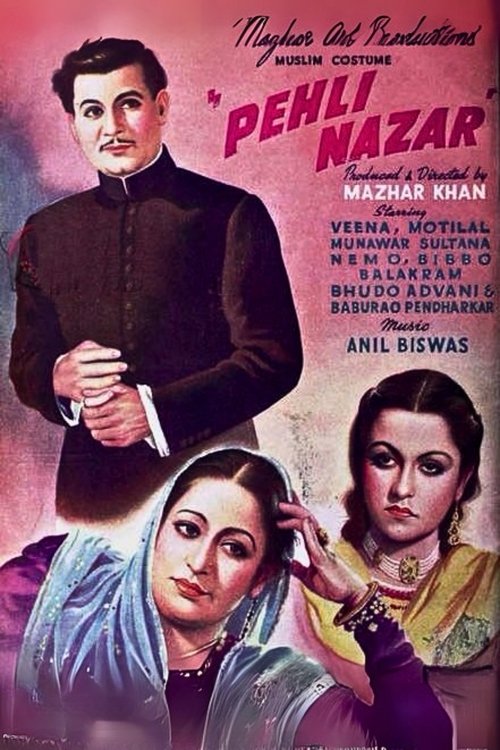
A tragic Muslim social drama. It tells the story of two close Pathan families torn apart when Motilal, initially engaged to Veena, falls for and demands to marry her cousin and best friend, Munawar Sultana, after seeing her by chance. This sudden change of heart creates a deep and painful rift between the once inseparable families.
Pehli Nazar
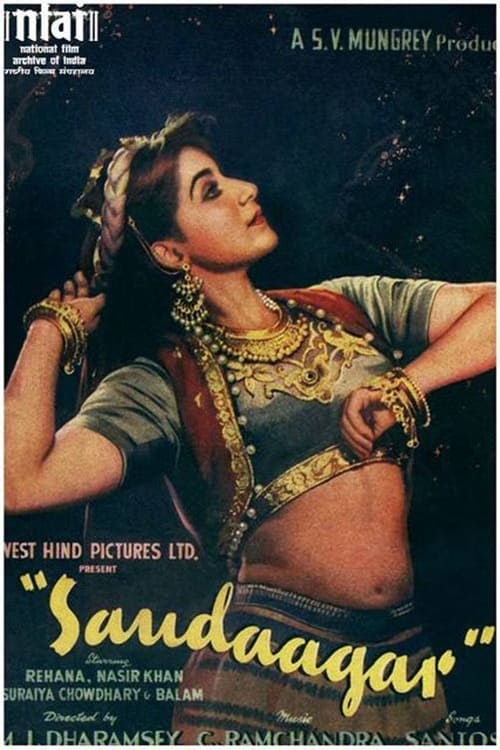
A ruthless spice merchant in pursuit of ultimate wealth must choose between his fortune and the only woman who knows the true measure of his heart.
Saudagar
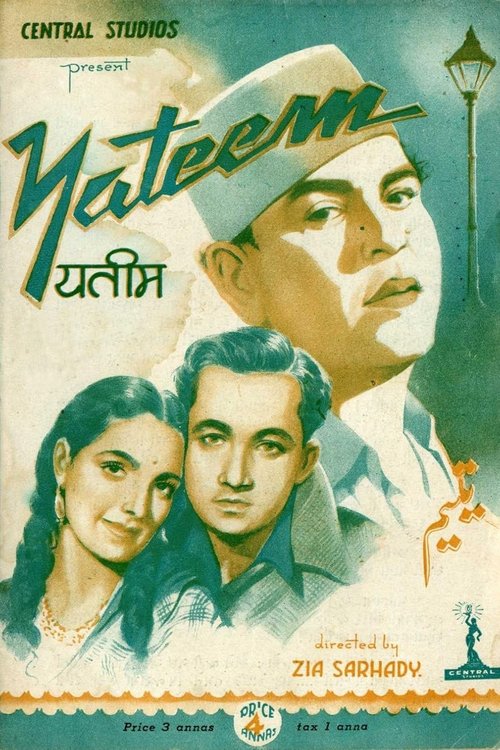
A social drama centered on the life and struggles of an orphaned child. The film explore themes of vulnerability, resilience, the search for belonging, or the challenges faced by someone without familial support in society. It aim to evoke empathy and highlight societal responsibilities towards orphans.
Yateem
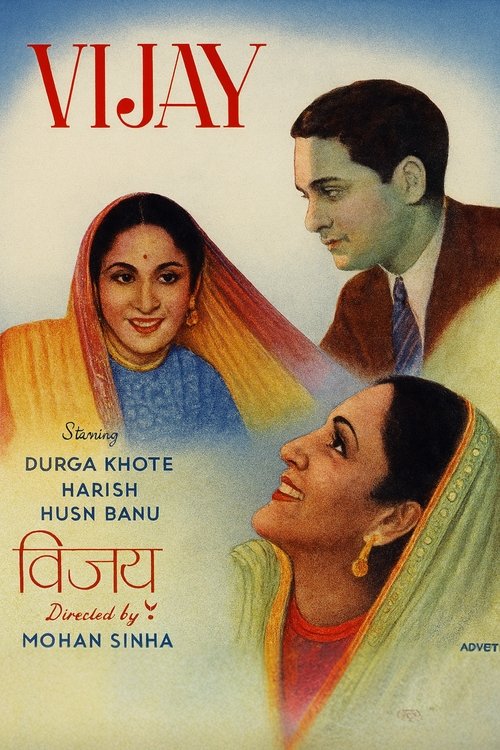
A rich, fatherless young man named Vijay faces betrayal when his greedy brother-in-law, Kampta Prasad, plots to seize his inheritance. Led astray by city life and losing his fortune, Vijay's struggles are silently supported by his devoted sister. But when Kampta Prasad sets his sights on Vijay's childhood sweetheart, Dulari, a vengeful Vijay returns, ultimately becoming a brilliant eye specialist who holds Kampta Prasad's fate in his hands. It's a gripping melodrama of deception, resilience, and poetic justice.
Vijay
Aankhen (meaning The Eyes) is a 1950 Bollywood family drama film directed by Devendra Goel
The Eyes
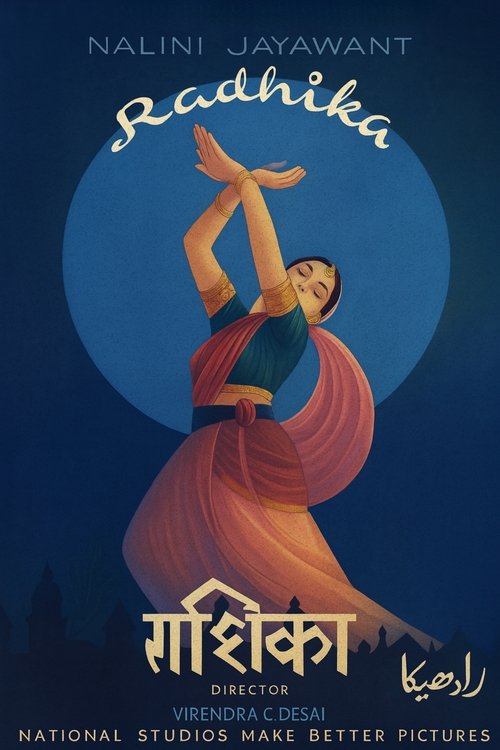
Radha is deeply devoted to Lord Gopal and spends her days in worship and spiritual pursuit. Her beauty and piety attract the attention of the Jagirdar, a powerful and wealthy man, who desires to marry her. However, Rasha is uninterested in worldly attachments and seeks only spiritual fulfillment.
Radhika
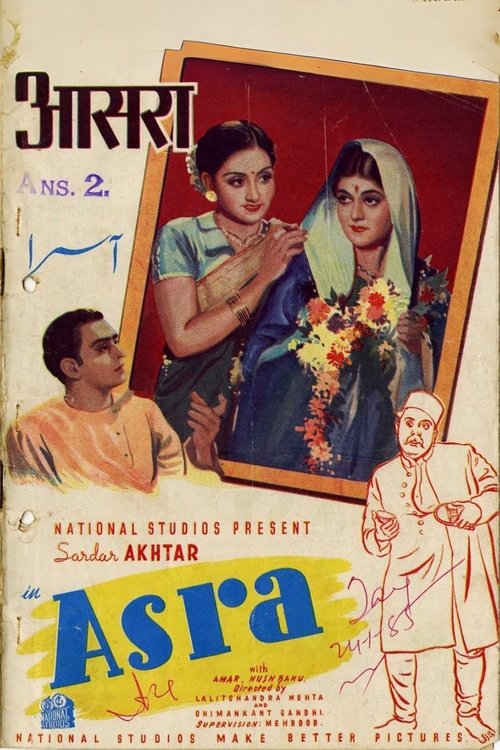
Aasra revolves around the life of Chanda (Sardar Akhtar), a sweet girl, who runs away from her house after her forcefully arrangement of marriage and meets with Chandan (Amar), a kind man in train and pretends to be married and worked in a Hotel. However, she meets with him again to save her life from an evil man and he pretends to be her husband. But they fell in love after an accident and this causes chaos and complications leading to consequences.
Aasra
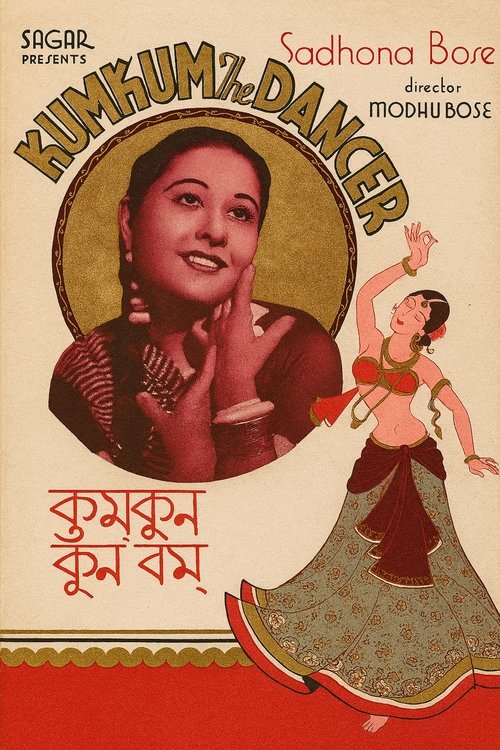
A dance film idealising poverty made mainly to showcase Bose's talents. Labour leader Suryashankar is jailed for trade union activities and, when released, finds that his friend Jagdish has stolen his property and plagiarised his play Bhookh (Hunger). To take revenge on behalf of the poor, Suryashankar's daughter Kumkum (Bose) marries Jagdish's son Chandan (Bhattacharya). Later she collaborates in staging a play meant to expose Jagdish's evil past. The film's publicity slogan was 'She robbed her husband to feed the poor!'
Kumkum the Dancer

A social woman-centered film interrogating aspects of feudal patriarchy. The painter Ashok (Surendra) who loves the orphaned Vimala (Bibbo) is distressed to learn that she is due to marry Jagdish (Yakub). He paints Vimala's portraits with a frenzied obsession and becomes a famous artist. Paralleling this love story is the decline in Ashok's family fortunes.
Manmohan
Directed by S.F. Hasnain, Duniya (1949) is a classic social drama from the golden era of Indian cinema. It explores themes of justice, class struggle, and the moral complexities of the legal system.
Duniya

The follow-up to Manmohan (1936) again starred Surendra and Bibbo. She is Neela, he plays Jagirdar Surendra. They secretly marry and have a child. When Jagirdar is presumed dead in a shipwreck, the child is considered illegitimate. The poor peasant Shripat (Pande) helps Neela by marrying her and raising her son Ramesh (Motilal). The husband eventually returns and violently quarrels with Shripat about who ‘owns’ Neela. When the villain Banwarilal kills Shripat, the husband is framed for the killing. The real problem, however, is the son’s rejection of his father, solved when together they face the gangsters in Narayanlal’s (Yakub) den.
Jagirdar
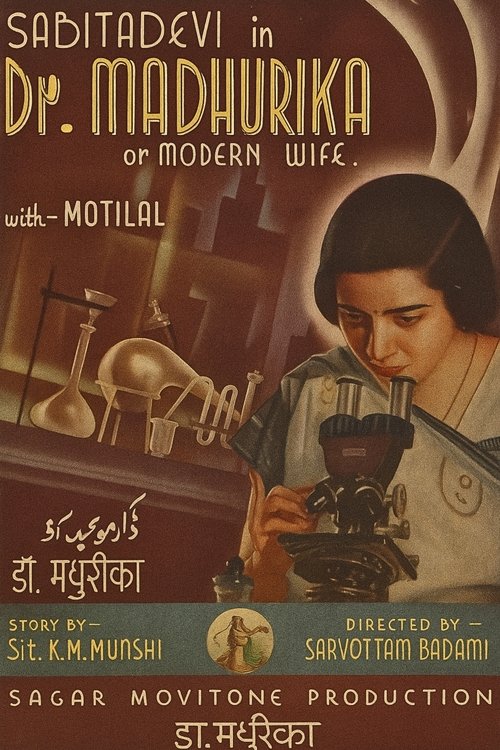
Dr. Madhurika, a career-focused woman, marries Narendra on condition .of no children or interference. Her neglect of home and close ties with colleague Dr. Gaurish spark Narendra's jealousy. However, when Narendra helps Gaurish's wife and a stranger, Madhurika's own jealousy leads her to embrace a domesticated role
Dr. Madhurika

Based on an ancient Hindu epic, the film tells the timeless love story of King Nala of Nishadha and Princess Damayanti of Vidarbha. Their love is sparked by the magical swans who carry messages between them. Despite challenges from gods who also desire Damayanti, and the cunning machinations of the evil Kali who curses Nala, the couple endures separation, hardship, and transformations. The film focuses on their trials, Nala's loss of his kingdom and disguise, Damayanti's unwavering devotion and search for him, and their eventual reunion and restoration of their happiness and kingdom.