Editing
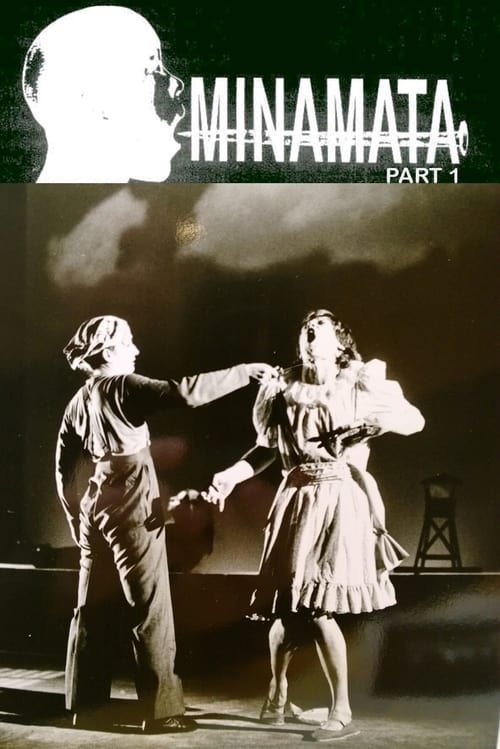
"Minamata is the name of a fishing village in Japan," said the writer-director ("Peep Show," "Eva Peron," "Rusty Sat on a Hill One Dawn and Watched the Moon Go Down"), who wrote the piece with Mira-Lani Oglesby. "Chisso, a company that makes parts for plastic, dumped mercury waste into the water supply and the fishermen got sick. A high percentage of the villages depended on fish and fishing so their livelihoods dried up too. "The story of Minamata is just the departure point for the play," the writer said. "It's the ghost behind the play, the shadow over it. The piece is a meditation on beliefs, ways of thinking, how operatives in the system create a way of thinking that makes it possible to destroy life in order to improve it. There's a thesis that in order to progress you have to allow for destruction. No. You cannot buy into that way of thinking, because it's erroneous and hurtful."
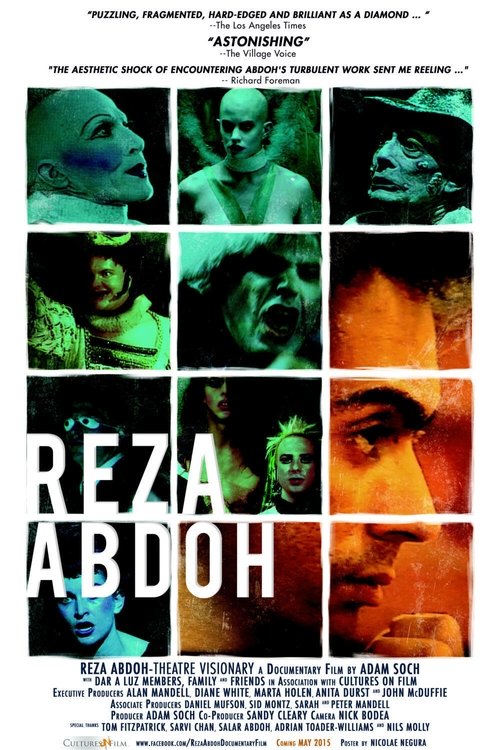
The impact of wunderkind theatre director Reza Abdoh's explosive work is finally brought to light twenty years after his death of AIDS, with live performance footage and interviews with those closest to him.
Short film starring founding member of the house of St Laurent; Octavia.
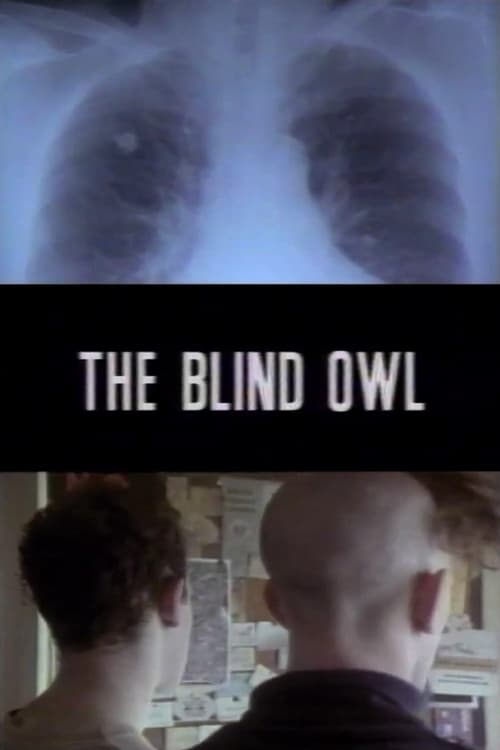
Ricky is a young man who takes care of his sick mother. His father hovers at the edge of the picture, so Ricky provides for himself and his mom through prostitution, running errands, and acting as a caregiver for a blind man. Through the course of the film, Ricky befriends Janey, a young woman he finds beaten by her ex-boyfriend, and Trenn, a mysterious young man in trouble with the law. The three of them navigate a dark and confusing world. It uses many of the actors who have come to constitute the Dar A Luz company, including Tony Torn, Tom Fitzpatrick, Juliana Francis, and Tom Pearl. It will disappoint those who approach it looking for a film analogue of the “faster and louder” aesthetic that critics have used to characterize much of Abdoh’s stage work. The Blind Owl does use a variety of techniques reminiscent of his stage direction, giving it an unusual theatricality.
The world premiere in 1990 of an avant-garde, queer retelling of the myth of Orpheus (Tommy) and Eurydice (Dora Lee), focusing on an antagonistic couple who find themselves exploited by Orpheus's overbearing and sexually-predatory boss.
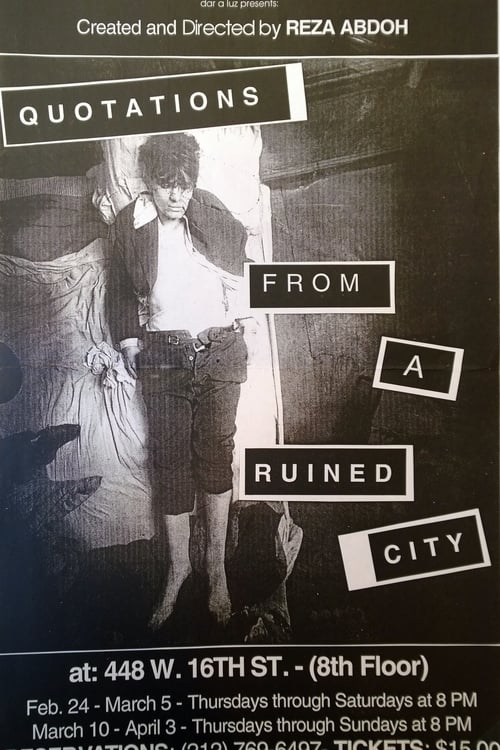
Quotations From a Ruined City was first performed as a workshop production for the Los Angeles Festival in a former shoe store on Hollywood Boulevard. The production subsequently moved to a vacant pajama factory in New York's meatpacking district and went on to be presented by multiple European presenters. It was Abdoh's final work. "Quotations from a Ruined City is a sort of apocalyptic follies: an evening of song, dance, poetry, nudity and torture set in a world whose center has clearly long ceased to hold. Created and directed by the gifted young theatrical cult artist Reza Abdoh, the work is a kaleidoscopic catalogue of images of decay and destruction that range through the centuries and around the globe."--New York Times, 1994.
An avant-garde video film short in which actors in various languages, states of dress and undress, standing or lying prone, pontificate about Geraldo Rivera's interview with Charles Manson (as well as the Greek myth of Medea), chopped and edited with off-screen directions and asides by the filmmakers and crew, to a state of borderline incomprehensibility.
This video was created and projected during the performance of The Hip-Hop Waltz of Eurydice (1990). "The use of the rear-screen video in Hip-Hop hooks you into the psyche of the world outside as well as the psyche of the world inside. When the Captain throws the coffin through the window, you see a world that shatters. The boy behind the window represents the forces behind the window, which are facing us but which we choose not to see. At the start of the play, the figure behind the window, which was before reproduced, is now, at the end of the play, alive. That is translated through light into space, and in space translated to motion. On one level it is completely reproduced, it is not actual; on another level, it's actual, and that is only possible when you are using different media." —Reza Abdoh