Directing
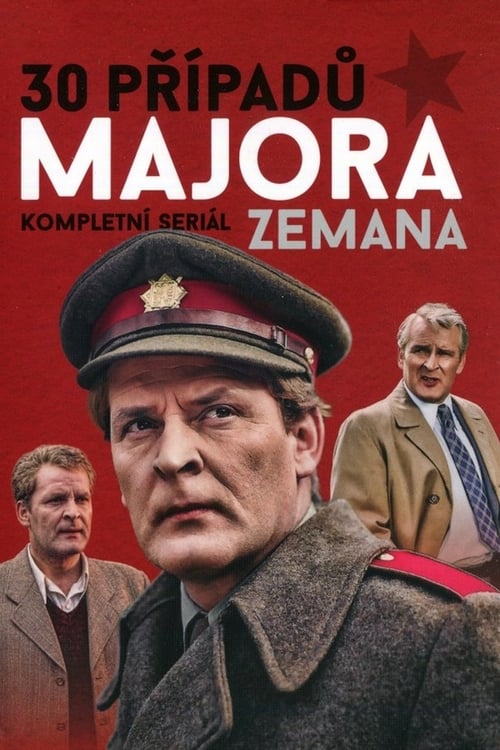
Thirty Cases of Major Zeman is a Czechoslovak action-drama television show intended as a political propaganda to support the official attitude of the communist party. The series were filmed in the 1970s. Each episode encompasses one year, and investigations are stylized to that year. Most are inspired by real cases. The series follows the life of police investigator Jan Zeman during his career from 1945 to 1975.
No description available.
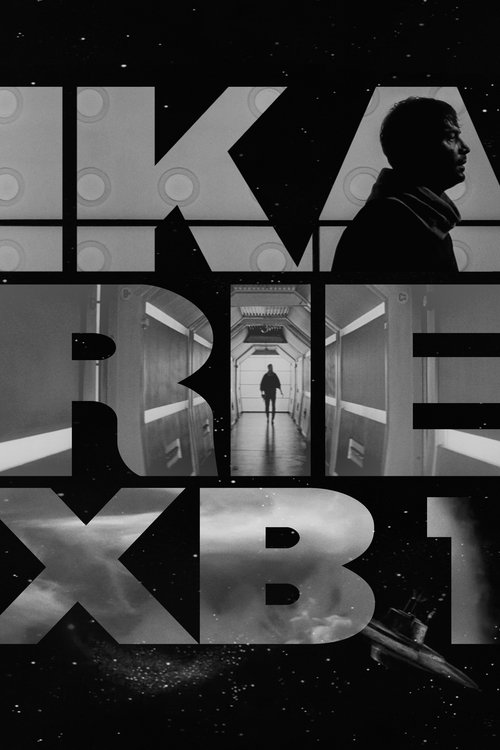
The year is 2163. Starship Ikaria XB-1 embarks on a mission deep into space in search of alien life. During their perilous journey the crew confront the effects of a malignant dark star, the destructive legacy of the 20th century and, ultimately, the limits of their own sanity.
Two classically trained musicians and childhood friends - one a successful cellist in Prague, the other a violinist who makes his money playing provincial funerals - reconvene on the eve of a small-town symphony concert.
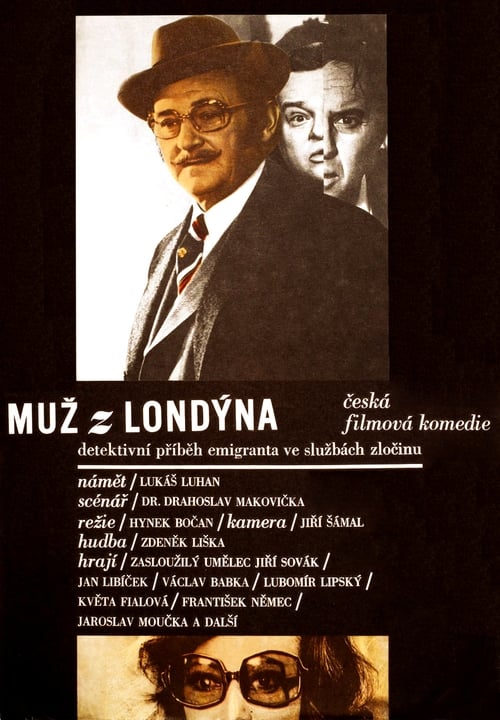
A British citizen by the name of George Reiner (Jirí Sovák) arrives at Prague airport. He was once a Czech safe-breaker, and has now returned home after thirty years to steal twenty-dollar gold coins still kept in the safe at a private villa in Pilsen whose owner fled to the West.
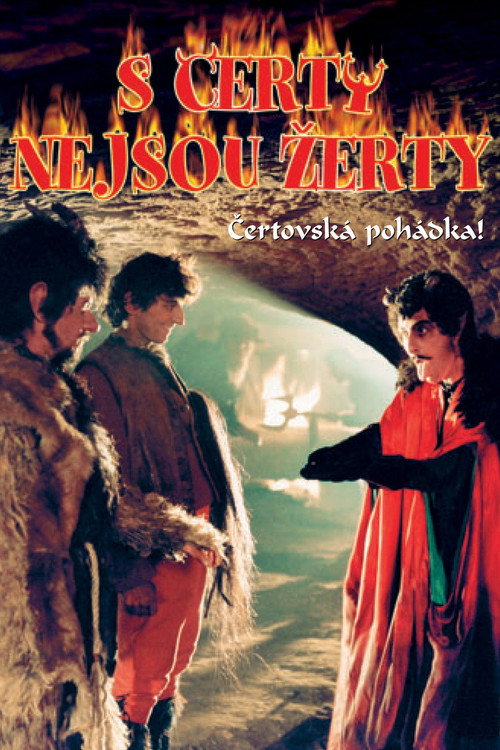
Dorota, a bad woman married the miller, out of sheer greed drives him to death. She then took the mill away from his son Peter and threw him out of the hime. Lucifer, who is known to rule in hell, sends out the devil Janek. He is supposed to fetch Dorota because the measure of her earthly sins is overflowing. But the devil himself can not handle this evil woman and flees to the military. There he meets Peter. By joining forces, they finally succeed in transporting the wicked Dorota to hell. Since then hell is hell. But for Peter, who is suddenly in possession of a magic mantle, begins a nice time, because strangely, the prince shows great interest in him.
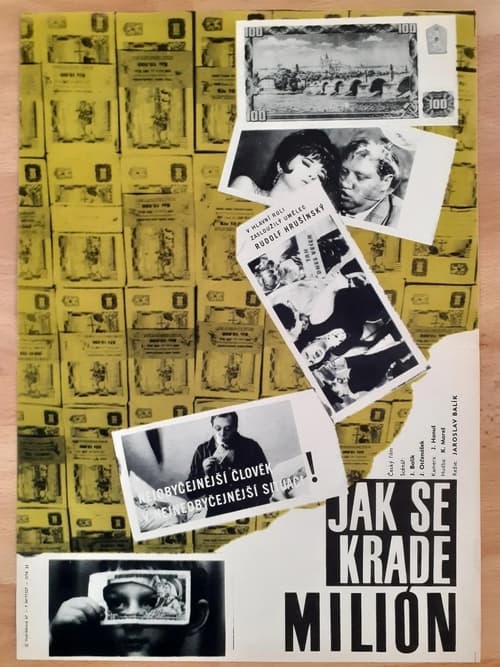
The exemplary accountant Antonín Safránek lives his orderly life as a citizen of a small town. His wife Eliska brings up their three children and desperately tries to get by on her husband's low salary every month. At the same time, she sadly watches the luxurious life of their neighbor and other people like him who have no qualms about improving their standard of living by cheating. One day, the infallible Safránek makes a mistake in the cash clearance and there are nine one-hundred Crown bills left in the safe. An unexpected company control carried out the next day passes without problems and the account is closed. The temptation is too strong. The insufficient control enables Safránek to gradually steal one million Crowns.
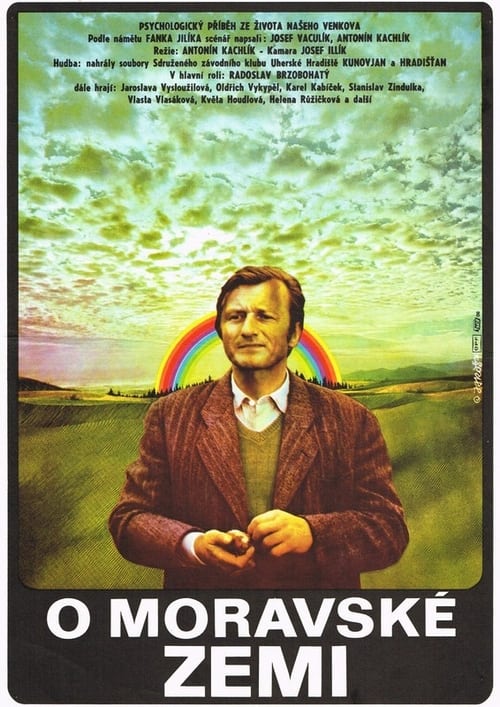
The reason for making this film is clear: it was to cover up Vojtěch Jasný's famous chronicle "All the Good Natives", an account of the tragic consequences of forced collectivisation. The pro-regime director Antonín Kachlík also focuses on the socialisation of the Moravian village, accompanied by mistakes and coercion, but in his optimistic view he emphasises the hopeful prospects leading to a happy future. Although the united village lands were born in pain, they will serve for the benefit of all the working people... As with Jasný, Radek Brzobohatý embodies the stubborn peasant, who is only slowly acknowledging the benefits of communal farming. However, unlike the poetic exuberance and pithiness of Jasný's chronicle, here we encounter a vicious posturing.
During World War II, a German university professor creates a spy ring that supplies the Allies with information about Nazi plans...
It is 1883 and Josef Hibes, a social democrat, is organising a strike of textile workers. The main demand is a reduction in working hours...
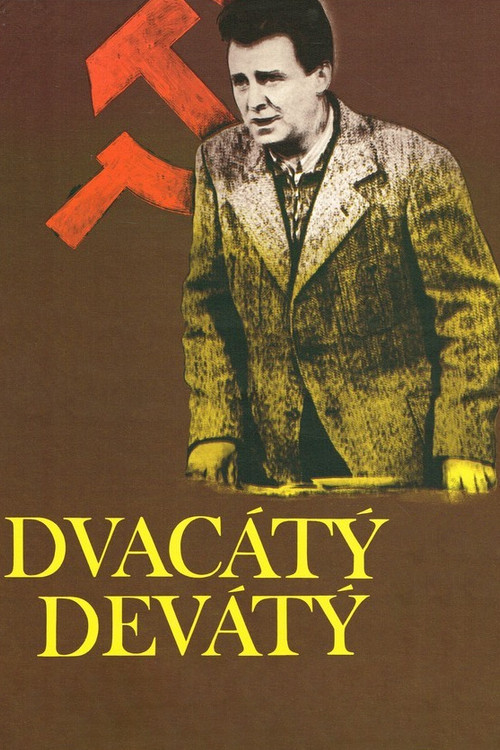
In the era of normalisation, a number of (pseudo)historical films were made, even described as reconstructions, which glorified the world-building mission of the Communist Party and attributed to it exclusively humanitarian intentions ("Days of Betrayal", "Sokolovo", "Liberation of Prague", "The Victorious People"). In 1929, when its fifth congress met, Klement Gottwald, who had taken the line of the Russian Bolsheviks, took over the leadership of the Communists...
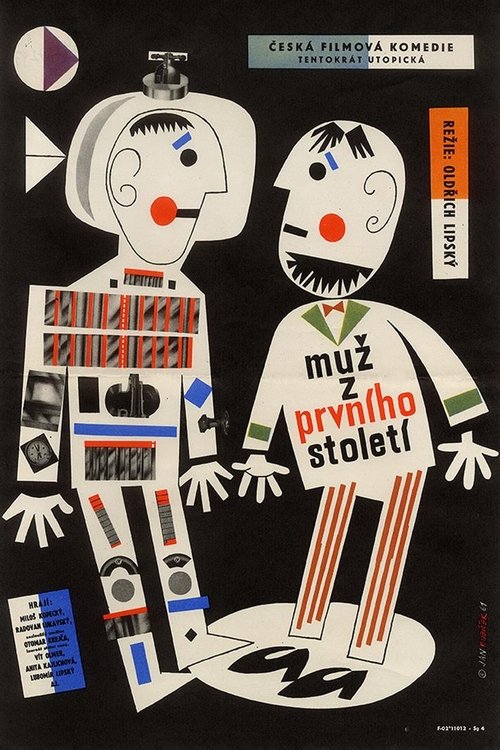
An upholsterer who is preparing a rocket for takeoff accidentally jettisons himself into space and returns to Earth 500 years later with an alien companion who wishes to learn more about the human race.
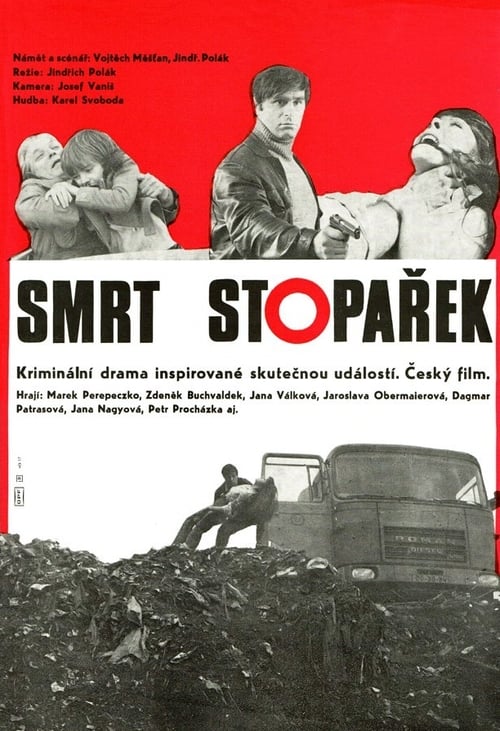
Maniac, a driver, sits on the track women, which then rape and kill. For loved ones, he is an ordinary person who has a wife and child. When exposed, he does not stop before killing his wife and takes his son hostage, under the guise of which he is trying to escape abroad.
A quarrel between divorced waitress Mája and her fifteen-year-old son Petr ends with the boy physically attacking his mother, and he is sent to an institution for juvenile delinquents.
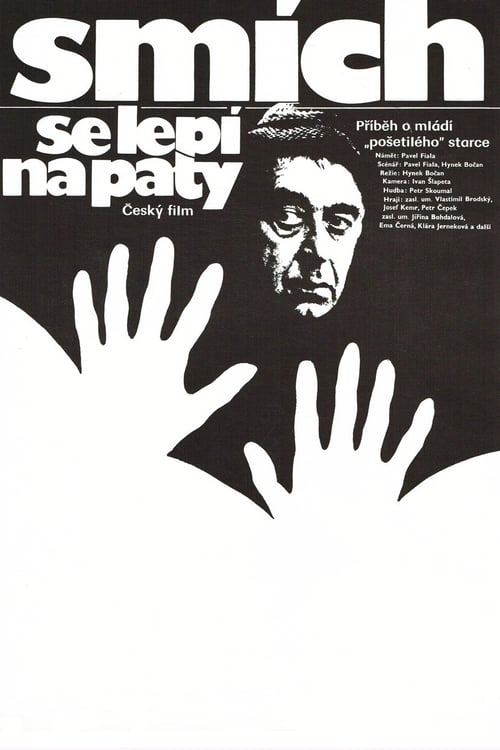
Sixty-year-old Joska Platejz, a peculiar jack of all trades, lives in a cottage in the Giant Mountains. He cooks wonderfully for a group of woodcutters. He has brought a mountain stream to his cottage and set up a set of tanks (one of which he keeps trout in). He also has a wind turbine, a wood-burning cable car, air-conditioning in the cottage and a mannequin of a man called Albert, who scares away unknown visitors. Joska is a man who claims that it is best to be alone, yet he constantly tries not to be alone. He is friends with a gamekeeper, a teacher, he tries to get his children to visit him regularly and therefore easily succumbs to a middle-aged lady. She doesn't take long to persuade him and soon comes to his cottage. A great love seems to be born...
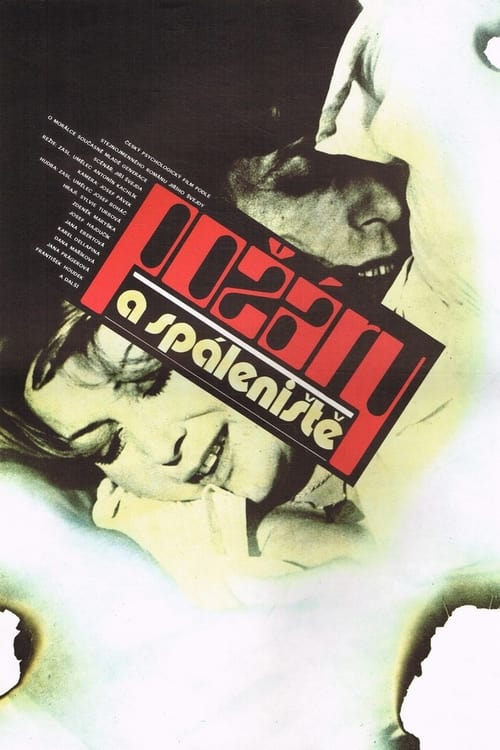
Antonín Kachlík wanted to make committed films about the moral dilemmas of the working class, but in the era of normalisation, he could only proclaim how faltering individuals would eventually come to the desired thinking. This is also true of the adaptation of Jiří Švejda's book about the wavering career of a young brickmaking technologist - the simplistic drawing of characters and plots, the posterishly lifeless language and the textbook discussion of social ills are all objectionable; the ideal becomes the code of the socialist builder.
Based on book by Svatopluk Turek.
Marek (Jirí Holý), formerly a driver of a long-distance lorry, has served his term for smuggling art works abroad and is released from jail. Years ago, he sacrificed himself and confessed his guilt on behalf of his companions - the drivers Krása, Jelínek, Hess and Novák from the Ministry of Culture who gave them tips. Marek finds Hess and tells him that now he expects the gang to compensate him for the wasted years of his life.
Approaches to important life values can vary: while the top athlete who has made it in cycling tries to monetise his talent, his brother cannot devote himself to his beloved sculpture because of his disabled arm and seeks alternative self-fulfilment. Moreover, the two are united - and at the same time divided - by a love affair with the same woman.