FEEL IT.STREAM
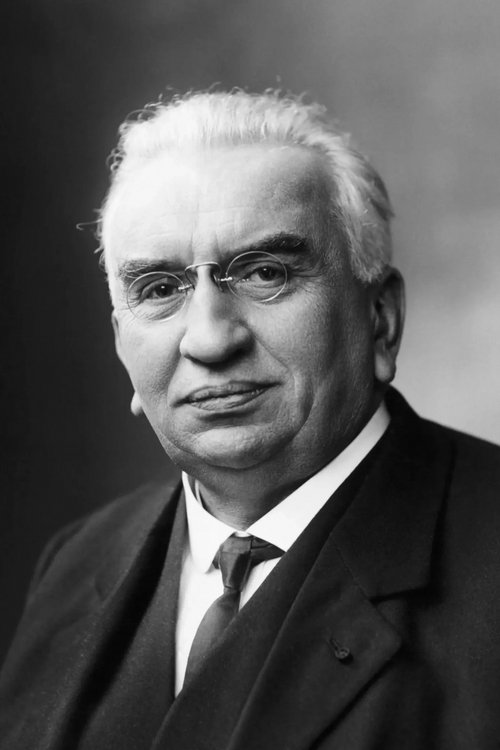
Louis Lumière

Louis Lumière

Directing

Biography

Louis Jean Lumière (1864–1948) was a French manufacturer of photography equipment. Along with his brother Auguste, he is best known for their Cinématographe motion picture system and the short films they produced between 1895 and 1905, which places them among the earliest filmmakers.

Known For

No image
9.0

Produced for television by Claude-Jean Philippe, the « Encyclopédie audiovisuelle du cinéma », recounts the history of French cinema from its birth to the beginning of the 1960s. With commentary read by Jean Rochefort.

Encyclopédie audiovisuelle du cinéma

1978
The Arrival of a Train at La Ciotat
7.1

A group of people are standing along the platform of a railway station in La Ciotat, waiting for a train. One is seen coming, at some distance, and eventually stops at the platform. Doors of the railway-cars open and attendants help passengers off and on. Popular legend has it that, when this film was shown, the first-night audience fled the café in terror, fearing being run over by the "approaching" train. This legend has since been identified as promotional embellishment, though there is evidence to suggest that people were astounded at the capabilities of the Lumières' cinématographe.

The Arrival of a Train at La Ciotat

1896
Workers Leaving the Lumière Factory
6.7

Working men and women leave through the main gate of the Lumière factory in Lyon, France. Filmed on 22 March 1895, it is often referred to as the first real motion picture ever made, although Louis Le Prince's 1888 Roundhay Garden Scene pre-dated it by seven years. Three separate versions of this film exist, which differ from one another in numerous ways. The first version features a carriage drawn by one horse, while in the second version the carriage is drawn by two horses, and there is no carriage at all in the third version. The clothing style is also different between the three versions, demonstrating the different seasons in which each was filmed. This film was made in the 35 mm format with an aspect ratio of 1.33:1, and at a speed of 16 frames per second. At that rate, the 17 meters of film length provided a duration of 46 seconds, holding a total of 800 frames.

Workers Leaving the Lumière Factory

1895
The Sprinkler Sprinkled
6.8

A gardener is watering his flowers, when a mischievous boy sneaks up behind his back, and puts a foot on the water hose. The gardener is surprised and looks into the nozzle to find out why the water has stopped coming. The boy then lifts his foot from the hose, whereby the water squirts up in the gardener's face. The gardener chases the boy, grips his ear and slaps him in his buttocks. The boy then runs away and the gardener continues his watering. Three separate versions of this film exist, this is the original, filmed by Louis Lumière.

The Sprinkler Sprinkled

1895
Transport of a Turret by a Team of 60 Horses
5.3

A very heavy turret is transported on a truck drawn by a long line of horses. The inscription “Charlemagne 53790K” readable on the turret suggests that this view was shot in the vicinity of Saint-Chamond, a town where there are factories specializing in the construction of heavy steel. It is certainly a turret intended for the battleship “Charlemagne”. In addition, a view projected by the Aléthorama on January 20, 1898 in Saint-Étienne, and entitled “Transportation of the armored turret of Saint-Chamond by a team of 80 horses”, could represent the same event.

Transport of a Turret by a Team of 60 Horses

1897
Demolition of a Wall
6.3

Auguste Lumière directs four workers in the demolition of an old wall at the Lumière factory. One worker is pressing the wall inwards with a jackscrew, while another is pushing it with a pick. When the wall hits the ground, a cloud of white dust whirls up. Three workers continue the demolition of the wall with picks.

Demolition of a Wall

1896
Spanish Bullfight
4.1

With a crowded arena in the background, a stationary camera records a bull charging a picador astride his horse. An attendant on foot throws stones at the rump of the horse to get it to move. Various toreadors run past the bull to try to get him to charge or at least run about.

Spanish Bullfight

1900
Baby's Meal
5.5

A father, a mother and a baby are sitting at a table, on a patio outside. Dad is feeding Baby her lunch, while Mum is serving tea.

Baby's Meal

1895
ViennaFilm 1896-1976
7.0

This film is a kind of anthology about Vienna, from the invention of film to the present day. The aim is to break down the usual clichéd "image of Vienna" such as that found in the traditional "Vienna Film" by juxtaposing documentary footage, newly shot material and subjective sequences created by various artists. Individual, self-contained sections of the film gain new meaning within the context of historical material. Familiar sites appear estranged when edited together with historical scenes. Other scenes appear like a persiflage or satirical. The film does not incorporate any commentary whatsoever. It is a collage of diverse materials aimed at conveying a distanced image of Vienna to the viewer

ViennaFilm 1896-1976

1977
Boat Leaving the Port
5.4

In very bad weather and a stormy sea, a small boat manned by two men is trying to leave the harbor of La Ciotat, while several people are watching them from the nearby pier.

Boat Leaving the Port

1895
The Dancing Skeleton
6.2

A skeleton dances joyously, often collapsing into a heap of bones and quickly putting itself back together.

The Dancing Skeleton

1898
Panorama of the Grand Canal Taken from a Boat
6.2

Filmed in 1896 by Alexandre Promio for the Lumière company, this short actuality presents one of the earliest traveling shots in cinema. With the camera mounted on a gondola, the film glides along Venice’s Grand Canal, capturing passing gondolas, bustling waterfront activity, and the city’s iconic architecture from a moving perspective. This simple yet groundbreaking technique introduced audiences to a new way of experiencing motion on screen.

Panorama of the Grand Canal Taken from a Boat

1896
Boston, Commercial Street
3.0

Boston, Commercial Street.

Boston, Commercial Street

1896
Jumping the Blanket
5.6

Four men stand holding what appears to be a blanket, while one wearing a hat stands watching. A sixth man then runs towards them and attempts to jump into the blanket.

Jumping the Blanket

1895
La toilette du petit chien
6.0

A man and a child are washing a small dog in a tub, while a large dog is circling around them, barking.

La toilette du petit chien

1900
The Photographical Congress Arrives in Lyon
5.3

Down the gangway, photographers leave the deck of a riverboat in large numbers.

The Photographical Congress Arrives in Lyon

1895
Japanese Actors: Wig Exercise
4.9

A Japanese theatre performance based on a legend.

Japanese Actors: Wig Exercise

1897
No image
5.3

Two children, playing in the garden, with a dog and a cat.

Scènes d'enfants

1896
Place de la Concorde (vue prise du côté ouest)
5.0

No description available.

Place de la Concorde (vue prise du côté ouest)

1897
Photograph
5.6

A photographer has his camera all set up to take a gentleman's picture. The subject checks his face in a hand mirror, and the photographer poses him. Just as the photographer is about to take the picture, the subject gets up to look at the camera more closely. The frustrated photographer soon becomes quite impatient.

Photograph

1895