FEEL IT.STREAM
Feliks Sobolev

Feliks Sobolev

Directing

Biography

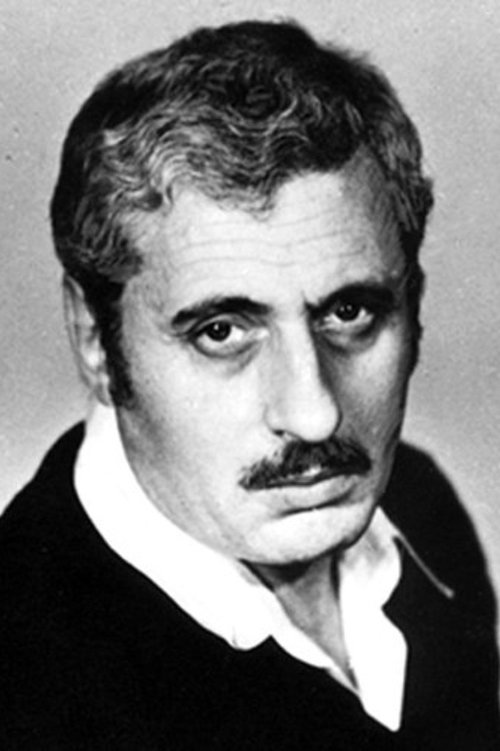
Feliks Mikhaylovich Sobolev (also known as Feliks Mykhailovych Soboliev) was a Ukrainian Soviet documentary filmmaker, a founder and a leader of the so-called Kyiv school of scientific cinema.

Known For

I And Others
6.5

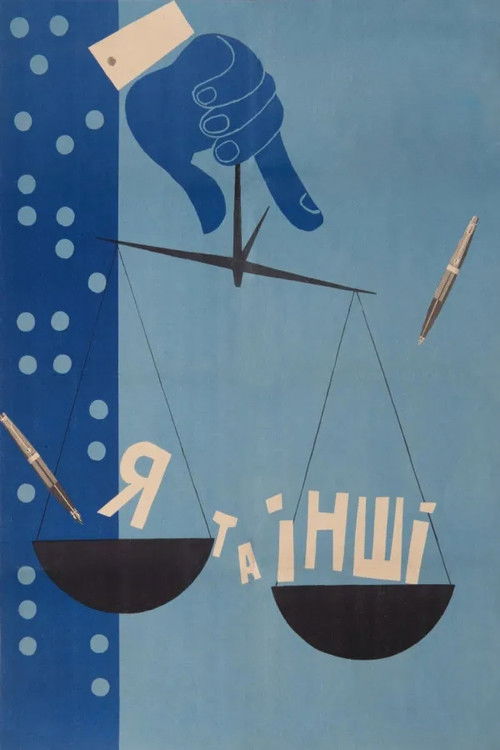
How independent are we in our judgments? How do other people influence us? Being like everyone else is a natural desire of a child. He often succumbs to suggestion and passes out someone else's opinion for his own. But for an adult, this is a loss of personality, adaptability, conformism, which forms the psychology of a slave.

I And Others

1971
Seven Steps Beyond the Horizon
N/A

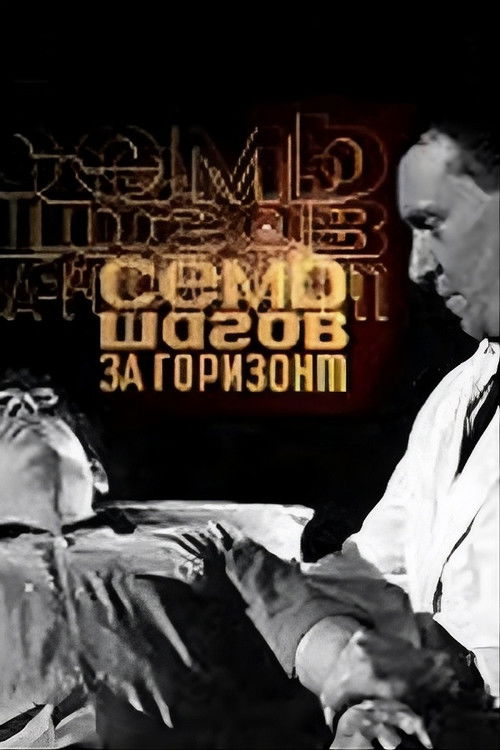
Has the capacity of the human brain already been exhausted due to information overload? Sobolev posed this question at the end of the 1960s after a hidden camera recorded the results of a university entrance exam. The director, renowned for his belief in the endless possibilities of humanity, created a participatory documentary in which he filmed experiments with people with phenomenal abilities under the guidance of professors from the Academy of Sciences. Scientific analysis of the nature of hypnosis, telepathy, and dermo-optical perception reveals potential avenues to expanding the frontiers of human knowledge.

Seven Steps Beyond the Horizon

1968
Do Animals Think?
N/A

Humans and animals are a living chain of nature. To understand on what basis the human mind arose, where are its roots, what was from the beginning? We often look for the key to understanding animals in the wrong place, among the motives of human actions, and we make mistakes.

Do Animals Think?

1970
At the Origins of Mankind
N/A

Animals and humans are part of a single chain of all living things, two poles of the living world. By looking deep into the past and reconstructing the ancient customs and rituals of various peoples of Europe and Asia, the authors seek answers to the following questions: How did human society originate? What made a human being truly human? Why did apes remain apes? Why do people kill their own kind with beastly cruelty? And why is it that only humans are capable of uniting through labor and collective creation?

At the Origins of Mankind

1976
Fast Neutron Pulsed Reactor
N/A

The Pulsed Fast Reactor (PFR) is designed to study the interaction of neutrons with atomic nuclei. Using a neutron beam, one can investigate nuclear reactions, nuclear excitation, and structure, i.e., the properties of various substances, addressing not only purely scientific but also some applied tasks. The main advantage of this type of reactor is the ability to incorporate materials such as uranium-238 and thorium-232 into the fuel cycle. This significantly expands the fuel base of nuclear energy. Additionally, these reactors allow for the relatively safe disposal of the most active and long-lived isotopes in spent nuclear fuel, fundamentally reducing the period of its biological hazard.

Fast Neutron Pulsed Reactor

1964
Animal Language
N/A

Kingdom of animals is an unknown territory. We are like foreigners in here. We don’t understand the language of this country. They say, once lived a person who could talk to the animals, King Solomon. All peoples have fairytales with animals speaking with each other and with humans. In amazement, we’re looking at the world which considered long discovered. Animal language. It’s not human language, but special, sometimes completely unexpected ways of communication between animals…

Animal Language

1970
Kyiv Symphony
N/A

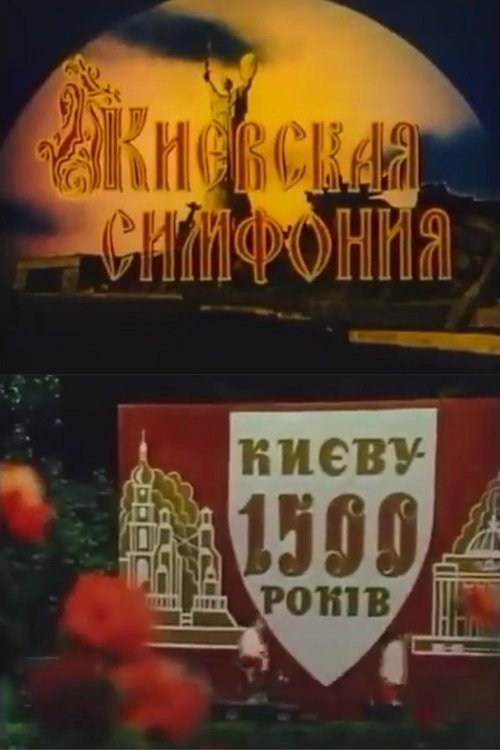
The film is dedicated to the 1500th anniversary of Kyiv.

Kyiv Symphony

1982
Dare, You Are Talented!
N/A

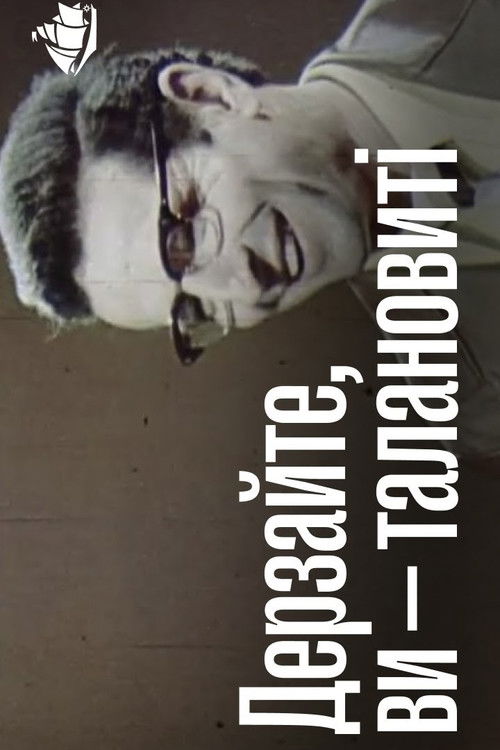
A film about an innovative method of learning a foreign language in just 24 sessions in Galina Kitaygorodskaya‘s method: "The method of activating the capabilities of the individual and the team", allows to activate mental processes (memory, perception, thinking, imagination) and emotional resources of the individual, which releases enormous creative energy, allowing students to easily and effectively process huge amounts of new information in a short time. It is a system of language teaching as a means of intercultural communication. The film shows the dynamics of two groups that started learning French and Russian from scratch. G. O. Kitaygorodskaya proved to be a fan of her work. She was not bothered by the camera, but she was not going to make up for it or pose for it: "No takes. I came to teach people the language." Here, every lesson is like a live script.

Dare, You Are Talented!

1978
When Barriers Disappear
N/A

The problem of barriers has come close to all aspects of human life. We guide people towards talent, towards their maximum potential, and indeed, a person can do anything—there is no limit here, we haven’t found a limit. But they don’t know how... rather, they think they don’t know how. In reality, it’s nothing like that—it’s a typical adaptation process, like when we step into bright light and can’t see anything. What do we do? On one hand, we create an information environment that is as saturated as possible with information, and on the other hand, we teach people to feel at home in this environment, like a fish in water.

When Barriers Disappear

1980
Synthesis of Element 102 at the Multicharged Ion Accelerator of the Joint Institute for Nuclear Research
N/A

No description available.

Synthesis of Element 102 at the Multicharged Ion Accelerator of the Joint Institute for Nuclear Research

1964
Propane Bubble Chambers at the Joint Institute for Nuclear Research
N/A

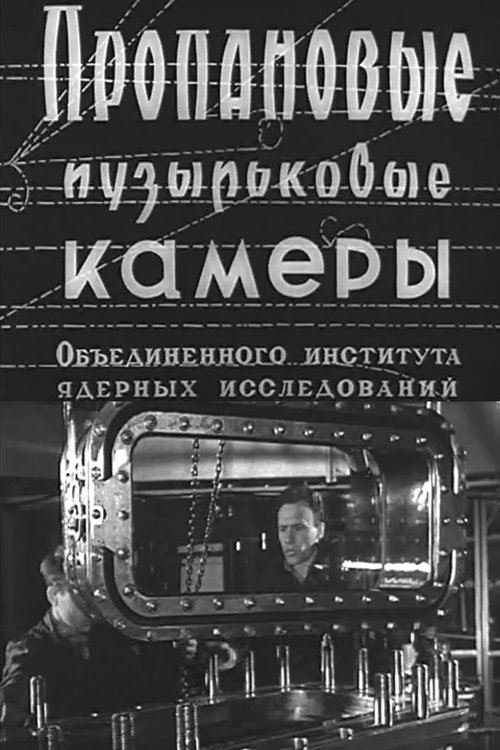
Bubble chambers are typically used to record interactions between high-energy particles and the nuclei of the chamber’s working fluid, or to observe particle decays. In the former case, the working fluid also serves as the detection medium. When an ionizing particle enters the chamber, its trajectory is marked by a trail of vapor bubbles, which can then be photographed. The ability to visually analyze these events made it possible to discover particles that could not be detected by any other means. Most notably, this includes the cascade decays of strange particles, whose decay products were either fully or partially captured in the chamber images.

Propane Bubble Chambers at the Joint Institute for Nuclear Research

1964
Biosphere! Time to Apprehend
5.5

A journalistic story inspired by Volodymyr Vernadsky about the genesis of life in the universe — from the physical elements of the primordial broth to the civilization of intelligent man.

Biosphere! Time to Apprehend

1974
Good and Ugly
N/A

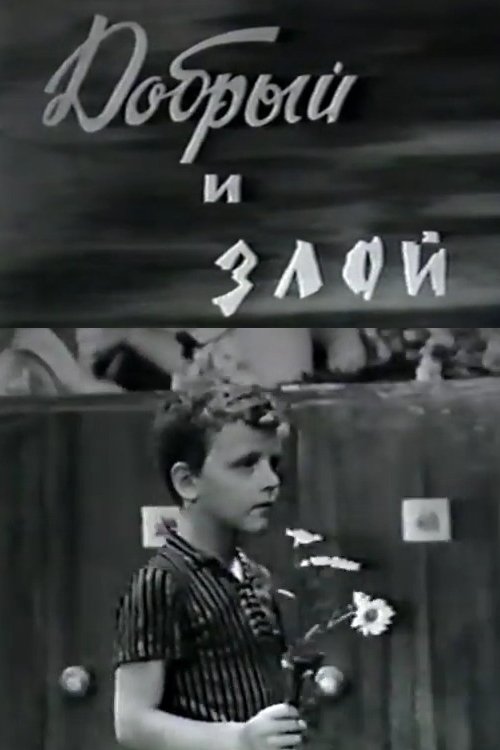
The film raises the problem of moral development of a child. It explores how the social environment shapes children's moral feelings.

Good and Ugly

1972
The Feat
N/A

A portrait of an unknown soldier, published in the memoirs of Marshall Zhukov, provoked a massive response in readers. In the dour face covered in dust, many recognized their sons, fathers, brothers. Sobolev brings the face described in the letters to life and each allows us to experience the transformation of his perception.

The Feat

1975
The Mysterious 102
N/A

The film is about the creation of a new element in the Periodic Table — Nobelium — by Soviet scientists, and about the global significance of this discovery.

The Mysterious 102

1964
The Target is Your Brain
6.0

A scientific documentary about propaganda and crowd manipulation

The Target is Your Brain

1985
Dawn of Destruction
N/A

If people don't come to their senses, our Earth could perish in a nuclear catastrophe, just as one of the planets in the solar system once did.

Dawn of Destruction

1965
Those Who Walk Into the Flames
N/A

A film about the daily work of the forest firefighters of the Krasnoyarsk Aviation Base.

Those Who Walk Into the Flames

1973
Discovery of Proton Radioactivity
N/A

The film is about the discovery in 1962 by V. A. Karnaukhov, G. M. Ter-Akopyan, V. G. Subbotin, and L. A. Petrov of proton radioactivity. The detection of a new type of radioactive decay of atomic nuclei – proton emission – significantly expanded our understanding of the properties of nuclei and the limits of their possible existence in nature. A fundamentally important fact is that the theoretical analysis of proton radioactivity confirmed the validity of the models widely used in traditional nuclear physics and the possibility of describing new previously unknown phenomena based on them.

Discovery of Proton Radioactivity

1964