
Kalle Lasn
Directing
Biography
Kalle Lasn is an Estonian-Canadian film maker, author, magazine editor, and activist. Near the end of World War II, his family fled Estonia and Lasn spent some time in a German refugee camp. At age seven he was resettled in Australia with his family, where he grew up and remained until the late 1960s, attending school in Canberra. In the late 1960s, he founded a market research company in Tokyo, and in 1970, moved to Vancouver, British Columbia, Canada. Over the course of twenty years, he produced documentaries for PBS and Canada’s National Film Board. He currently resides in Vancouver, British Columbia. He is the co-founder of Adbusters magazine and author of the books Culture Jam and Design Anarchy and is the co-founder of the Adbusters Media Foundation, which owns the magazine.
Known For

Discipline and productivity are more regimented in Japan than in many other parts of the world. For the Japanese, survival means doing things together rather than asserting North-American-style individualism. Japan's industry has automated and computerized at an unparalleled rate. Open-concept offices and collaborative work styles offer a model of the changing style of modern work that could inspire the West to modify their processes as well.
Japan Inc: Lessons for North America?
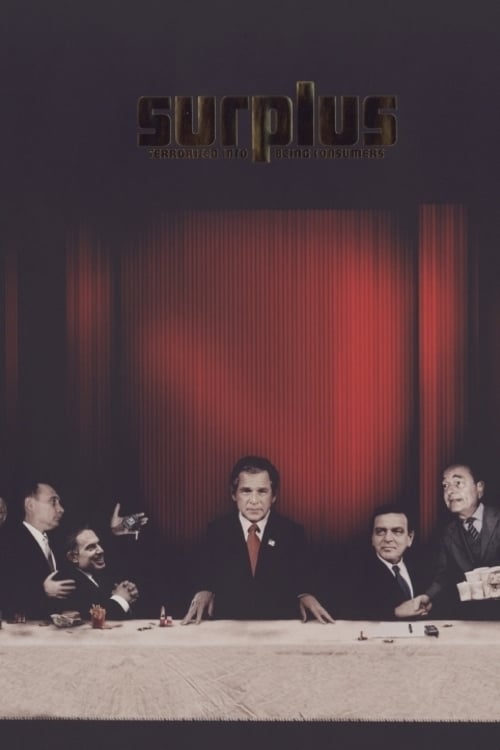
Swedish documentary film on consumerism and globalization, created by director Erik Gandini and editor Johan Söderberg. It looks at the arguments for capitalism and technology, such as greater efficiency, more time and less work, and argues that these are not being fulfilled, and they never will be. The film leans towards anarcho-primitivist ideology and argues for "a simple and fulfilling life".
Surplus: Terrorized Into Being Consumers

This feature documentary provides a gripping retrospective of United States-Canada relationships through a study of successive presidents and prime ministers. Using archival film footage, it demonstrates that Canadian prime ministers, from John A. Macdonald down, all began their tenures by making overtures to their American counterparts. Attitudes and outcomes have varied widely. The almost comic antipathy between Kennedy and Diefenbaker, for instance, is as palpable here as is the folksy camaraderie of Reagan and Mulroney. Part four of Reckoning: The Political Economy of Canada series.
In Bed with an Elephant
This documentary from 1987 looks at the serious malaise that plagued the US manufacturing sector at the time. No longer competitive in the world market, and forced to buy more than it could sell, the US nevertheless continued to bask in the glow of past glory rather than face its immediate predicament. Meanwhile, Japan and other Pacific Rim countries were gaining economic ground, perhaps permanently. This film was part one of the series, Reckoning: The Political Economy of Canada.
The Rise and Fall of American Business Culture

This documentary looks at the microchip, an American invention exploited by the Japanese that caused a second industrial revolution. The devastating effect on millions of human lives is related through interviews with some of the newly jobless in Hamilton, Ontario. Using the example of Japan for contrast, host James Laxer demonstrates that the cost of technological advances need not be so high if their effects are foreseen and planned for. Part 2 of the series Reckoning: The Political Economy of Canada.
Shift Change
A portrait of Arthur Erickson, a Vancouver-based architect internationally known for his unique style. Seated in his Vancouver home, Arthur Erickson talks easily about his art, the importance of interpreting the site and of achieving harmony between environment and structure, the inseparability of climate and site, and the cultural role of a building. Five of his projects are shown. He explains how the designs evolved and what he was trying to achieve. Shot on location in Canada, Japan and Kuwait, the film introduces the man, the architect, the humanist.