Ursula Biemann
Directing
Biography
Ursula Biemann is a Swiss video artist, curator, educator, and art theorist.
Known For

This video research is based on a trip to Morocco in July 2005, during which the director documented irregular migration transiting through Morocco, as well as their control. This geographical project focuses on the main migratory axes: Oujda, entry point for migrants in Morocco; Tangier, from where migrants can try to cross the strait or the fences of Ceuta; Rabat, organization space; and Laayoune, the closest point to the Canaries. The video questions the nature and meaning of these extraterritorial enclaves that structure the Moroccan territory.
Crossroads at the Edge of Worlds
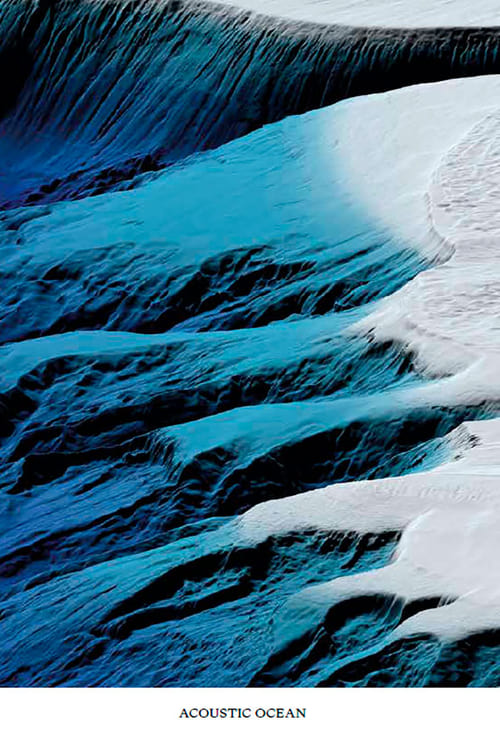
Acoustic Ocean is an artistic exploration of the sonic ecology of marine life in the North Atlantic. Located on the Lofoten Islands in Northern Norway, the video centers on the performance of a marine-biologist diver who is using a life-size model of a submersible equipped with all sorts of hydrophones and recording devices. In this science-fictional quest, her task is to sense the submarine space for acoustic and bioluminescent forms of expression.
Acoustic Ocean
No description available.
Deep Weather
Forest Mind is a video work that emerges from the artist’s longstanding interest in the human interaction with the natural world. Forest Mind tackles the underlying concepts that distinguish the Indigenous knowledge systems from that of modern science, gaging the limits of rationalism which has dominated Western thinking for the last 200 years. Located in the tropical forests of southern Colombia and told from a personal perspective, the narrative takes up diverse strands of research from the intelligence of plants to the importance of the territory as a sentient and cognitive entity. Drawing on scientific as well as shamanic perspectives of engaging with the world, the project takes an ecocentric worldview. (Video Data Bank)
Forest Mind
Upon entering the harbor, the voyager leaves the exceptional condition of the boundless sea--this traversable space of maritime immensity--to come ashore in an offshore place, in a container world that only tolerates the trans-local state of not being of this place--nor of any other really--but of existing in a condition of permanent not-belonging, of juridical non-existence. He comes to signify the itinerant body, bound to string along a chain of territories, never reaching a final destination. Probing the protocols of access time and again, he moves through non-civil places, waits for status in off-social spaces, only to remain suspended in the post-humanist lapse. What used to be a state of temporary exemption--survival in the fluid time-space of legal deferral--has slowly consolidated into the prime mode of migratory subsistence. The site of this existence is connected but segregated; it is the world system of contained mobility. (Video Data Bank)
Contained Mobility

Appealing concurrently in this video essay to various meanings of the term “Subatlantic”—a climatic phase beginning 2500 years ago, as well as the submerged regions of the Atlantic—Biemann immerses her camera deep in oceanic waters to ponder upon the entanglements of geological time with that of human history. As the voice-over speaks the accounts of a she-scientist traversing the pan-generational timescales of the Subatlantic, we navigate between the palpable evidence of the dramatic human-induced ecological alterations to the world and those that are simply beyond our comprehension.
Subatlantic
X-Mission explores the logic of the refugee camp as one of the oldest extra-territorial zones. Taking the Palestinian refugee camp as a case in point, the video engages with the different discourses — legal, symbolic, urban, historical — that give meaning to this exceptional space.
X-Mission
Forest Law is a video essay that draws from research carried out in the oil-and-mining frontier in the Ecuadorian Amazon— one of the most biodiverse and mineral-rich regions on Earth, currently under pressure from the dramatic expansion of large-scale extraction activities. At the heart of Forest Law is a series of landmark legal cases that bring the forest to court and plead for the rights of nature. One particularly paradigmatic trial that has recently been won by the indigenous people of Sarayuku based on their cosmology of the living forest.
Forest Law
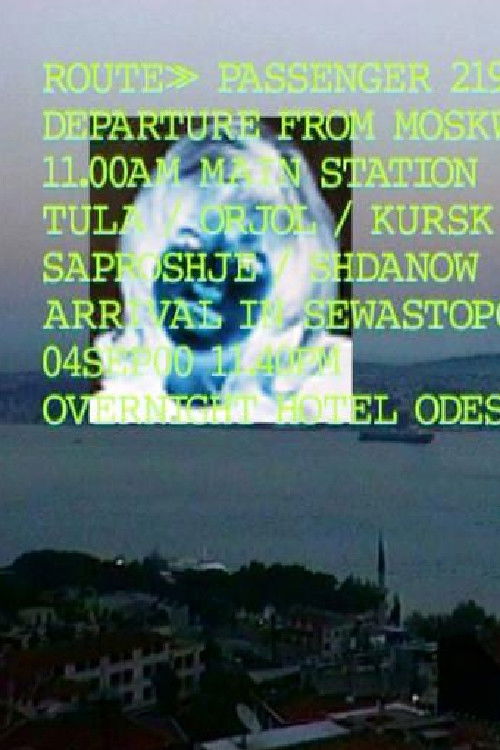
Remote Sensing is a two-year project resulting in a split-screen digital video tracing the topographies of the global sex trade in relation to satellite media and other geographic information technologies that visualise globality. The video unravels the multi-layered meaning of a geography in which the mobility and migration of women is linked to illicit economies and the implementation of new technologies.
Remote Sensing
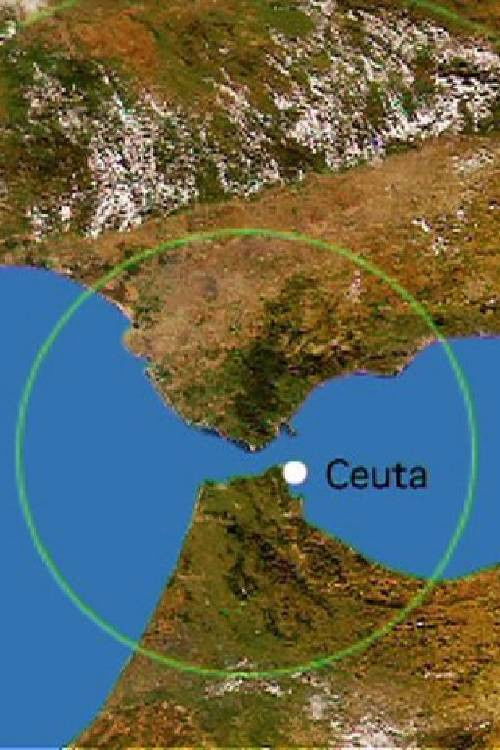
The fourth in Ursula Biemann's critically acclaimed series of video essays that investigates migration across borders, EUROPLEX, a collaboration with Angela Sanders, tracks the daily, sometimes illicit, border crossings between Morocco and Spain- a rare intersection of the first and third worlds.
Europlex

A video essay set in the Mexican-U.S. border town of Ciudad Juarez, where U.S. multinational corporations assemble electronic and digital equipment just across from El Paso, Texas. This imaginative, experimental work investigates the growing feminization of the global economy and its impact on Mexican women living and working in the area. Looking at the border as both a discursive and material space, the video explores the sexualization of the border region through labor division, prostitution, the expression of female desires in the entertainment industry, and sexual violence in the public sphere.
Performing the Border
Sahara Chronicle encompasses an undefined number of short videos documenting the present sub-Saharan exodus towards Europe. Taking a close look at the modalities and logistics of the migration system in the Sahara, the project examines the politics of mobility, visibility and containment which lie at the heart of current global geopolitics. The material is gathered during three field trips to major gates and nodes of the trans-Saharan network in Morocco, Mauritania and Niger where migratory intensity is bundled. No voice-over narrative strings these stories together. Meaning has to be extracted from the interstices between the documents, from the stretch of the journey that is most invisible to the eye.
Sahara Chronicle
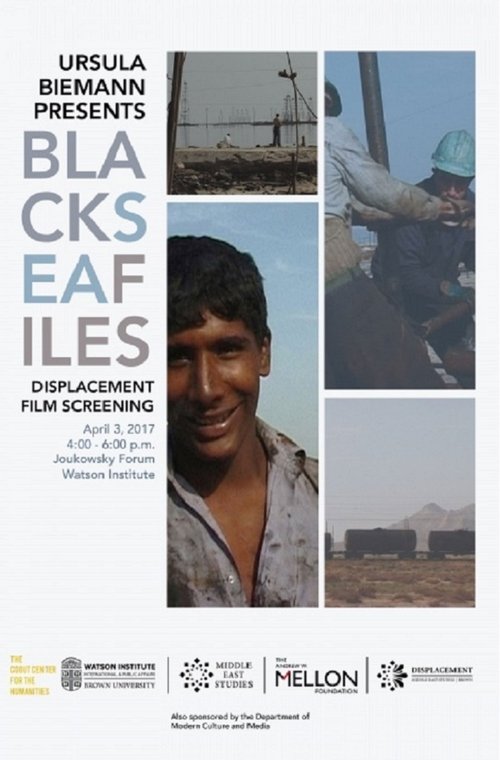
Black Sea Files is a territorial research on the Caspian oil geography: the world’s oldest oil extraction zone. A giant new subterranean pipeline traversing the Caucasus will soon pump Caspian Crude to the West. The line connecting the resource fringe with the terminal of the global high-tech oil circulation system, runs through the video like a central thread. However, the trajectory followed by the narrative is by no means a linear one. Circumventing the main players in the region, the video sheds light on a multitude of secondary sceneries. Oil workers, farmers, refugees and prostitutes who live along the pipeline come into profile and contribute to a wider human geography that displaces the singular and powerful signifying practices of oil corporations and oil politicians.