Walter Ulbricht
Acting
Biography
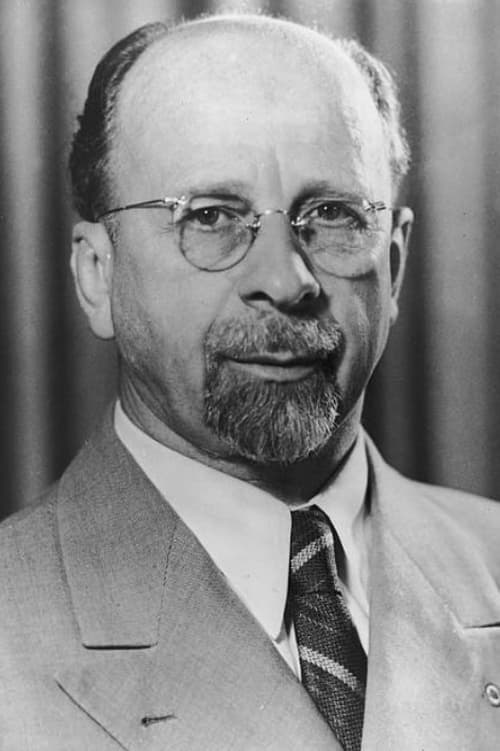
Walter Ernst Paul Ulbricht (30 June 1893 – 1 August 1973) was a German communist politician. Ulbricht played a leading role in the creation of the Weimar-era Communist Party of Germany (KPD) and later (after spending the years of Nazi rule in exile in France and the Soviet Union) in the early development and establishment of the German Democratic Republic in East Germany. As the First Secretary of the Socialist Unity Party from 1950 to 1971, he was the chief decision-maker in East Germany. From President Wilhelm Pieck's death in 1960 on, he was also the East German head of state until his own death in 1973. As the firm leader of the strongest and most important Soviet satellite, Ulbricht had a degree of bargaining power with the Kremlin that he used effectively. For example he demanded the building of the Berlin Wall in 1961 when the Kremlin was reluctant. Description above from the Wikipedia article Walter Ulbricht, licensed under CC-BY-SA, full list of contributors on Wikipedia.
Known For

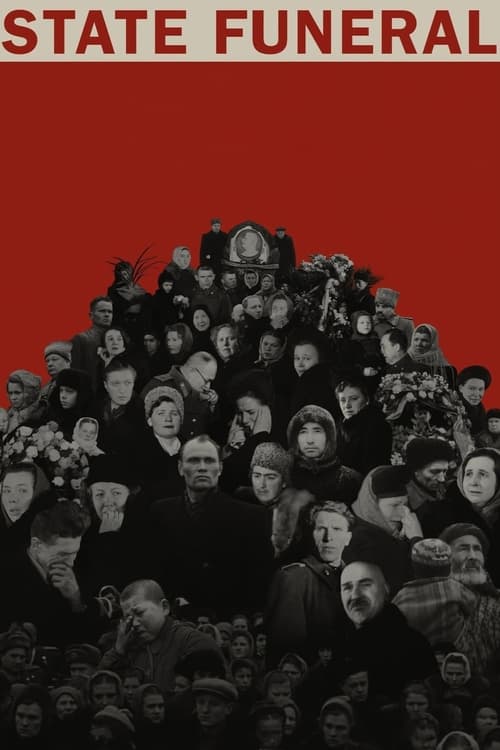
The enigma of the personality cult is revealed in the grand spectacle of Stalin’s funeral. The film is based on unique archive footage, shot in the USSR on March 5 - 9, 1953, when the country mourned and buried Joseph Stalin.
State Funeral
The film talks about the rise and fall of the two most influential protagonists in GDR-politics. In succession, over long stretches even together, Ulbricht and Honecker determined the course of the GDR, of course without ever getting out of being a satellite state to the big brother in Moscow. The film looks for the caesura and crucial points in the power game between Ulbricht and Honecker.
Die Sekretäre

After the fall of the Berlin Wall, thousands of documents were hastily shredded by the dreaded GDR political police. 16,000 bags filled with six million pieces of paper were found. Thanks to the meticulous work of technology, the destinies of men and women who had been spied on and recorded without their knowledge could be reconstructed.
Stasi: A State Against Its People
No description available.
A Celebration of Our Youth

Basing his work on documentary material, Andrew Thorndike tells the life story of Wilhelm Pieck: from young worker to fighter for the German working class, and from enemy of national-socialism to the first president of the German Democratic Republic.
Wilhelm Pieck - Das Leben unseres Präsidenten
The 5th anniversary of the inner-German wall to West Germany and West Berlin is on the agenda. The necessity of erecting the border is illustrated by comparing the situation in 1939 and the situation in the summer of 1961 with regard to the "threat of intervention" by the Western powers. Berlin people and GDR border guards are interviewed.
Schutzwall
Short film intended for the mobilization of NVA units to secure the state border in Berlin on 13 August 1961.
Der Schlag hat gesessen!
Documentary about a military manoever involving all the armies of the Warsaw Pact.
Manöver Waffenbrüderschaft

The Sequel to 1961's Die Mauer, Walter Ulbricht's Stacheldraht (Barbed Wire) traces the continuing expansion of the exclusion zone in East Berlin until 1961. Original footage documents the consequences of division: dilapidated buildings, border zones patrolled with guard dogs, walled-up cemetery gates, tear-gas clashes between East and West German police and refugee memorials on the West side and interviews with fugitives.
Stacheldraht

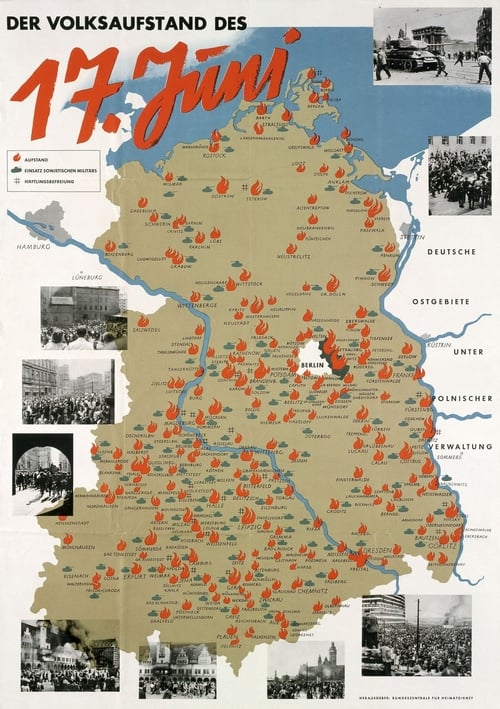
"GDR The uprising of June 17, 1953" - : Since its founding, the German Democratic Republic (GDR) has repeatedly struggled with domestic political problems. While the standard of living of the population in the western part of Germany steadily increased, it stagnated in the GDR . A one-sided, industry-oriented reconstruction policy, coupled with rapid militarization, weighed on the country's economy, which was already under pressure from Soviet reparations demands. A majority of the population did not identify with the socialist system, which accordingly stood on shaky ground.
DDR: Der Aufstand vom 17. Juni 1953

After the workers’ revolt on June 17th, 1953 this film disappeared in the archives until 1997.
Baumeister des Sozialismus Walter Ulbricht
The Belgian documentarian Frans Buyens interviewed passers-by in East Berlin and Dresden, factory workers and technical draftswomen at the Warnow shipyard in Stralsund, small business owners in Chemnitz, LPG farmers in the countryside, foreign students at the Gottfried Herder Institute in Leipzig and industrial workers in Magdeburg and Eisenhuettenstadt. "The GDR seen through the eyes of a foreigner" was the original title of the film. A few years after the Wall was built, Buyens documented the approval, disapproval and fears of the interviewees.