Writing
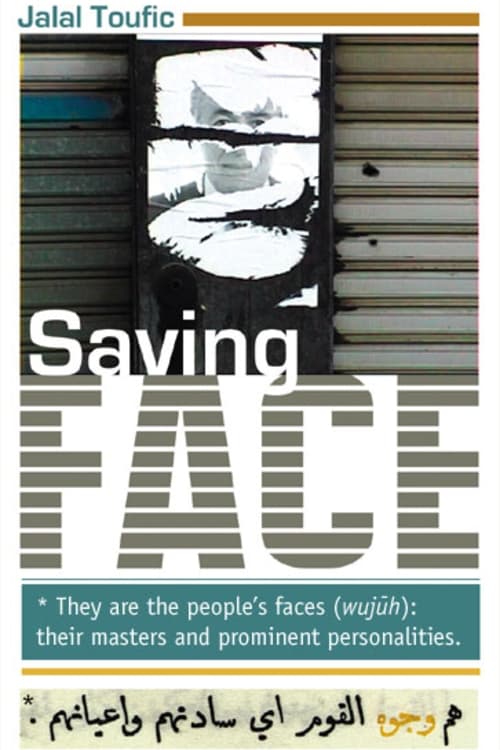
Were all the candidates’ faces posted on the walls of Lebanon during the parliamentary campaign of 2000 waiting for the results of the elections? No. As faces, they were waiting to be saved. Far better than any surgical face-lift or digital retouching, it was the physical removal of part of the poster of the face of one candidate so that the face of another candidate would partially appear under it; as well as the accretions of posters and photographs over each other that produced the most effective face-lift, and that proved a successful face-saver for all concerned. We have in these resultant recombinant posters one of the sites where Lebanese culture in specific, and Arabic culture in general, mired in an organic view of the body, in an organic body, exposes itself to inorganic bodies.
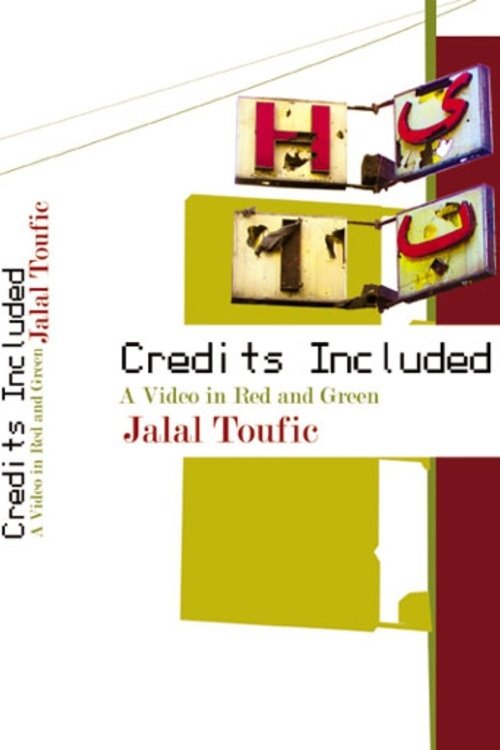
With his hand-held video camera, Jalal Toufic presents faces of ordinary people living in a war-ravaged country. He begins with a 1987 US state department document invalidating US passports for travel to Lebanon. Then, we see walls marked by bullet holes, film students listening to a lecture and practicing scenes in a restaurant. Next, the camera visits a mental hospital in Fanar and an older man, holding his Koran, laments being a refugee within his own country. The camera then enters a nursery school. The colors of poetry are red and green; the cost of being Lebanese is to orphan one's children in order then to adopt them.
While the ten-day ceremony 'Âshûrâ' is a commemoration of the slaughter of the grandson of the prophet Muhammad and his relatives and companions at Karbalâ' in 680, it is also an invocation of the occulted Twelfth Imam, the Mahdî, in the hope of hurrying his exoteric earthly return. But how would the one invoked, who is (imaginally) present albeit occulted, perceive the ceremony? He would not perceive it the way we see it but in more temporal detail. While the first part of the video appears to be a documentation of the ceremony as it might be perceived by an all too human audience member, the second part of the video, which happens across a lapse of consciousness if not of being (indicated by the cut to black on the sound of the participants' hands striking their chests), and where time is dilated, implies that the essential spectator of the ceremony is the one to whom it is addressed, the Mahdî.