Acting
No description available.
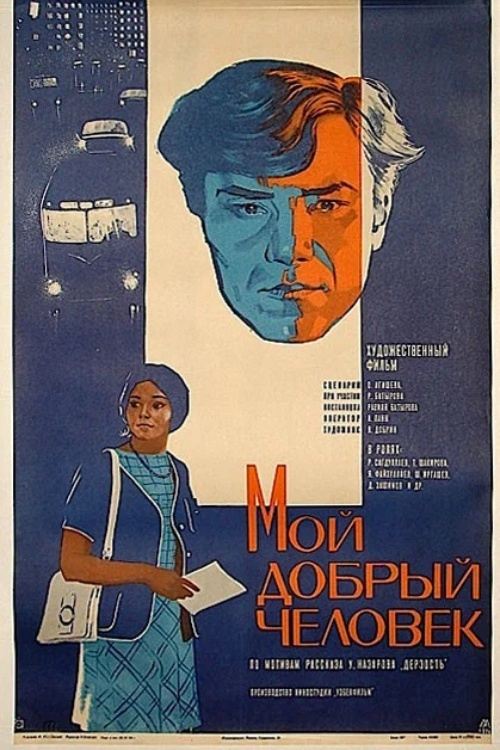
Iskander, a gentle Uzbek man, is convinced by a Russian friend to give an impromptu speech praising the Communist Revolution. Impressed by his eloquence, the Soviets make Iskander a spokesman - a precarious position in a turbulent time.
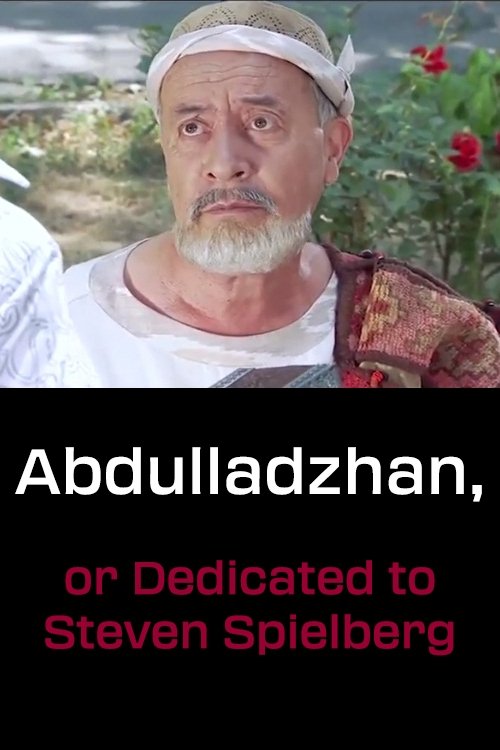
Considering that Musakov’s Abdulladzhan (1991) was dedicated to Steven Spielberg, we might suggest that these four boys embody nothing more complicated than a conflict of youthful innocence with some ominous threat—the basic workings of E.T. (1982) or War of the Worlds (2005), say. That threat, however, is best understood not through vague nationalism or warmed-over socialism, but through the other reference-point of Abdulladzhan—Tarkovskii’s Stalker (1980). Musakov leaves his boys in a simplified radiance so bright and so overexposed that it no longer looks like the skies of sunny Tashkent, but a disturbing, borderless luminosity to match the flat tonal range of Stalker’s “Zone.” Our Uzbek boys are nowhere in particular; this is a broader domain than anything international.
Reconstructed from archival documents and historical studies, a chronicle of the 1916 popular uprising in the Hungry Steppe and the Jizzakh Steppe.
The story of Hasan the doctor, who dreamed of making a quick profit by raising rabbits, and who became distant from his wife and those around him.
In some kingdom was inhabited by seven Genie. Six are evil and one is good. Good Genie, despite the machinations of evil, helped the potter Nabi cheat khan to give water to irrigate the land of the poor.
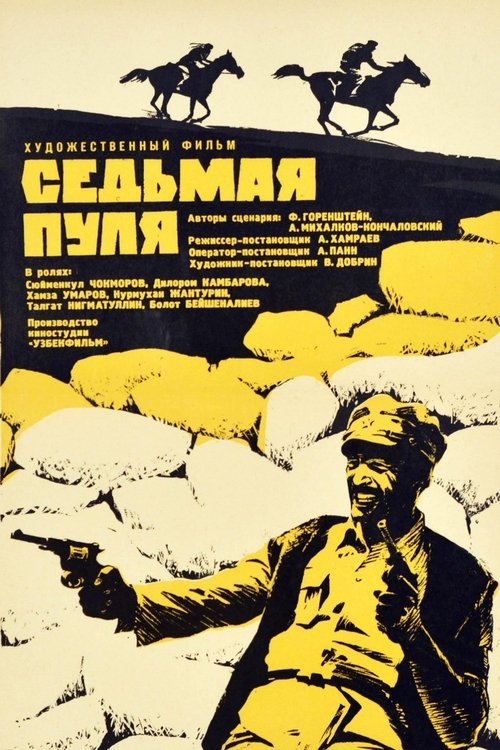
Despite the restoration of Soviet power in the area, Basmachis continue to arrive from across the border, bringing death and destruction to peaceful villages. One of the bands of rebels is led by Khairulla who is pitted against the militsiya (local militia) leader Maxumov. At first it seems hopeless for Maxumov as the rebels capture most of his men, winning them over to his side. He has only one strategy left; to give himself up, and try to explain to the people that Khairulla has deceived them, turning the soldiers back to revolution. Later in pursuit of his enemy, he chases Khairulla across a river. He has only one bullet left -- the seventh, and he must not miss his target!
A Bolshevik army officer and Uzbek who has been nursed back to health by a young Uzbek woman to whom he is now married, gains responsibility for the local village in 1929. He is urged by comrades in Tashkent to have the local women drop their chadors and veils but he is also told that he should not force this on anyone. His wife declines to take off her veil, so a 14 year old girl steps forward to set the example, over the objections of the local Muslim clergy and most of the village men. After the girl is killed, and the commissar is shot, his wife takes him to the hills to nurse him back to health once again. She begs her husband to leave the village. Instead when he decides to return, she is pressured by her father to continue to wear the veil.
The red commander Mirsharapov was sent to fight the Basmachi gang in Khiva. After the fighting, Junaidkhan's gangs are defeated.
Based on the story by U. Nazarov "Audacity".
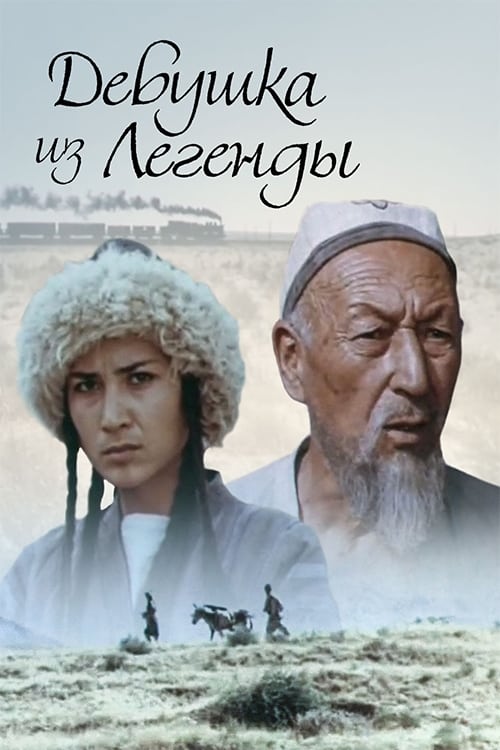
There is a civil war in Turkestan. Many people stood up in arms to defend the young Soviet government. Among them is the young Mayna Khasanova. She devoted her life to the struggle for the ideals of revolution. Mayna, as a girl from a legend, will accomplish a feat, a story about which many generations of Soviet people will betray by word of mouth. The young heroine will be awarded the Order of the Red Banner of Battle.
Follows the construction of the Fergana Canal, which employed 170 thousand people, and Usman Yusupov was given a very specific task - in 45 days, a 270-kilometer-long canal should provide water to the cotton fields.
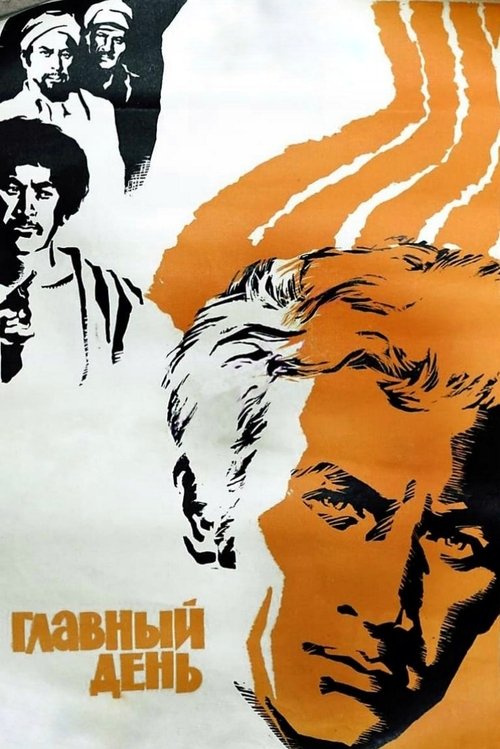
The hero of the painting is a young man who is engaged in deciphering ancient cuneiform inscriptions. His life flows exactly according to schedule, everything is predetermined, calculated, taken into account. But suddenly events begin to develop so rapidly, unforeseen circumstances assert themselves so completely that Yunus cannot get to his own wedding for a whole day and becomes an active participant in many events taking place on that day in the city...
A film about the friendship between the workers of the Uzbek collective farm 'Leningrad' and the city of Lenin. This friendship has grown stronger and developed over more than four decades. The film takes us back to the distant and difficult 1920s, when the farmers of Fergana sent a wagon of fruits to the workers of the Putilov factory. In return, the workers gifted the collective farm two tractors and sent their representatives to help set up the new machinery.
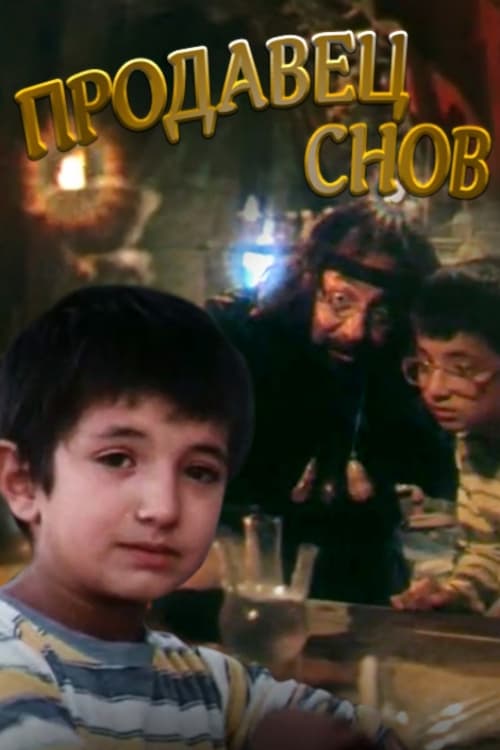
A schoolboy Karim, who is fond of electronics, unexpectedly finds himself in a fairyland, in the laboratory of the wizard Ogima, who has been looking for a capable student for a long time. Ogima comes up with dreams - sweet and funny, being sure that he is doing good for ordinary people. It turns out that more than two people need to stand in a circle around a magic mirror and hold hands — then everything you dream about will come true. But the ruler makes the last move — she has released all dreams, people can sleep for 100 years.
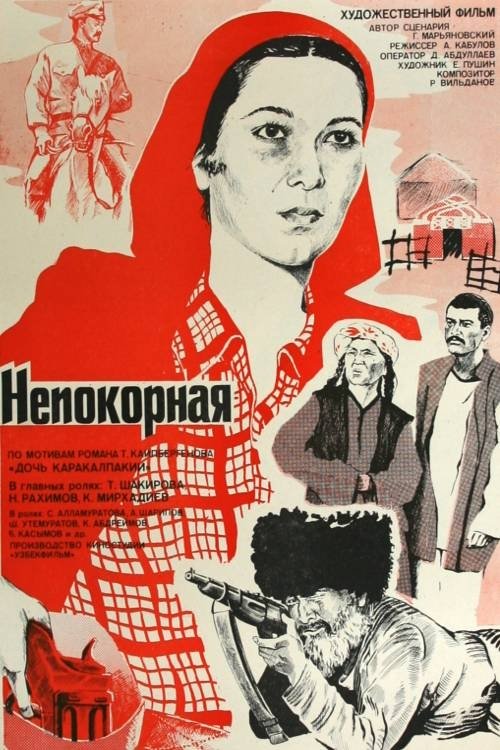
1925. Soviet power arrives in the remote Karakalpak villages. During this time, the dzhigit Turumbet and the beautiful Jumagul fall in love with each other. However, after the wedding, the young wife leaves her husband’s home, unwilling to accept the Old Testament way of life of her husband's family. Turumbet, who participates in bandit raids, does not immediately understand the revolutionary changes taking place.