Eugen Gindl
Writing
Known For
No description available.
Hĺbkový rekord
In the late 1980s, several films were made that wanted to come to terms with the crimes of Stalinism, but they did so with a very alibi - they basically communicate that it is enough to remove the erroneous deviation of the communist regime for this social system to become fully humane again. This also applies to the immediate post-war fates of former front-line fighters - one fought in the Soviet Red Army, another in the English Air Force, another was a soldier in the Slovak Army. The difficult character check will only be completed by the 20th Congress of Soviet Communists, which condemned recent blunders. The film was made based on a proposal by former Foreign Minister Bohuslav Chňoupek.
Právo na minulosť
The Himalayan mountain Makalu, located in Nepal, is the fifth highest mountain in the world. In 1973, a Czechoslovak expedition also attempted to climb it via the challenging route, the so-called South Pillar, but it ended tragically. The group of climbers led by the experienced Ivan Kaščák (real-life Ivan Gálfy) is composed of the fittest men. In the base camp and during the preparation of the advanced camps, the expedition struggles with common health problems - a sore tooth, intestinal problems or a cold. For the actual climb to the summit of Makalu, Kaščák chooses a young engineering student Milan, a colleague Karol who is a generation older than him, and a young man Jož. In the advanced camp, without Kaščák's knowledge, he gives up his place to the ambitious Karol. However, due to fatigue and lack of oxygen, Milan falls down a snowy slope and injures his head and spine. He can‘t be transported down.
Vynes na horu svoj hrob
No description available.
Len rieka nestarne
No description available.
Chuť vody
In 1950, Jozef watched the communists assume control over his native Hungary. He was too young to have an opinion about it, but he was mightily impressed all the same. Now it is 1968, and he is a young man. When the Russian tanks come rolling through his village on their way to suppress the stirrings of freedom in Prague, he does what he can to ensure that he's in good odor with those who will inevitably come out on top. This meandering political drama is apparently an exploration of opportunism, but reviewers gave it low marks for clarity of exposition.
When the Stars Were Red
No description available.
Celý svet nad hlavou

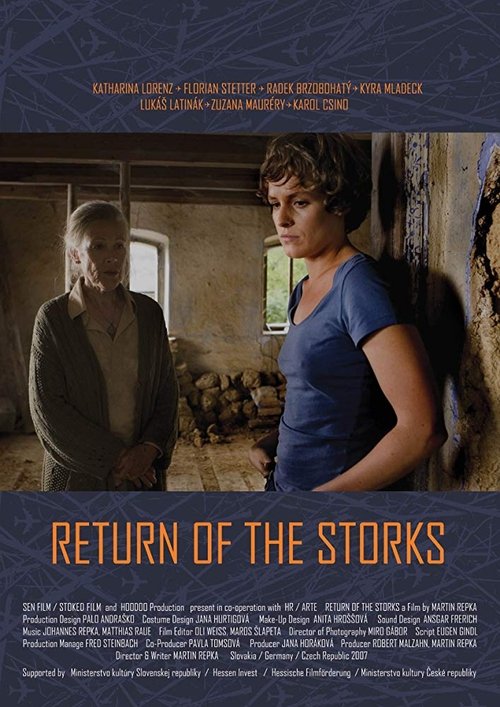
Vanda works as a stewardess in Frankfurt am Main. When Vanda loses her job, she takes the opportunity to finally visit her grandmother Magdalena, who has been living in her old homeland, the Slovak Republic, for several years. Vanda immediately feels at home in this completely different world and soon falls in love with the somewhat shady Mirko. When Vanda finds out that he works as a trafficker, she is initially horrified, but soon realizes that he is also helping people who are in great need.
Return of the Storks

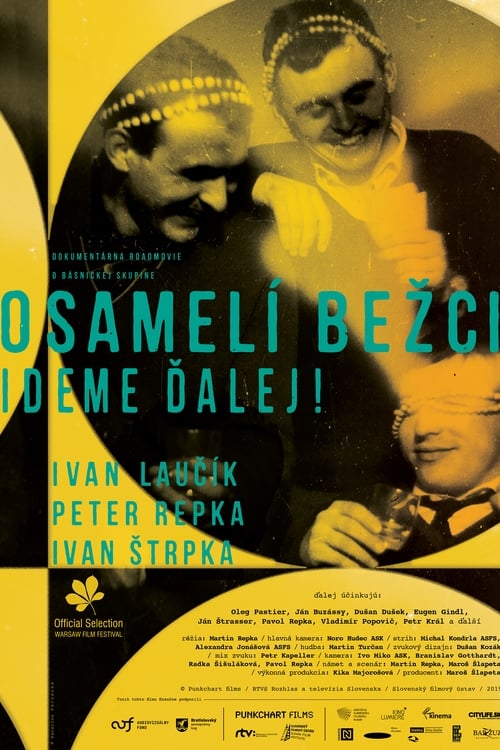
The story of the extraordinary friendship of three great Slovak modernist poets who formed the legendary literary group "The Lonely Runners" in 1963. The group’s existence was announced in the manifesto “The Merits of Three-legged Nightingales” and their motto posited that “the good angels of humanity return to our minds and feelings – frankness of speech, nobility of intentions and righteousness of deeds”. Physically, they parted ways: Peter Repka moved to Germany in the 1970s, Ivan Laučík lived most of his life in the peaceful Liptovsky Mikulas and Ivan Štrpka in Bratislava. Even though their meetings were rare, their friendship held strong despite all obstacles. Their work is still considered one of the most important in modern Slovak poetry. The film follows a meeting of these three giants of poetry and their journey together, during which they meet with friends and visit places important to them. A story of an inspirational friendship.
Lonely Runners: Moving On!
No description available.
Vnuci Antoina de Saint-Exupéryho
No description available.