Tobias Büchner
Production
Known For
No description available.
German Film Award

Astrid is a comedian who makes people laugh for a living; her husband Markus is her manager and the two of them work well together. They have a nine-year-old daughter and are expecting their second child. When they learn that their child will not be born healthy, they are at first optimistic that they will be able to meet this challenge – although they have no idea what awaits them. But the closer it gets to the due date, the more Astrid begins to worry about the future of her unborn child as well as that of her family and her career. After many discussions and arguments Astrid realises that the decision that will affect all their lives must be made by her alone. What complicates matters further is the fact that, as a successful entertainer, she is in the eye of the public and the media.
24 Weeks

Asli and Saeed fall in love in the mid-1990s. Although Asli’s mother is against their relationship, they secretly get married. Then he disappears. A sensitive love story that recounts how Saeed changes Asli’s life – before the entire world is shaken.
Copilot

A young German soldier named Paul goes AWOL and returns to his childhood home in the countryside. Over a few summer days, Paul evades the responsibilities of everyday life and falls in love with his brother’s girlfriend, disrupting the lives of everyone in his circle.
Bungalow

For the first time in six years, Barbara Morgenstern, pioneer of German-style electronic intimate pop, works on a new album. Her laptop sits on a shoebox, in the privacy of her home she finds first lines and harmonies: “I like to be alone,” one song begins. One by one, musicians join her. Intuitive ideas take shape. A window has opened. Arrangements, rehearsals, recordings follow. Step by step, the music enters public space, images are produced, videos, narratives. Questions arise: New beginning or back to the roots? New Biedermeier or tough political comment? The bigger the band, the riskier the booking. The more crisis-ridden the environment, the more comforting the music-making.
Barbara Morgenstern – Doing It for Love

SHORT ORDER tells a story so vibrantly sumptuous each still could be served as its own meal. Amidst the quaint Parisian street night, Fifi Koko runs a petty short order diner. Although her name is famous in chef circles she has placed her uncanny culinary skills on the back burner as she falls prey to an existential quagmire that fears her talent shall not overcome the expectations her reputation has sown. The late hours play out as Fifi must face her talent and unrequited love for a friend, while a collective stream of colorful creatures of the night make through Fifi's consciousness to feed her with temptation, insight, and humor on the path of her life-defining decision.
Short Order
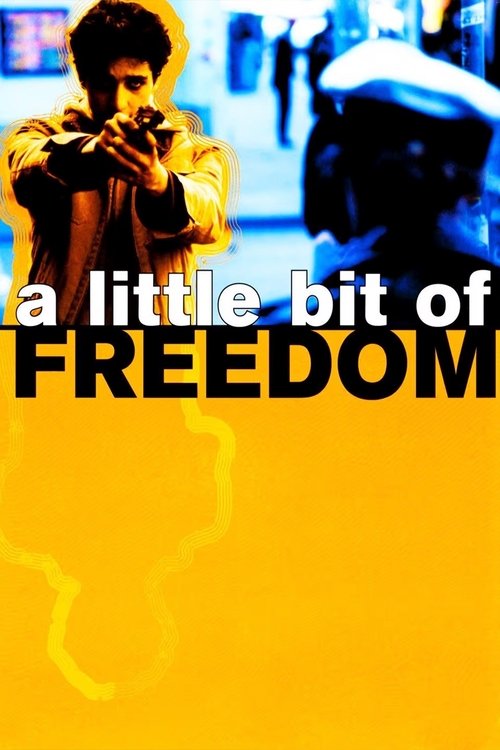
Hamburg. Baran, a Kurdish orphan, and Chernor, a refugee from Africa, are living in the shadows of a city that barely registers their existence. Bound by statelessness and survival, they carve out a fragile friendship on the margins, stealing glances of freedom in a country that denies them belonging.
A Little Bit of Freedom

For Reminiscence of a Moviegoer, filmmaker Christiane Büchner works extensive interviews with the late Werner Dütsch, a commissioning editor at the German television station WDR, and massively influential figure in postwar West German film culture, into a moving portrait of cinephilia through time.
Reminiscence of a Moviegoer

Since more than 10 years the director Darío Aguirre lives between two totally different worlds, Germany and Ecuador. He decides to make an extraordinary journey, visiting five unknown men called Darío Aguirre as well: One in Mexico and four in Argentina. Meeting each other develops into a reconcilement with their own past lives and permits a brief glance into the protagonists’ present time. For two months Darío shares five different lives, adapting himself to situations and activities he has never done before.
Five Ways to Darío
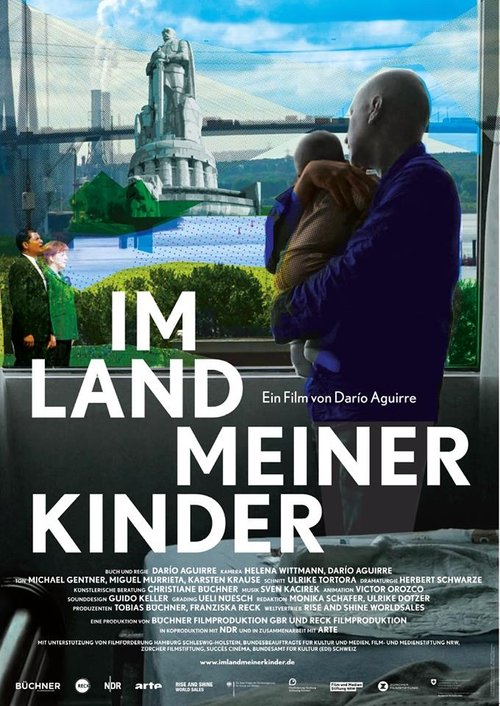
Darío Aguirre moved from Ecuador to Germany to be with Stephanie, but from the very first day there was a third party in their relationship:the government. They issued him ten visas in fifteen years. A long trail of papers, stamps, permits, and restrictions connected Darío to Germany while also keeping him at a distance. Then one fine day the mayor of Hamburg invites Darío to become a German citizen. A confession of love? Darío responds with a tender, ironic road movie that traces his intertwined journey from the country of his fathers to the country of his children.
Land of My Children
In a St. Petersburg apartment, every room belongs to a family. The four families share the kitchen and bathroom in shifts. One family decides to sell their room and money hungry agents try to sell everyone else's rooms as well.
PereSTROIKA: Reconstruction of a Flat
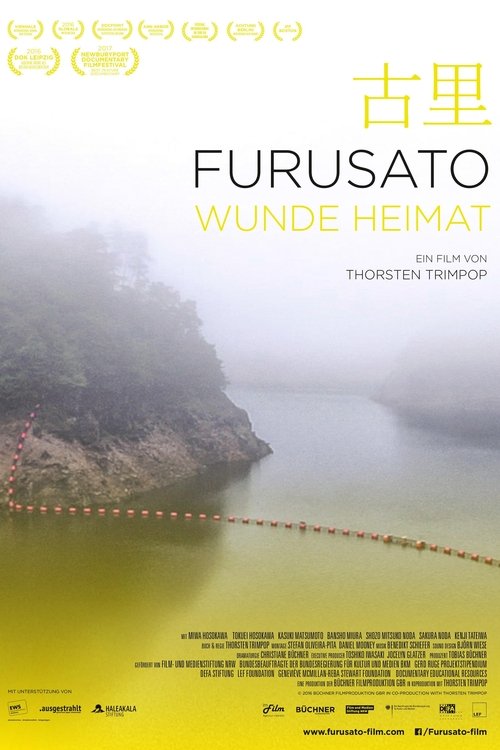
A small town in Japan's exclusion zone searches for normalcy in the five years following the greatest nuclear catastrophe since Chernobyl.
Furusato
On the roof of a high-rise building in St. Petersburg stands a bearded man with a briefcase, telling a story. He feels comfortable up there, because from here he has a clear view of his neighborhood, Kuptschino, a dreary concrete housing estate. He can observe crimes. And he can intervene. As proof, he pulls out an imaginary pistol and fires it wildly. The man is a member of a club dedicated to fighting crime. After all, every child knows that crime is part of everyday life in Russia.