Jonathas de Andrade
Directing
Known For
Ready for a new perspective? Ammodo Docs presents artistic shorts about original minds. In 15-minute films, renowned Dutch filmmakers challenge you to see the world through the eyes of pioneers in the arts and sciences. Ammodo Docs. Forward-thinking films.
Ammodo Docs
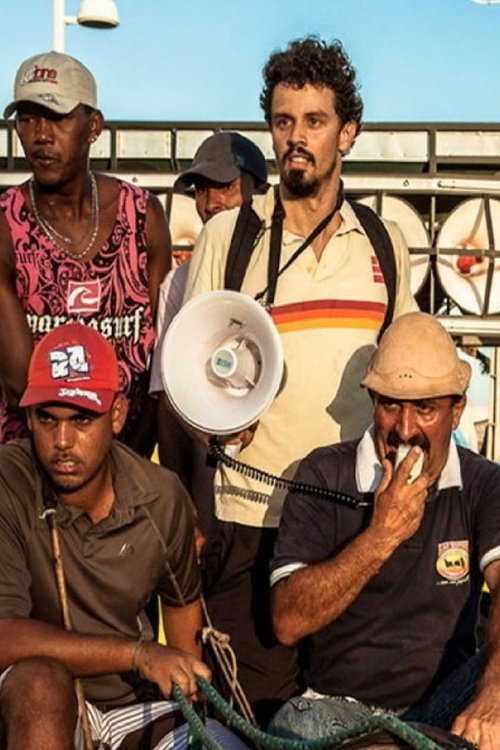
As farm animals are prohibited anywhere in Recife, everyone who gets about by horse is made invisible from the point of view of the law. Only by dealing with the race as if it were scene from a movie – by being able, therefore, to have it considered as being to some extent a piece of "fiction" - is what would make the event feasible and fit to obtain the authorizations needed to make it happen from the official point of view.
The Uprising
A dive into moments of concentration and muscular tension typical of the world of sport. Through intrusive thoughts and layers of everyday life, the film approaches the personal and metaphorical dimensions of overcoming. Starring ordinary people from the Parisian suburbs of Noisy le Sec, the film culminates with the passing of an unofficial torch, as a symbol of dream and collective resistance.
La Joie Musculaire
"4000 shots helps me to position myself in relation to the history I did not experience directly, but from which I am a descendent. A history full of the most traumatic episodes which I access more through readings and less through my own body, through an instinctive reaction which is sensitive to me. The way I react to what touches me, to what disgusts me, or to what I profoundly desire defines how I move. It defines the political use of my existence. Art helps me to approach and respond to what provokes me. It also helps me to experience more wholeness along the way. To make this work, I used a roll of Super 8 film to shoot, frame by frame, faces of random men in the streets of Buenos Aires. The urgency, the obsession, the randomness, and the aesthetics of the video bring up an ambiguous atmosphere of this past—the very amnesia in which this memory is embedded." - Jonathas de Andrade
4000 disparos
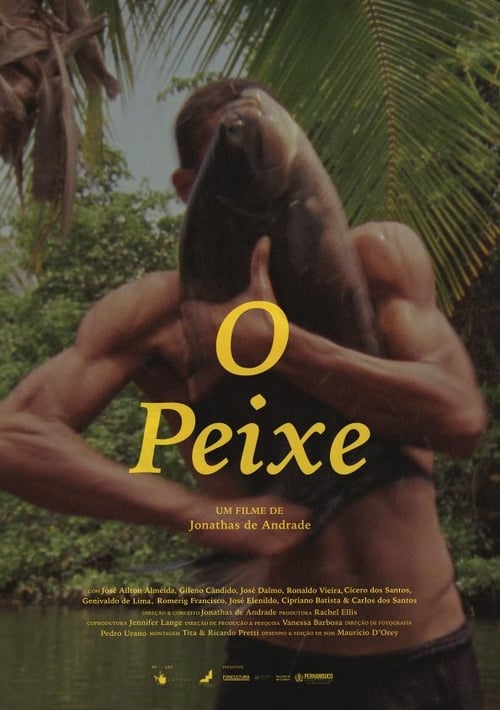
"A fisherman, dark-skinned and shirtless, sits in a boat on a quiet river and, before long, catches a fish. The fish gasps for air and the fisherman holds it to his chest until it dies. This sequence—performed by a series of fishermen, of various ages and using various styles of capture—is the spine of the work, interrupted by passages of quiet natural beauty; one shot is a steady, stately pan through scores of trees and empty air behind." - Vinson Cunningham
The Fish

Pigeon Fanciers reflects on generational changes by exploring the unique relationship between humans and pigeons — pigeon fanciers and birds interact in front of the camera before the apotheotic moment of release. This is the first film by Jonathas de Andrade, one of the most important artists of his generation, shot outside of Brazil — a country he represented at the Venice Biennale in 2022.
Columbófilos
"A deeply beautiful and disturbing split-screen depiction of the contrasting daily routines of sociologist Gilberto Freyre in 1959 (author of The Masters and the Slaves, originator of Lusotropicalism, proponent of racial integration) and Cristóvão, an ordinary housekeeper in 2016." - Angeline Gragásin
The Housekeeper
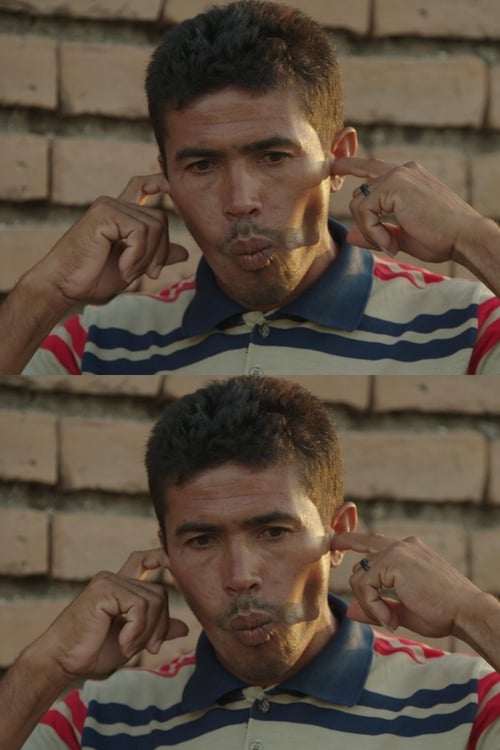
Directed Games is a language experience permeated by improvised testimonies from a cast of non-actors, performed in settings within their community. The messages conveyed by the characters are, for the most part, not translated. At times, there is a systematization of the lexicon of Várzea Queimada presented through gestures accompanied by the words they represent.
Directed Games

The choreography repeated from generation to generation, the collective effort to lower and raise the rafts into the sea; the nautical gestures and respect for the right tide time; the knowledge passed down from father to son; a profession entangled with many others—roleiros, rafters, painters, sail makers, carpenters, and boat builders.
Raftsmen and Canoeists

The first recorded testimony of a group of Brazilian Catholic women who, in the 1970s, embraced the emerging movement of Liberation Theology — a force that reshaped the Church in Latin America by aligning faith with social justice and the struggles of the poor under authoritarian regimes. Pressured by the Brazilian dictatorship and in conflict with Church hierarchy, they broke with the institution, took a vow of anonymity, and fled into exile in Rome, escaping aboard cargo ships. Today, the fifteen women who remain from the original group agree, for the first time, to share their story.
Sorelle Senza Nome

With a cast of one hundred people making the street their home, a temporary community transforms a public square into a great stage.